
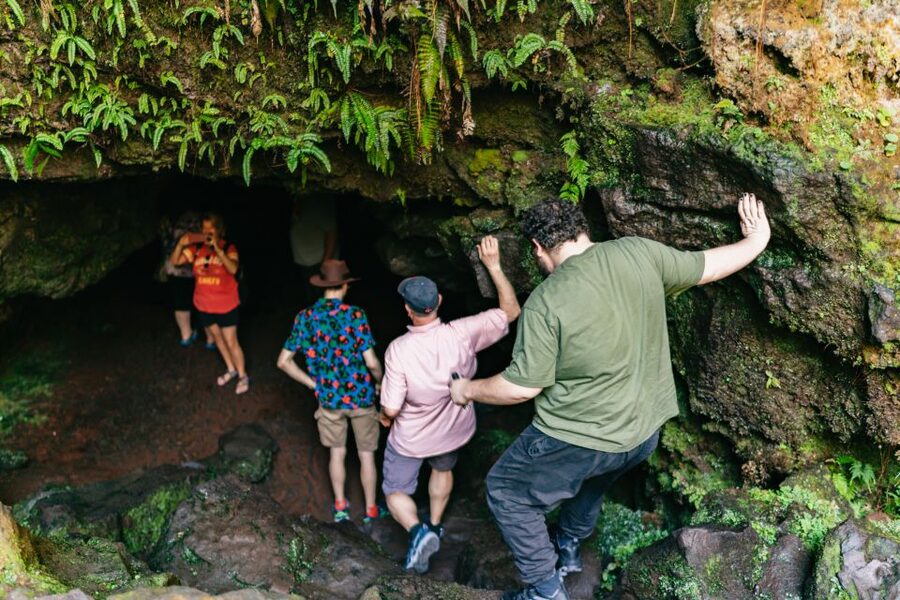
Reviewed · VOLCANO TOURS
Hilo: Elite Volcano Hike
The most striking part of this Hilo day trip is how closely it takes you to the scars of the 2018 eruption. You walk along a highway stopped by a 40-foot wall of ʻaʻā lava, follow the flow through pine forest, then look across the new black sand coast. Later, you hike into Kilauea Caldera and face the vast pit left when Halema’uma’u’s lava lake drained.
I like the mix of fresh volcanic ground and older park scenery, and I like having lunch, drinks, transportation, and a small group included. The main catch is the long day and the heat. One past booking described the walk as tiring in hot weather, while another noted that the drive can be lengthy if you are coming from the far side of the island.
Key points
- Walk beside the 2018 lava flow: Follow a closed section of highway and see where the advancing ʻaʻā lava stopped traffic.
- See Fissure 8 from the road: Visit the Leilani Estates eruption area near Isaac Hale Beach Park.
- Reach Kilauea Caldera on foot: Hike about two miles toward Keanakakoʻi and the floor of the caldera.
- Look into a 1,000-foot-deep crater: Halema’uma’u changed dramatically when its lava lake drained during the 2018 eruption.
- Travel in a small group: The outing is limited to 13 people, with an English-speaking guide.
- Pack proper shoes: Closed-toe footwear is required, and open-toe shoes are not allowed.
From Hilo to the 2018 eruption coast
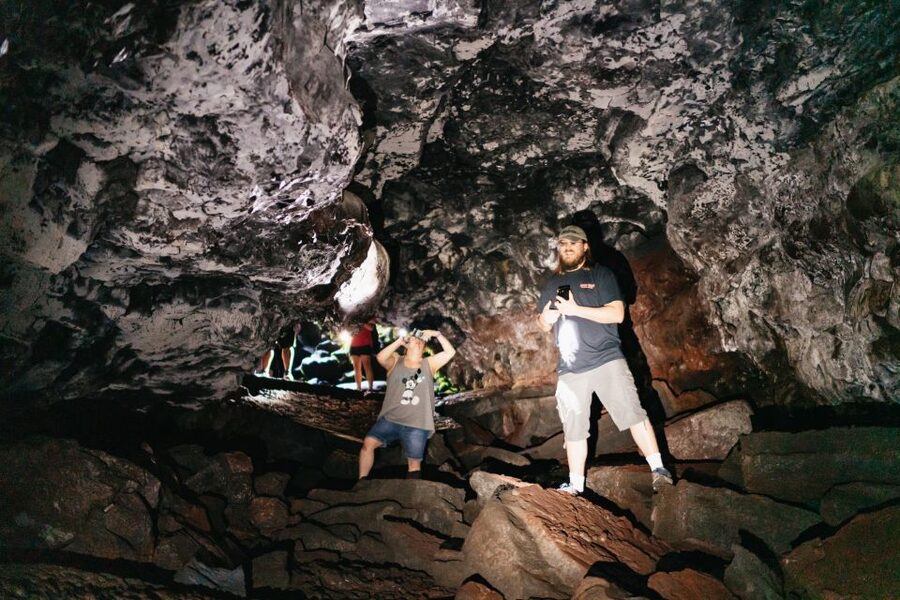
This outing begins in Hilo and heads toward the Puna Coast, where the 2018 eruption changed roads, neighborhoods, and the shoreline itself. You can meet at the KapohoKine Adventures store in the Grand Naniloa Resort, or arrange pickup from your location by calling the operator.
The first stop is Mackenzie State Recreation Area. The highway here was shut when lava advanced toward the sea. Instead of simply viewing the flow from a roadside pullout, you walk along the closed highway and then follow the lava through a pine forest.
That detail matters. A quick photo stop can make an eruption feel like a distant event. Walking on or beside the route where the lava moved gives you a better sense of its reach and force. You see the rough ʻaʻā surface, the altered ground, and the new edge of the island.
The path leads toward cliffs above a new black sand beach. The coast here is not just scenic. It records how the island gained new shore during the eruption. You should expect an exposed, uneven walk rather than a smooth park stroll. The required closed-toe shoes are sensible protection on volcanic ground.
More Hiking Tours in Big Island
- Secret Tide Pool Hike – Jungle & Coast – Private
★ 4.5 · 92 reviews - Hilo: Waterfall Hike and Swim with Native Hawaiian
★ 4.9 · 8 reviews - Hilo: Kilauea Fissure 8 Hiking, Volcanoes and Waterfalls
★ 4.7 · 3 reviews
Isaac Hale Beach Park and Fissure 8
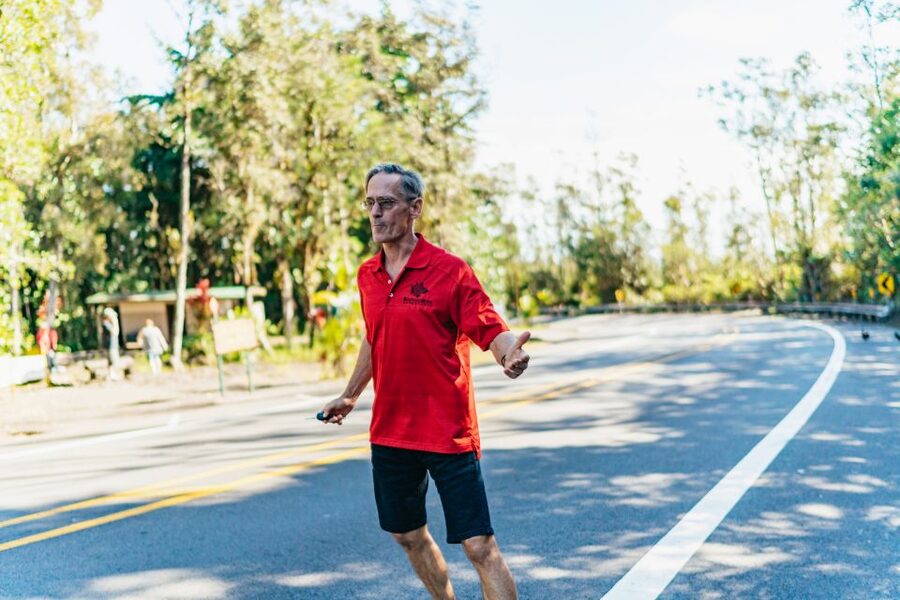
The next stop is Isaac Hale Beach Park, where the tour drives along the area associated with Fissure 8. That vent opened in the middle of the Leilani Estates subdivision and became one of the best-known features of the 2018 eruption.
This part of the day gives you a different view of volcanic change. At Mackenzie, you see lava reaching the coast. Near Leilani Estates, you see where it began in a residential area. The contrast helps explain why the eruption affected daily life so sharply.
A picnic-style lunch is served at the park, weather permitting. Beverages are included, so you do not need to plan the entire day around carrying food and drinks. Still, I would bring water and a small personal snack if you are sensitive to heat or tend to get hungry between stops. The supplied lunch is useful, but the exact menu is not specified.
The weather qualification is worth noting. Outdoor lunch plans can change, and the same is true of comfort on the walk. Much of the value here comes from being outside, so sun, rain, and heat can shape your day more than the timetable does.
Entering Hawaii Volcanoes National Park
After the Puna Coast, the tour continues to Hawaii Volcanoes National Park, the main event for many people. The park section begins at Kilauea Iki Overlook, where you get a broad view before setting off on foot.
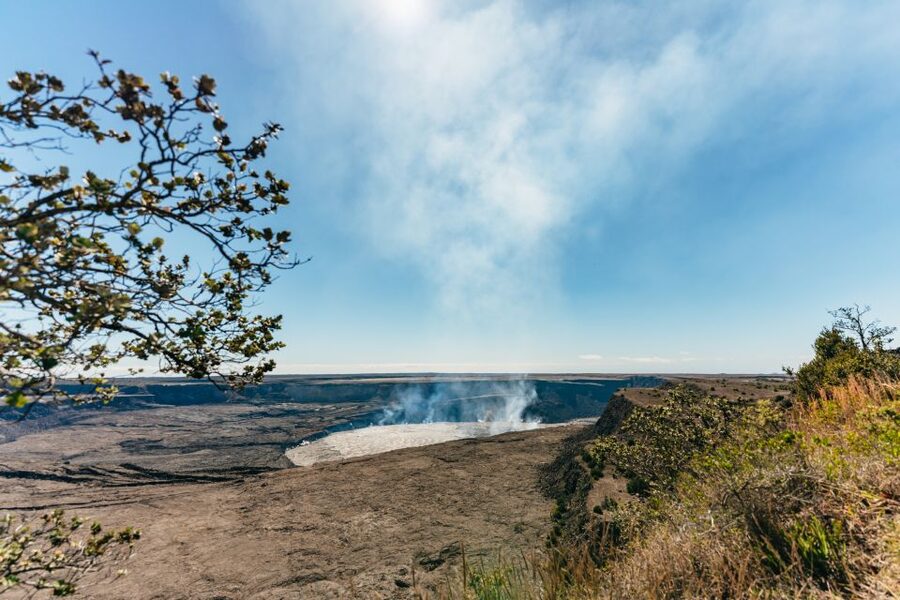
The overlook helps you understand the route ahead. You can see Kilauea Caldera, Halema’uma’u Crater, and the trail area below. This is a good moment to take photos and listen to the guide’s explanation before the walking begins.
The tour then follows a paved road toward Keanakakoʻi. The road was damaged during the 2018 eruption, and you can see buckled pavement, cracks, and sinkholes. These marks make the eruption feel immediate. They also show that volcanic change is not limited to a cone or crater. Roads and access routes can shift under the pressure of the earth.
The overall park walk is described as about two miles. It is not presented as a technical climb, but it is still a real hike with uneven volcanic terrain and a return trip. One earlier booking found the walking enjoyable and said the lava-flow and crater sections were fun. Another found the heat tiring. Plan for effort, not just sightseeing.
The walk into Kilauea Caldera
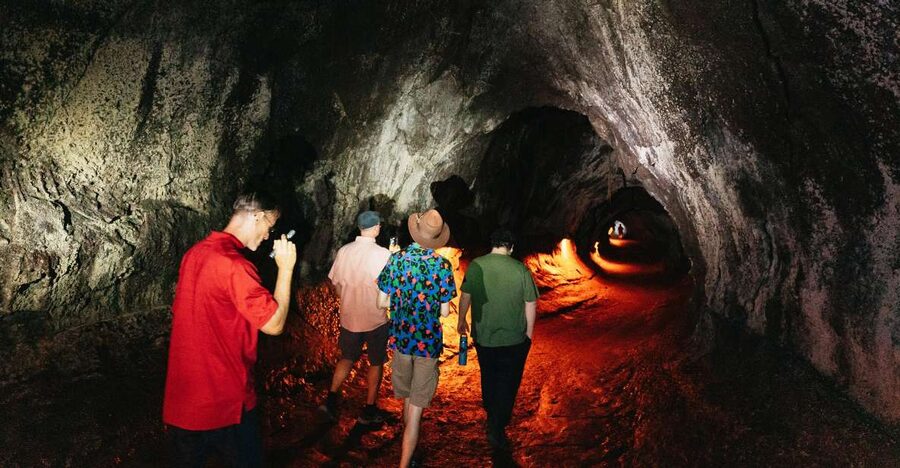
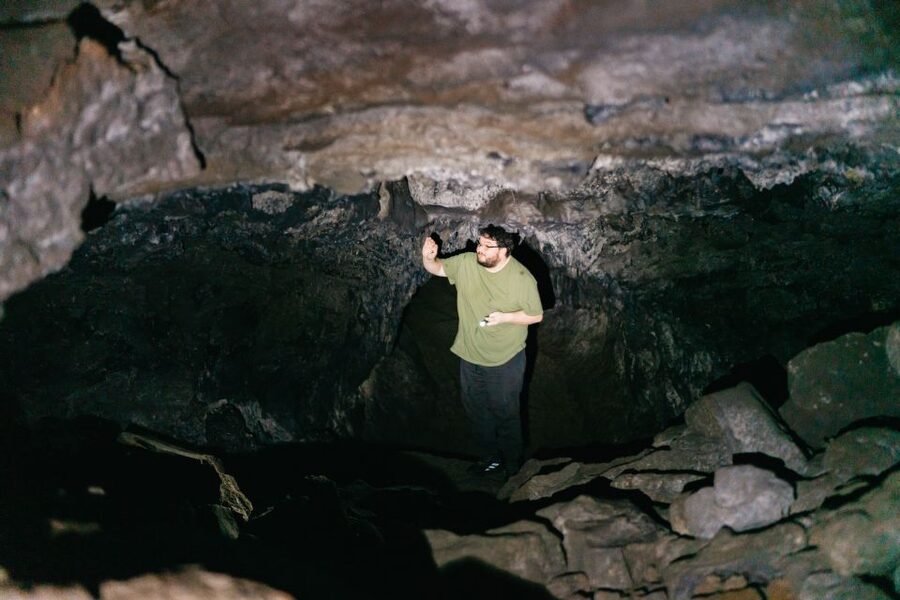
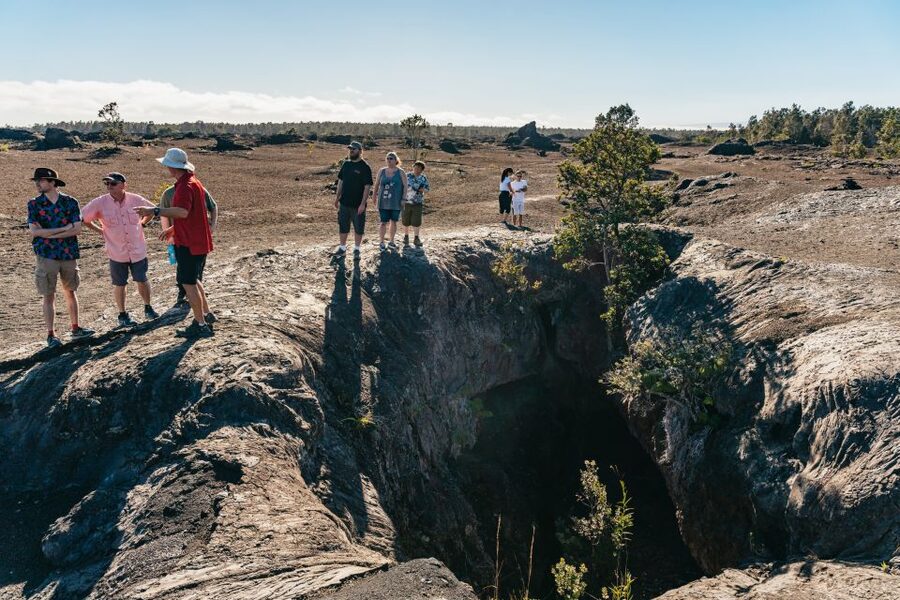
The most powerful part of the park visit comes as you reach the floor of Kilauea Caldera. From above, the crater system is already impressive. At ground level, the scale becomes harder to judge because the surrounding rock walls and open floor spread far beyond a normal viewpoint.
Huge boulders sit in the area, placed there by older rock slides and eruptions. You can also look for marks left by earlier visitors, including Benjamin Boyd and John Webster. These small traces add a human detail to a place otherwise shaped by forces far larger than people.
The 2018 eruption left a major rock slide to the left as you reach the caldera floor. Halema’uma’u Crater lies ahead, now much larger than it was before the eruption. Its lava lake drained, leaving a pit described as about 1,000 feet deep.
Do not expect to see active lava simply because you are visiting a volcano. The key sight here is the scale of the crater and the evidence of recent change. Conditions inside a volcanic park can also vary, so your guide’s instructions and the park’s current access rules matter.
The walk back to the starting point completes the park section. That return is easy to underestimate. If heat affects you, save some energy and take steady steps rather than rushing the outward portion.
More volcano and lava-country days:
- Big Island: Volcanoes, Waterfalls, & Coffee Farm Day-Trip
★ 4.9 · 414 reviews - Volcano Adventure: Hilo Sightseeing w/ Optional Helicopter Tour
★ 4.5 · 412 reviews - Hilo Shore Excursion: Active Volcano, Lava Tube, Waterfall and Gardens
★ 5.0 · 393 reviews - Hawaii Volcanoes National Park and Hilo Highlights Small Group Tour
★ 5.0 · 260 reviews
Native birds and volcanic clues
The tour is not only about giant craters. Along the two-mile hike, you can look for native birds such as the yellow ʻamakihi and red ʻapapane. Wildlife sightings are never guaranteed, but the chance adds another layer to the walk.
Keep your attention on the ground and the sky. Volcanic rock, road damage, plant growth, and birdlife all tell different parts of the story. The guide can connect these details to the eruption and the park, which is one reason the guide makes a difference on this trip.
Guide Ray received especially warm praise for his explanations, humor, and ability to interact with the group. Nick was also noted for clear information about the island and volcanoes, along with local stories. Your guide may be different, but these comments point to the role you should expect the guide to play: not just driving you from stop to stop, but helping you read the ground.
What the small group changes
The group is limited to 13 people. That is small enough to feel more personal than a large coach outing, while still giving the operator a practical way to cover a full day across two major areas.
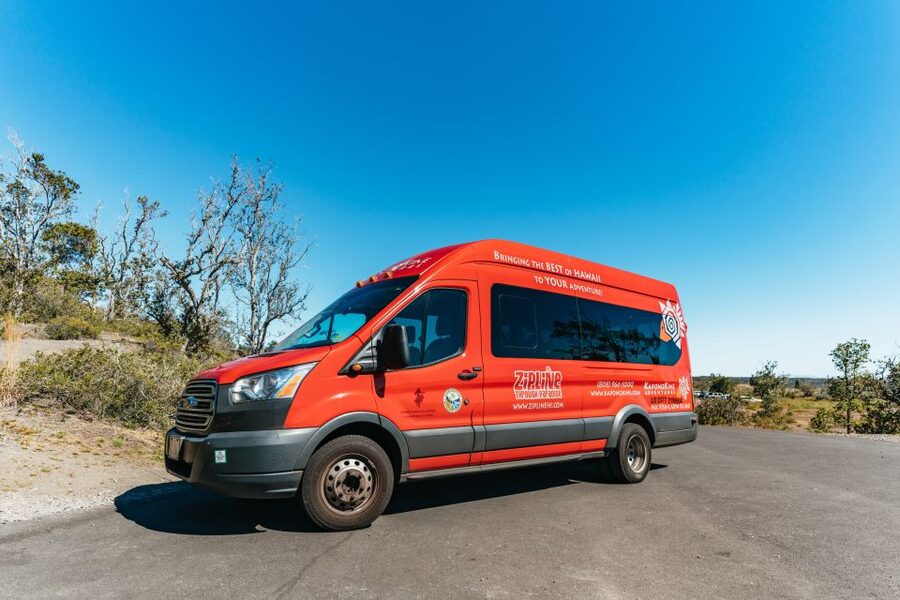
A small group helps when you have questions about lava features, crater changes, birds, or the island’s roads. It can also make the walking pace easier to manage than a very large group. The vehicle was described as comfortable in one earlier booking, which matters because this is a full 510-minute outing.
The guide will likely do much of the talking during the drive. One useful criticism of the experience was that a recorded history program could have shared some of the long travel time and given the guide a break. If you prefer quiet transport or a self-guided day, this may not be your ideal format.
On the other hand, a live guide lets you ask questions and respond to the day’s conditions. The value depends heavily on the person leading your group, and named guides such as Ray and Nick have been associated with strong guiding on this excursion.
Is the $189 price fair?
At $189 per person, this is not a cheap casual outing. The price makes more sense when you count what is bundled: hotel pickup and drop-off, transportation for a full day, an English-speaking guide, lunch, beverages, and access to several widely separated volcanic sites.
You are also paying for a carefully arranged route. Reaching Mackenzie State Recreation Area, Isaac Hale Beach Park, and Hawaii Volcanoes National Park on your own requires more driving, route planning, and attention to changing access conditions. The tour puts the newest eruption areas and the park’s major crater views into one day.
The value is strongest if you have limited time on the Big Island or do not want to drive the whole route yourself. It is also useful if you want interpretation rather than only viewpoints. If you already have a car, plenty of time, and a strong interest in setting your own pace, the fixed schedule may feel less attractive.
The price includes drinks, but no details are given about the lunch menu or the exact beverage selection. If you have dietary restrictions, ask the operator before booking rather than assuming the picnic will suit you.
How demanding is the hiking?
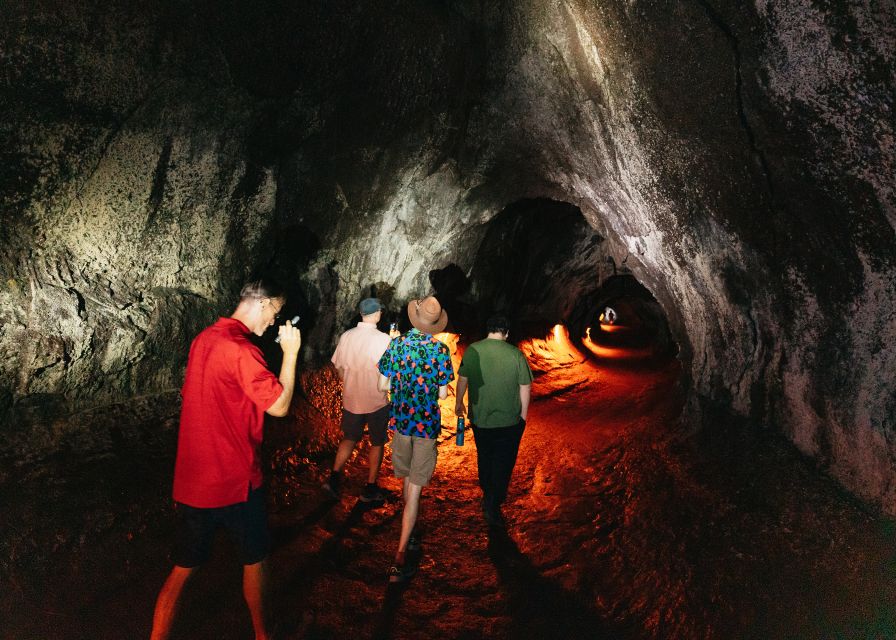
The hike is manageable for many people who are comfortable walking for a few miles, but this should not be treated as a purely sightseeing van tour. You walk on lava flows, along a closed highway, through forest, and into the caldera area. Heat can make the outing feel harder than the distance suggests.
Closed-toe shoes are mandatory. Choose sturdy footwear that you can use on uneven volcanic ground, not sandals or open-toe shoes. Bring sun protection and personal water even though beverages are provided.
The experience is not suitable for pregnant women, people with back problems, wheelchair users, or people with respiratory issues. Those restrictions are important because of the walking, surface conditions, and outdoor volcanic setting.
The outing may suit older people who want a guided and organized way to see the park, as one past booking noted. Younger or more adventure-focused hikers may want a harder walk or more time on foot. This tour aims for a middle ground: substantial walking, but within a structured day that also includes vehicle access and lunch.
Timing, pickup, and practical planning
The listed duration is 510 minutes, or about eight and a half hours. That is a full day, so do not book it beside another major activity. You will need energy for both the Puna Coast and the park, plus the return drive.
Pickup is included. The meeting point is the KapohoKine Adventures store at the Grand Naniloa Resort, 93 Banyan Drive, Hilo, Hawaii 96720. You can also contact the operator at 808-964-1000 to ask about pickup from your location or for more information.
The tour is conducted in English. If you want a day built around local explanation, volcanic history, and questions, that is a plus. If you need another language, the provided information does not list one.
You can cancel up to 24 hours before departure for a full refund, and the reserve-now, pay-later option lets you hold a place without paying at once. Those terms help if your island schedule is still taking shape, but you should still confirm the current start time when checking availability.
Who should book this volcano day?
I would choose this tour if I wanted to see both the 2018 eruption zone and the major Kilauea sights without arranging a long self-drive. It is especially useful for a first visit to Hilo, a short Big Island stay, or anyone who values a guide’s stories and explanations.
You should also choose it if the idea of walking across recently changed volcanic ground appeals to you. The closed highway, new black sand coast, Fissure 8 area, buckled road, and enlarged crater create a clear story from eruption to aftermath.
I would hesitate if you dislike full-day outings, tire easily in heat, or want a demanding backcountry hike. The route has memorable walking, but it also includes substantial driving and scheduled stops. Some younger, fitter hikers may want more time or a tougher trail.
The strongest reason to book is the combination of access and context. You do not simply look at a crater from one viewpoint. You move from the coast to the residential eruption zone, then into the national park, seeing how one volcanic event altered roads, forests, shorelines, and a major crater.
FAQ
How long does the Hilo Elite Volcano Hike last?
The experience lasts 510 minutes, or about eight and a half hours. Check availability for the current starting time.
What is included in the price?
Hotel pickup and drop-off, lunch, beverages, and an English-speaking live guide are included.
Where does pickup take place?
You can meet at the KapohoKine Adventures store in the Grand Naniloa Resort at 93 Banyan Drive, Hilo, Hawaii 96720. You can also contact the operator at 808-964-1000 to ask about pickup from your location.
How much hiking is involved?
The Hawaii Volcanoes National Park portion includes about a two-mile hike, along with walking near Mackenzie State Recreation Area and the lava flow. The route includes volcanic ground and a return walk.
What should I wear?
You must wear closed-toe shoes. Open-toe shoes are not allowed.
Is the tour suitable for everyone?
No. It is not suitable for pregnant women, people with back problems, wheelchair users, or people with respiratory issues. It may also be tiring in hot weather.
Should you book it?
Book this tour if you want a guided, full-day look at the 2018 eruption and Kilauea, with transportation and lunch taken care of. The small group, strong guide feedback connected with Ray and Nick, and unusual access to the altered coast give it real value.
Skip it if you want a short volcano visit, a strenuous adventure hike, or complete control over your schedule. For most visitors with one open day in Hilo, though, the route offers a clear and memorable way to see how the Big Island is still being shaped.
More Hiking Tours in Hilo
- Small Group Waterfall and Rainforest Hiking Adventure on Maui
★ 5.0 · 1,417 reviews - Kauai: Secret Falls Kayak and Hike
★ 5.0 · 1,403 reviews - Kauai Adventure: Kayak & Hike to Secret Falls with Expert Guide
★ 5.0 · 1,387 reviews - Secret Falls Kayak & Hike Guided Adventure on the Wailua River
★ 5.0 · 1,212 reviews
Just added around Hilo
- Hilo: Walking Ghost Tour★ 4.7 · 8 reviews
- Hilo: Waterfall Hike and Swim with Native Hawaiian★ 4.9 · 8 reviews
- Hilo: Kilauea Fissure 8 Hiking, Volcanoes and Waterfalls★ 4.7 · 3 reviews
- Hilo: Discover Hilo Helicopter Tour★ 4.1 · 35 reviews
- Hawaii: All-Inclusive Volcanoes and Waterfalls Private Tour★ 5.0 · 3 reviews
- From Big island-Volcanoes & waterfall tour in a small group★ 3.8 · 4 reviews
- From Hilo: Hawaii Volcanoes National Park Tour★ 4.9 · 70 reviews
- Big Island: Volcano, Black Sand Beach, Waterfall, with Lunch★ 4.9 · 44 reviews
Volcano Tours, compared.
Big Island in a Day: Volcanoes Waterfalls Sightseeing and History
Read our review →
Hilo Shore Excursion: Volcanoes National Park & Black Sand Beach
Read our review →
Small Group Big Island Twilight Volcano and Stargazing Tour
Read our review →
Big Island Highlights: Coffee, Volcano, Black Sands & Waterfall
Read our review →
Deluxe Volcano Experience with Restaurant Dinner
Read our review →
Captain Cook Snorkel Tour with Sea Caves and Lava Tubes
Read our review →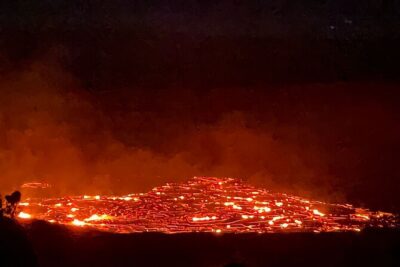
Fat Tire E-Bike Tour through Volcanoes National Park
Read our review →Browse the lists this tour appears in