
Reviewed · WORKSHOPS
Hawaiian Reef Spearfishing Lesson for Beginners on Kauai
The best part of this Kauai excursion is that it turns ordinary snorkeling into a traditional island skill. At Anini Beach, you learn to read the reef, handle a three-prong spear, and recognize native and invasive fish before heading into the water with a guide. A fish is a bonus, not the whole point.
I like the small group size, capped at six, and the patient teaching style associated with guides such as Aidden, Christian, and Tui. I also like that the lesson includes real guidance on responsible fishing, not just a quick equipment handoff. The catch can be cleaned and taken home, but there is no promise of dinner.
The main thing to consider is the physical demand. You need to swim and snorkel well, bring your own fins, and be ready to cover a good distance across the reef while working against possible current. This is a poor choice if you are uneasy in open water or expect an easy shore activity.
Key points to know before you book
- Anini Beach is your starting point: Meet at 4241 Anini Road at 9:30 a.m., and return there at the end.
- The lesson starts on land: Spend about 45 minutes learning safety, equipment handling, fish identification, and responsible practices.
- The water session lasts about two hours: You will practice with a traditional three-prong spear in reef areas selected by your guide.
- You must bring fins: Snorkeling equipment is supplied except for fins, and strong swimming ability is required.
- A catch is never guaranteed: You may take fish home if you land one, but the activity is built around learning and reef awareness.
- Plan for extra costs: The $125 price does not include the $20 Hawaii recreational ocean fishing license for nonresidents, transportation, sunscreen, water, or snacks.
What this Kauai spearfishing lesson is really like
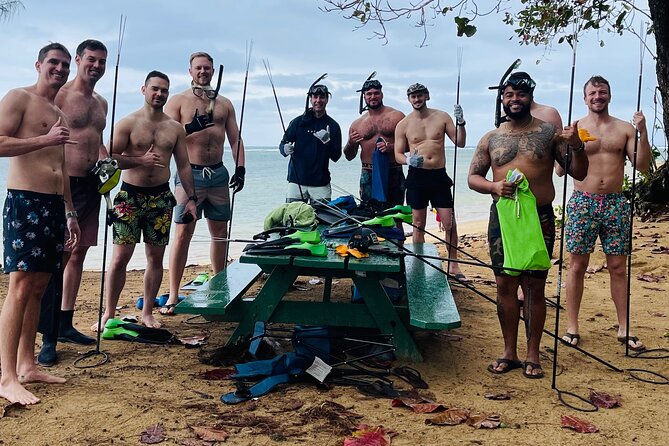
This is not a standard snorkeling trip with a spear added at the last minute. The first part is a proper beginner class, followed by guided practice in the sea. You learn why fish behave as they do, how to hold the equipment safely, and how to make responsible choices around marine life.
The activity begins at Anini Beach, on Kauai’s north shore. The meeting point is 4241 Anini Road, and the scheduled start is 9:30 a.m. You arrange your own transportation, so plan extra time to find the meeting spot and get ready. The activity ends back where it starts.
The group limit of six matters. A guide can give more attention to a small group, though you should still expect some space between participants once you begin looking for fish. One account described people spreading out by 50 to 100 yards, so stay alert, keep track of the group, and follow the guide’s instructions.
A few more Kauai mornings worth comparing
- Corner Store Kauai Cooking Class
★ 5.0 · 18 reviews - Private Chef, Catering and Cooking Classes
★ 5.0 · 7 reviews - Outrageous Surf ScHool Lesson on Lahaina Side
★ 4.5 · 547 reviews
The 45-minute beach class builds the right habits
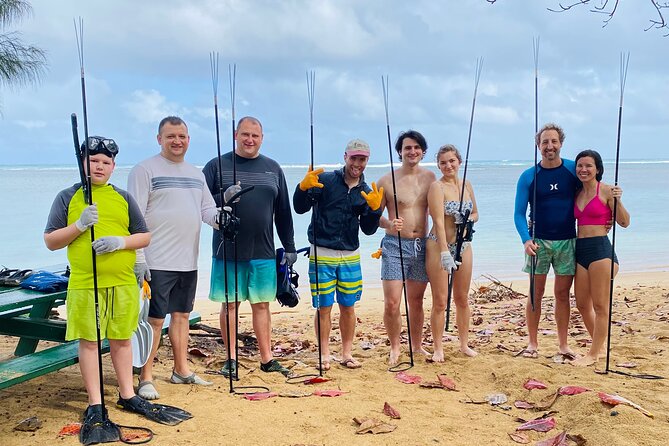
The onshore master class is the foundation of the experience. Your guide covers gear safety, basic spearfishing technique, reef etiquette, and fish identification. You also learn to tell native fish from invasive species, an important distinction in an activity where you are making choices about what to pursue.
The equipment includes snorkeling gear and a traditional three-prong spear. Fins are the clear exception. You must bring your own, and the quality of those fins can affect how comfortable you feel once you move away from shore.
This is also the time to ask practical questions. Make sure you understand how the spear works, how to carry it safely, how to handle a fish, and where to stay in relation to your guide. Guides including Aidden, Christian, and Tui have been praised for patient instruction and for helping first-time participants feel more at ease.
The lesson does not make spearfishing look effortless. Several people found that it took time and trial and error to get used to aiming, holding the spear under tension, and waiting for a fish to move into position. One important detail is that the spear works much like a slingshot. Holding it ready with one arm can tire your dominant arm sooner than expected.
Reaching the reef takes real effort
After the class, you suit up and head into the water for roughly two hours. The fish are often better farther out on the reef, so the guide may lead you a substantial distance from shore. One participant compared the swim to about three football fields before the group began fishing.
That distance is why the swimming requirement matters. You should already be comfortable snorkeling and moving through water with some current resistance. This is not the place to learn how to use a mask for the first time.
Water depth can vary, but one account described the deepest area as about five feet. That may sound reassuring, yet shallow water does not remove the need for stamina. You still need to swim out, hold your equipment, watch the bottom, and move back to shore. Conditions and tide timing also affect the outing. Low tide can make the route in and out more awkward and may increase the chance of scraping yourself on the reef.
Good fins are worth bringing if you have them. Basic fins may work, but stronger dive fins can make it easier to manage current and conserve energy. Practice snorkeling before your scheduled morning if you have not been in the water recently.
The reef gives you more than a chance at dinner
Once you reach the fishing area, the lesson becomes a quiet game of patience. You look for fish, judge distance, control your movement, and decide when to take a shot. The guide helps you identify what you are seeing and points out areas where you have a better chance of finding fish.
Even if you miss every shot, the reef can make the trip worthwhile. Participants have seen sea turtles, eels, manta rays, sea cucumbers, large fish, and many smaller reef species. After rain, visibility or fish activity may change, so conditions can affect the fishing result without ruining the snorkeling.
The guide may demonstrate the technique by catching a fish. Aidden has been described as catching one very quickly during a demonstration, while also explaining that his own early attempts took much longer. That is a useful lesson for beginners: a skilled local guide can make the activity look simple, but you should not use the guide’s success as your expected result.
Your guide may also spread the group across the reef so each person has room to watch and aim. That gives you a better chance to focus, but it can feel less social than a group snorkeling excursion. Keep aware of the guide and your companions rather than becoming fixed on one fish.
Same island, a completely different kind of day:
- Koloa Zipline in Kauai
★ 5.0 · 6,764 reviews - Kauai Deluxe Sightseeing Flight
★ 5.0 · 2,162 reviews - Kauai Eco Adventure Helicopter Tour
★ 5.0 · 2,032 reviews - Kauai Airplane Tour: Na Pali Coast, Waterfalls & Window Seats
★ 5.0 · 1,964 reviews
Catching a fish is possible, but not promised
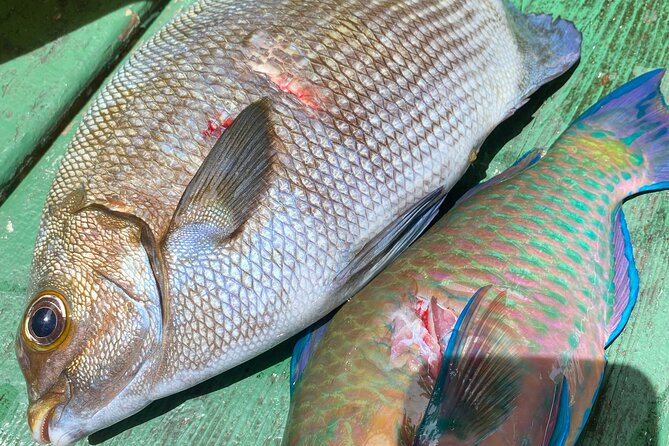
The possibility of taking home a catch adds purpose to the activity. If you land a fish, the guide will bag it, and some guides have cleaned or processed fish and offered cooking suggestions. Several people prepared their catch at home later, including one family that turned it into a meal that evening.
Still, the experience is not sold as a catch-and-cook trip. The focus is instruction and sustainable practice. Some participants go home with fish, while others make good shots but catch nothing. That difference is normal, and you should book this as a lesson with a fishing opportunity, not as a guaranteed source of dinner.
Responsible practice is one of the stronger reasons to choose a guided outing. You learn which fish to recognize and how to behave around the reef rather than simply firing at anything that moves. The guide can also help you judge whether a fish is an appropriate size. One practical rule shared during the activity is to take only a fish larger than your open hand in the familiar shaka shape.
The final 15 minutes are set aside for team photographs and questions. If you caught a fish, this is also when the guide can help with the handoff. It gives you a chance to review what you saw and ask about equipment, fish species, or how to continue learning.
What the $125 price covers
At $125 per person, the price is reasonable if you want instruction, equipment, and guided time in the water rather than a quick rental. You get the shore class, snorkeling equipment except fins, a traditional three-prong spear, and the guided reef session. The small maximum group size also adds value.
The price does not include several items you need to budget for:
- Hawaii recreational ocean fishing license: $20 for nonresidents, valid for 24 hours
- Your own fins
- Transportation to and from Anini Beach
- Sunscreen
- Water and snacks
The license is not optional for out-of-state participants. Get it through the Hawaii Department of Land and Natural Resources website before the activity. Bring your license information with you so the morning does not begin with a scramble.
You should also bring drinking water, a snack, sunscreen, and sun-protective clothing. One participant specifically wished they had used more sunscreen and protective clothing. The activity can be physically demanding, and a long morning in the sun makes hydration especially important.
The guides make a big difference
The guide is central to the experience. Aidden has been praised for being friendly, patient, and clear with beginners. Christian has been described as careful about choosing safe areas and giving families enough time to learn. Tui has been noted for taking extra care with a nervous first-time snorkeler.
Those details matter because the activity can feel intimidating at first. You are learning a new tool while trying to breathe through a mask, watch the reef, and control your body in moving water. A guide who stays available, explains the process, and adjusts to the group can make the difference between a satisfying challenge and an exhausting morning.
The guide’s role is not limited to fish spotting. You also rely on that person for safety judgment, reef awareness, and direction about where to move. One solo participant felt the instructor was not present enough during part of the outing, and the operator acknowledged the concern. That suggests you should speak up if you need more direct help or want the guide to stay closer.
Who will enjoy it most
This activity suits you if you already enjoy snorkeling and want a more active way to experience Kauai’s reef. It is a good choice for adventurous couples, families with older teens, solo participants, and anyone curious about a traditional Hawaiian ocean skill.
It can also work for people who have never spearfished. You do not need prior experience with the spear, and the class is designed for beginners. You do need a solid comfort level in the water before arriving.
Think twice if you tire easily, dislike swimming away from shore, or want a relaxed float with little instruction. The swim to the outer reef, current resistance, arm fatigue, and long time in the water can be demanding. A participant who was in only mediocre physical shape still managed the full session, but that person also had plenty of experience in the ocean.
Families should set expectations carefully. Some children and teens may love the challenge, while others may find the distance and concentration tiring. The guide can make the outing safer and easier to understand, but no instructor can remove the physical work involved.
Timing, weather, and cancellation details
The activity starts at 9:30 a.m. and lasts about three hours, including the class, water session, photographs, and questions. The water portion may run around 90 to 120 minutes, depending on conditions and the flow of the outing.
Tide timing deserves attention. Low tide may make the route out and back more difficult, and reef entry can be less comfortable. Weather also matters. If poor conditions force a cancellation, you can choose another date or receive a full refund.
You can cancel for a full refund up to 24 hours before the start time. Changes or cancellations made inside that 24-hour window are not accepted for a refund. The activity also requires a minimum number of participants, so a cancellation for that reason brings the option of another date, another experience, or a full refund.
Should you book this Anini Beach experience?
Book it if you want to learn a real skill, already feel comfortable snorkeling, and can accept that the fish may get away. You will receive more than a standard reef tour: instruction in fish identification, responsible practices, spear handling, and the patience needed to hunt underwater.
Skip it if you want guaranteed seafood, an easy swim, or a casual activity that requires little effort. Bring strong fins, prepare for current, get the fishing license ahead of time, and treat the catch as a bonus. For the right participant, this is one of Kauai’s more personal ways to meet the reef, with turtles and other sea life making the morning worthwhile even when the spear comes back empty.
FAQ
Where does the spearfishing lesson begin?
Meet at 4241 Anini Road, Kilauea, Hawaii 96754. The activity also ends back at this meeting point.
What time does the activity start?
The scheduled start time is 9:30 a.m.
How long does the lesson last?
The full experience lasts about three hours. This includes a 45-minute shore class, roughly two hours in the water, and about 15 minutes for photos and questions.
Do I need previous spearfishing experience?
No. The activity is designed for beginners and includes instruction in spear handling, gear safety, fish identification, and responsible practices.
Do I need to know how to swim and snorkel?
Yes. You must have a strong level of physical fitness and be proficient in swimming and snorkeling.
Are fins provided?
No. Snorkeling equipment is included except for fins, so you must bring your own.
Is a fishing license required?
Yes. Hawaii requires out-of-state residents to have a recreational ocean fishing license. The 24-hour license costs $20 and can be obtained through the Hawaii Department of Land and Natural Resources website.
Is the fish catch guaranteed?
No. You may catch a fish, but the activity focuses on learning and sustainable practices. You can still see reef fish, turtles, eels, manta rays, and other marine life if you do not catch anything.
What should I bring?
Bring your own fins, water, snacks, sunscreen, and the required Hawaii fishing license. Transportation to and from the meeting point is also your responsibility.
How many people can join the activity?
The maximum group size is six participants.
What happens if the weather is poor?
If the activity is canceled because of poor weather, you will be offered another date or a full refund.
What is the cancellation policy?
You can cancel at least 24 hours before the start time for a full refund. Cancellations or changes made less than 24 hours before the start time are not accepted for a refund.
Just added around Kauai
- Small Group Waterfall Rappel in Lihue, Kauai★ 5.0 · 187 reviews
- Waimea Historical and Cultural Shared Tour★ 4.5 · 5 reviews
- Waimea Canyon & Na Pali Driving Tour app★ 4.5 · 116 reviews
- Kauai Island Private Guided Tour-Waimea Canyon from Lihue/Kapaa★ 5.0 · 17 reviews
- Kauai Island Private Guided Tour-Waimea Canyon from Poipu/Koloa★ 5.0 · 9 reviews
- Kauai Island Private Guided Tour-Waimea Canyon from Princeville★ 5.0 · 3 reviews
- Wailua River Paddle★ 4.5 · 73 reviews
- Kauai Wailua Valley & Waterfalls Audio Driving Tour★ 4.5 · 23 reviews
Workshops, compared.
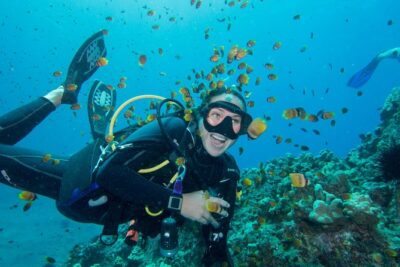
Maui Scuba Diving Introductory Lesson from Lahaina
Read our review →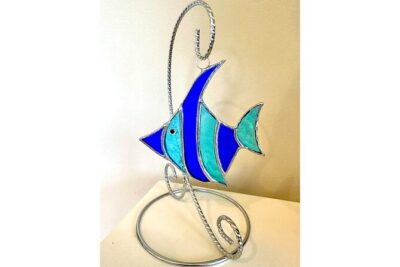
Fun and Creative Stained Glass Class and Workshop
Read our review →
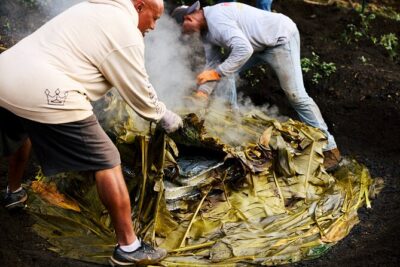
Hands-On Hawaiian Imu Cooking and Cultural Dining Experience
Read our review →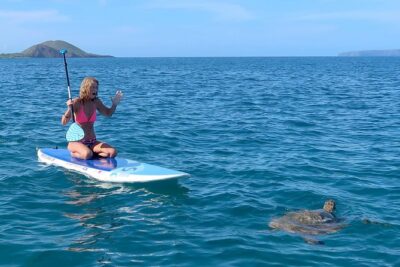
Private Beginner Paddleboard 101 Lesson: Makena Landing!
Read our review →

Browse the lists this tour appears in