
Reviewed · VOLCANO TOURS
Hilo: Hawaii Volcanoes National Park Flight
The most striking part of this Hilo helicopter ride is the sudden change from black lava and volcanic craters to thick jungle and waterfalls. In one hour, you fly from Hilo toward Hawaii Volcanoes National Park and see parts of the Big Island that are difficult, or impossible, to connect from the ground.
I like the small group of up to six and the strong focus on safety. I also like that the pilots do more than point out scenery. Andrew, Sam, Matt, and Drew are praised for clear explanations of the island’s geology, history, and volcanoes. The main drawback is simple: weather may hide specific sights, and this is a costly experience at $379 per person.
Key points to know
- Kilauea from above: Look into the broad caldera and see how volcanic activity has reshaped the island.
- Pu‘u ‘Ō‘ō: This volcanic cone gives you a clear sense of the scale and force of the East Rift Zone.
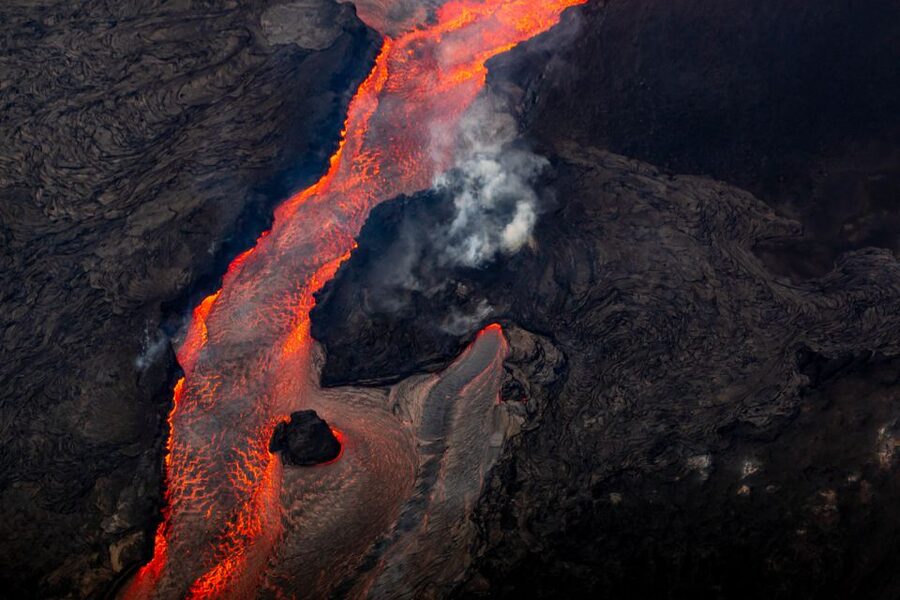
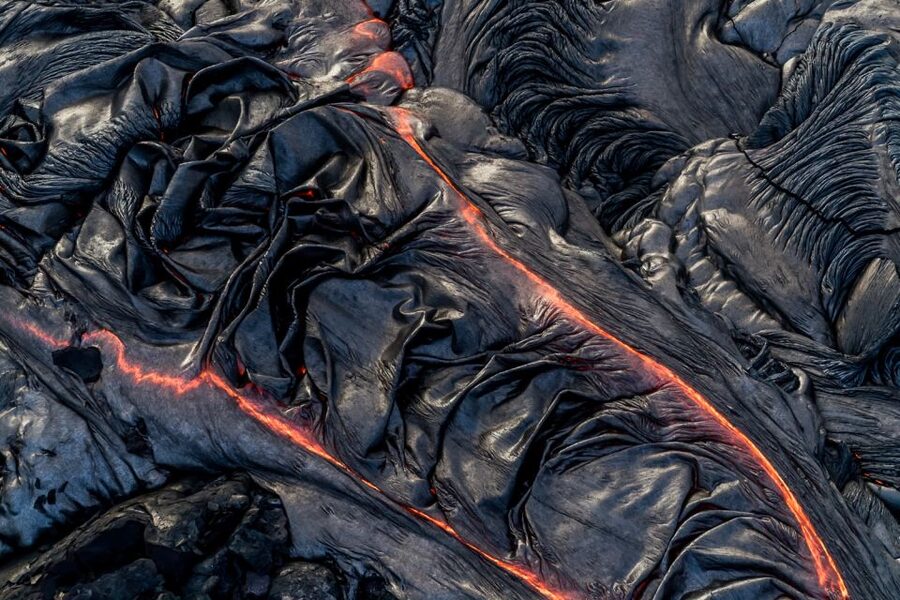
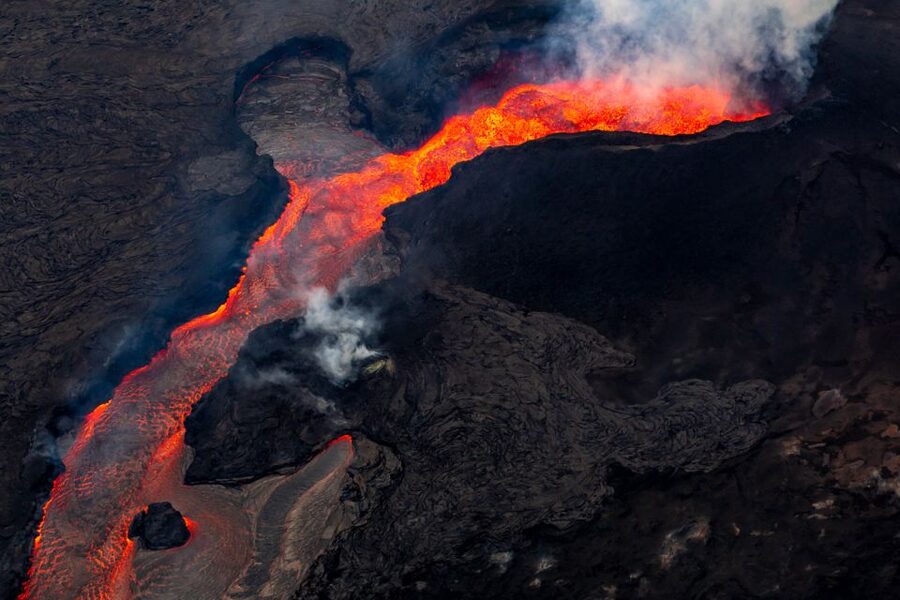
- Old and new lava fields: The flight shows both cooled ground and areas still being formed.
- Waterfalls and jungle pools: The volcanic scenery gives way to dark-blue pools and dense greenery.
- Mauna Kea and Mauna Loa: These huge volcanoes may appear in the distance when conditions are clear.
- Weather controls the route: The tour promises access to the area, not a guaranteed view of every listed site.
From Hilo to Hawaii Volcanoes National Park
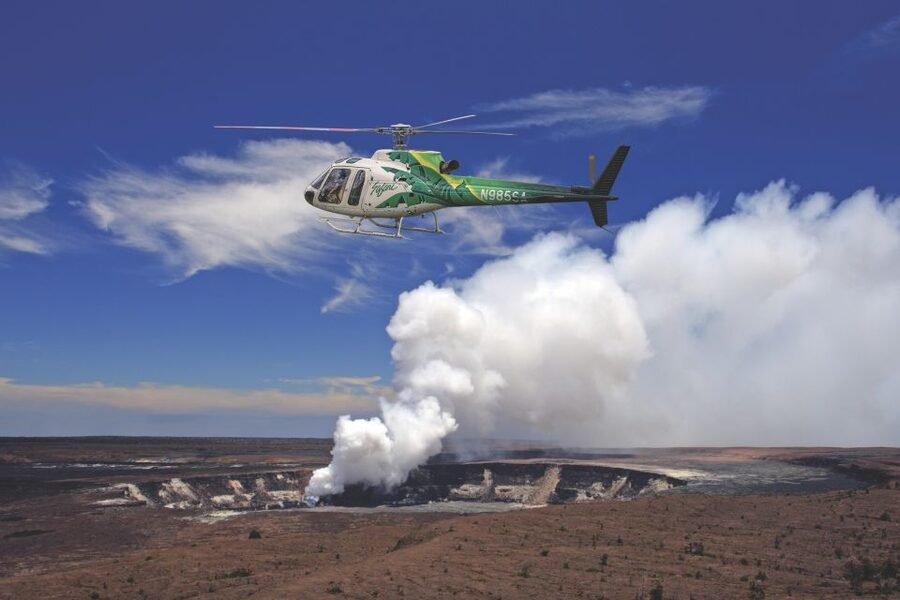
You meet at the Safari Helicopters office at 2220 Kekuanaoa Street in Hilo. The flight lasts one hour, so the experience is compact and focused rather than an all-day outing.
That short duration works well if you are building a larger Big Island itinerary. You can see a great deal without spending most of a day on the road. It also means the flight moves at a brisk pace. You will not linger over each feature, and your best photographs may come during brief passes.
The aircraft carries no more than six participants. That matters because a small cabin usually gives you a better chance of seeing out without a large crowd around you. Your exact seat can affect your views, so ask the staff about seating if photography is important to you. One person specifically praised having an excellent position in the helicopter, while another noted that the ground crew kept the process safe and well organized.
You fly directly toward Hawaii Volcanoes National Park. From the air, the route turns the Big Island into a lesson in cause and effect. Dark volcanic rock, crater rims, forest, and waterfalls are not separate attractions here. They are parts of one active natural system.
More volcano and lava-country days:
- Big Island: Volcanoes, Waterfalls, & Coffee Farm Day-Trip
★ 4.9 · 414 reviews - Volcano Adventure: Hilo Sightseeing w/ Optional Helicopter Tour
★ 4.5 · 412 reviews - Hilo Shore Excursion: Active Volcano, Lava Tube, Waterfall and Gardens
★ 5.0 · 393 reviews
Seeing Kilauea’s caldera from the air
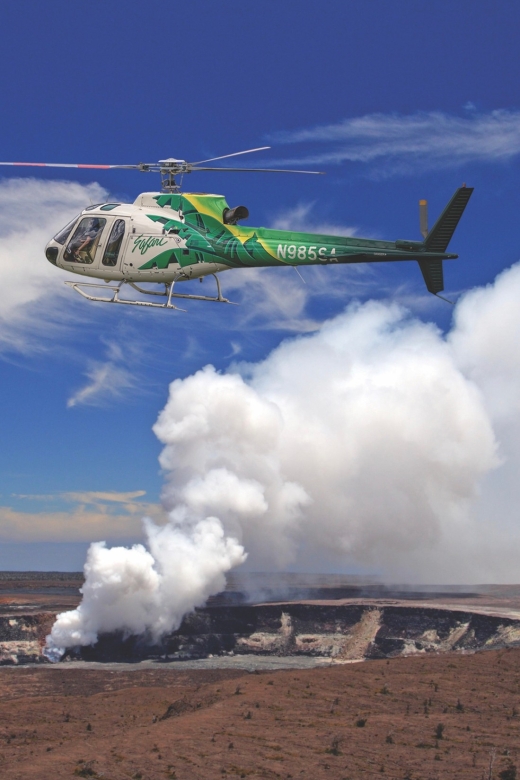
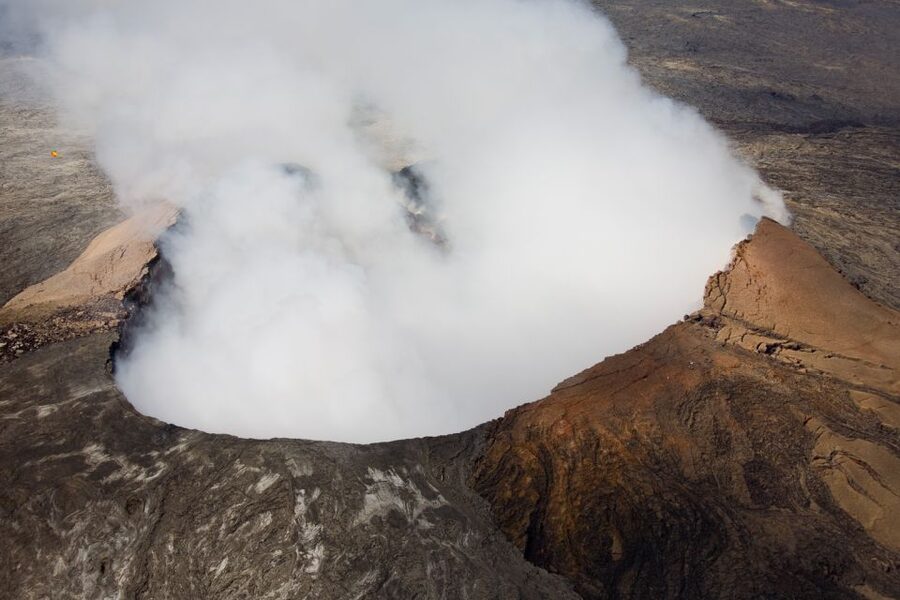
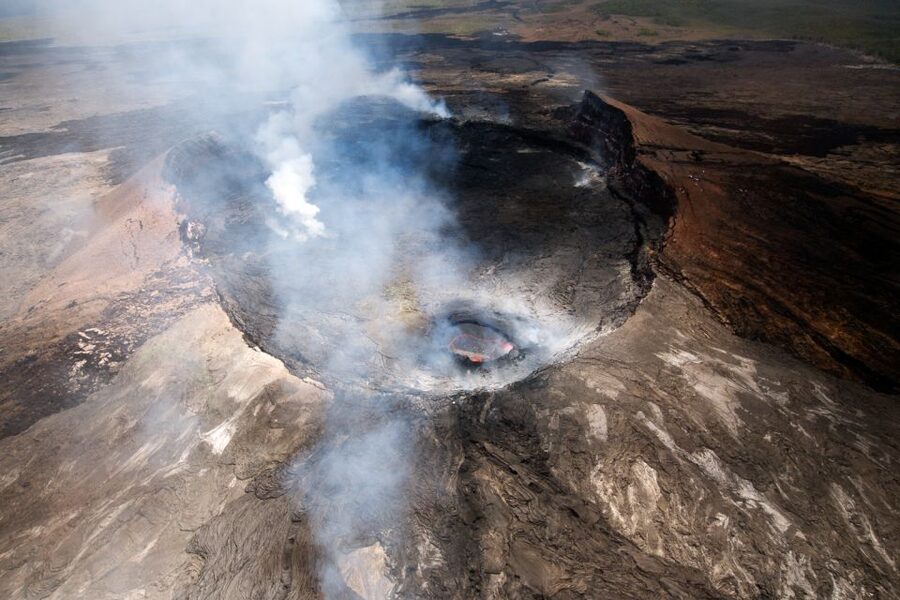
Kilauea is the centerpiece of the flight. From above, the caldera gives you a much wider sense of the volcano than you get from a roadside viewpoint or walking trail.
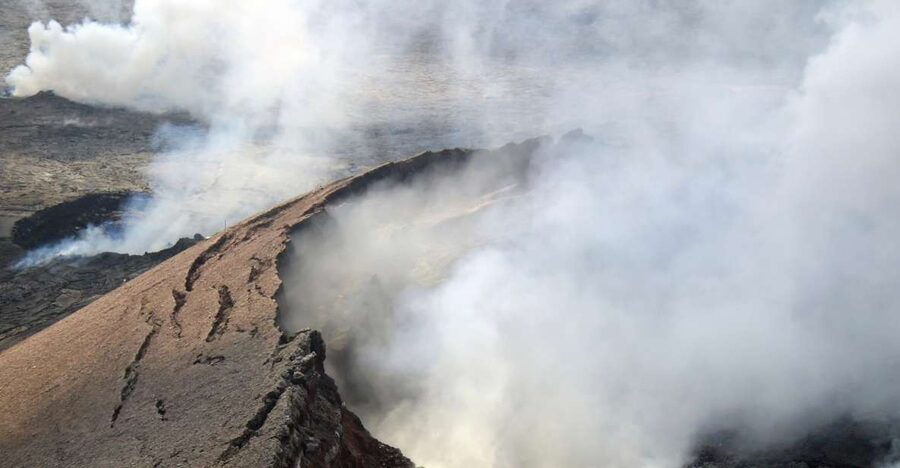
The scale is the key. A crater can look like a simple hollow from the ground. From a helicopter, the broad opening and surrounding volcanic ground show how much material has shifted over time. Your pilot provides commentary in English, and the strongest part of the experience is the link between what you see and how it formed.
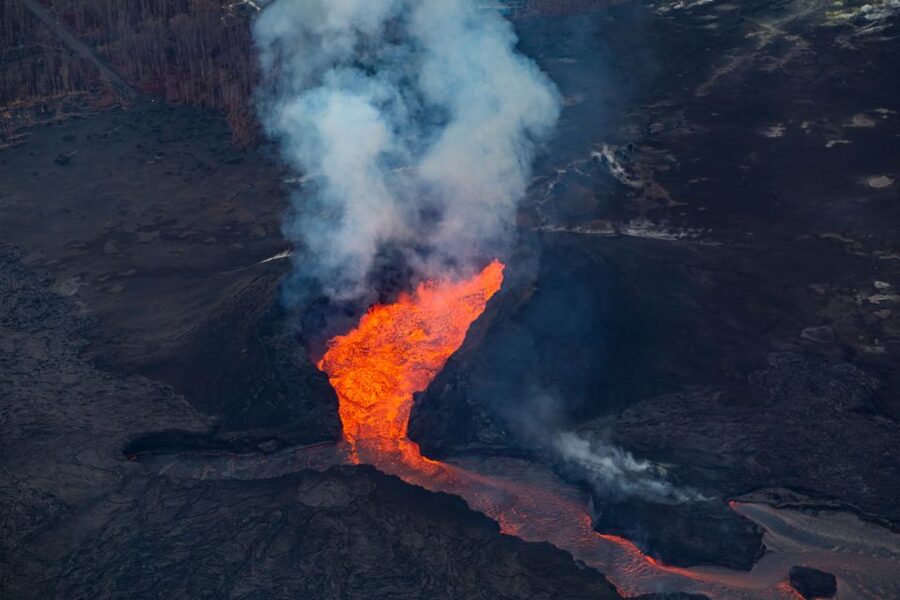
Do not expect a guaranteed glowing lava lake or a particular eruption scene. The supplied information promises views of the caldera, lava fields, and changing volcanic ground, but it does not promise active lava at a precise location. Volcanic conditions change, and weather can block specific areas.
That uncertainty is part of the nature of this tour. The Big Island is not a fixed exhibit. The pilot may adjust the route if conditions change. One passenger described a pilot moving the planned route toward better weather, which led to improved views and photographs. That flexibility is useful, but it also means your flight may not match another departure exactly.
Pu‘u ‘Ō‘ō and the volcanic East Rift Zone
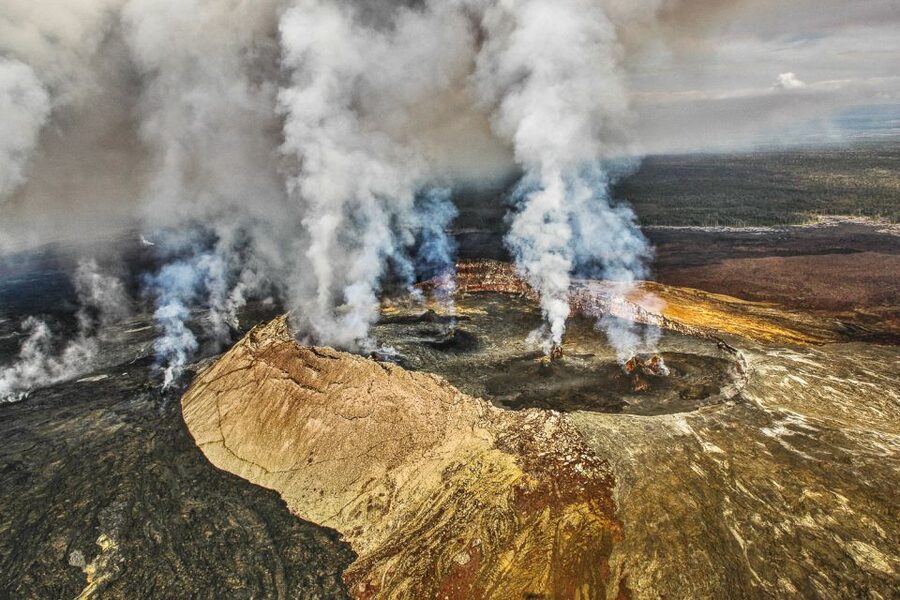
Pu‘u ‘Ō‘ō is one of the most interesting names on the route because it is not simply a scenic cone. It represents the force of the Big Island’s volcanic activity and helps you understand how new ground has been built.
From the helicopter, the cone gives you a strong visual marker amid the surrounding lava. You can compare its shape with older volcanic areas and see how the land changes from one section to the next. This is one place where a pilot’s explanation adds real value. Without context, volcanic rock can look like a broad field of dark stone. With a clear explanation, you begin to read the forms.
The flight also passes over old lava fields and newer areas that are forming. That contrast is more useful than seeing one dramatic crater alone. You get a view of time in layers: older surfaces, fresh-looking flows, forest reclaiming the ground, and places where the volcanic process continues.
The exact route is weather dependent. Cloud, wind, or poor visibility may limit the view of Pu‘u ‘Ō‘ō or change how long the aircraft can remain near a site. If this cone is your main reason for booking, ask about current conditions before departure and keep your expectations flexible.
Black sand beaches and lava reaching the sea
The route includes black sand beaches where lava once flowed into the ocean. This is an important Big Island scene because it shows what happens when molten rock meets water and later breaks down into sand.
From the air, the dark shoreline gives you a clear contrast with the sea. It also helps connect the inland volcano with the coast. The lava is not only a feature around a crater. It has reached the ocean, changed the shoreline, and created new coastal surfaces.
You will see this from above rather than stop on the beach. That is both a benefit and a limitation. The helicopter gives you a broad view of the coast and the route taken by old lava, but you do not get time to walk on the sand or examine the rock at ground level.
I like this portion because it makes the island feel active and unfinished. You see a place shaped by forces that are still part of the Big Island’s story, rather than a scene that has been arranged for sightseeing.
More national park days around Hilo:
- Hawaii Volcanoes National Park and Hilo Highlights Small Group Tour
★ 5.0 · 260 reviews - Big Island: Hawaii Volcanoes National Park and Hilo Tour
★ 5.0 · 118 reviews - From Hilo: Hawaii Volcanoes National Park Tour
★ 4.9 · 70 reviews - Hilo Shore Excursion: Volcanoes National Park & Black Sand Beach
★ 4.5 · 2,338 reviews
Waterfalls, blue pools, and dense jungle
The volcanic section is only half the visual story. At some point, the dark ground gives way to thick jungle, waterfalls, and deep-blue pools.
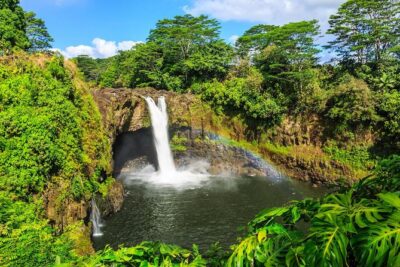
This change can be surprisingly sharp. One moment you are looking at craters and lava. Then green forest fills the view, with water cutting through it. From above, waterfalls can appear as narrow white lines dropping into shaded pools. The helicopter gives you a view of the relationship between steep terrain, heavy vegetation, and flowing water.
The tour description includes flying over waterfalls, but a separate comment indicates that a waterfall view or visit was not guaranteed on one departure. Treat this part as weather and route dependent. You are booking an aerial tour, not a landing and walking visit to a waterfall.
That distinction matters when comparing this flight with a ground excursion. You may get a fine overhead view, but you will not explore a waterfall on foot. If your priority is a long waterfall stop, this is not the right product. If you want to see how water cuts through the jungle from above, it can be a memorable part of the hour.
Mauna Kea and Mauna Loa in the distance
The flight also offers views toward Mauna Kea and Mauna Loa. These are not quick decorative additions. They help explain the size of the Big Island and the way several major volcanic mountains occupy the same island.
Mauna Kea and Mauna Loa can appear as distant, massive forms beyond the nearer volcanic features. Clear weather is essential, so cloud or haze may reduce the view. Still, when both are visible, the scale of the island becomes easier to grasp.
This is also where the flight provides something a road trip cannot always deliver. On the ground, you often experience one district at a time. In the air, you can connect Hilo, the national park, the volcanic zones, the coast, and the large mountains in one sweeping route.
The pilot’s commentary is important here. Several pilots, including Andrew and Sam, are praised for explaining the island’s geology and history while flying. A good narration helps you understand why one mountain looks different from another and how the volcanoes relate to the scenery below.
What the pilot and ground crew add
The aircraft and scenery get the attention, but the people running the tour shape the experience. You should expect an English-speaking live guide, usually the pilot, to provide information during the flight.
Andrew is praised for being skilled and informative. Sam is singled out for friendly, strong explanations of the island and volcanoes. Matt is noted for sharing interesting facts throughout the trip, and Drew is associated with a reassuring flight experience. The specific pilot on your departure may be different.
The comments about the ground staff are just as useful. They point to patient scheduling help, clear safety information, and a professional approach from check-in through return. That matters on a helicopter ride because you want the staff to take weight, seating, weather, and aircraft procedures seriously.
Do not treat the trip as a silent scenic flight. The commentary is part of the value. You are not only looking down at lava and forest. You are learning how the island was shaped and why its features look so different from one another.
Is $379 a fair price for one hour?
At $379 per person, this is a major vacation expense. I would not call it a casual add-on. The value depends on how much you care about seeing the Big Island from a viewpoint that roads and trails cannot provide.
The price includes the helicopter tour, with no separate park admission or ground transport listed. You get one hour in the air and a small group limited to six people. That is a better setup for personal viewing than a large sightseeing aircraft, but the flight remains brief.
I see the price as reasonable for someone who wants a broad aerial understanding of Hawaii Volcanoes National Park and the surrounding island. You can see Kilauea, Pu‘u ‘Ō‘ō, old and new lava areas, coastal formations, jungle waterfalls, Mauna Kea, and Mauna Loa in a single outing. Reproducing that route by car would take far longer, and some views would not be possible from roads.
The value is weaker if you want a guaranteed lava flow, a long stop at a waterfall, or a specific photograph. Weather can change the route, and the tour does not promise every listed feature on every flight.
I would also compare the helicopter price with the rest of your Big Island budget. If this flight would force you to cut a major land experience, think carefully. If you already plan to spend time in the park and want one high-level view to connect everything, the cost makes more sense.
Who should book this Hilo flight?
This tour suits you if you want to understand the Big Island’s scale and geology quickly. It is especially useful for a first visit, when you may not yet know how the coast, volcanoes, forests, and mountains fit together.
It also suits photographers who can work quickly and accept changing light and weather. You should be ready to photograph through the helicopter windows and accept that the best view may be brief.
The flight is not a good match for people afraid of heights, people with vertigo, people with claustrophobia, or people prone to motion sickness. It is also not suitable for children under two, pregnant women, or passengers unable to sit upright. People with a cold are excluded as well.
Weight rules are strict. Anyone weighing 250 pounds or more must purchase an additional seat because of aircraft balance and safety. Two people who each weigh less than 250 pounds but together weigh 420 pounds or more must also purchase an additional seat. The information also lists people over 250 pounds as not suitable, so contact Safari Helicopters before booking if this applies to you and ask how the policy will be handled.
Bring a passport or other identification and a credit card. The booking allows cancellation up to 24 hours before departure for a full refund, and you can reserve now and pay later. Those terms are useful because weather can affect the experience.
How to make the most of the hour
Check the forecast before you leave for the office, but do not assume a cloudy morning means the flight is pointless. Conditions can differ around the island, and the pilot may adjust the route to find clearer views.
Listen closely to the safety briefing and the commentary. The names of volcanic cones and lava areas can blur together if you are only looking for dramatic scenery. The explanations give shape to what you are seeing.
Keep your expectations centered on the full route. You may get an outstanding view of Kilauea but limited waterfalls. Another departure may have excellent jungle scenery and less visibility near Mauna Kea. The tour is strongest when you value the changing conditions as part of the experience.
You should also leave room in your day for schedule changes. The flight itself is one hour, but the operation may need to respond to weather and aircraft conditions. The staff are described as patient with scheduling, but a helicopter tour should not be placed immediately before a nonrefundable, time-sensitive activity.
Should you book Safari Helicopters?
I would book this tour if you want a compact, well-explained aerial view of Hawaii Volcanoes National Park and accept that nature controls the show. The combination of Kilauea, Pu‘u ‘Ō‘ō, lava fields, black sand coast, jungle waterfalls, Mauna Kea, and Mauna Loa offers far more than a simple flight over one crater.
I would skip it if $379 feels uncomfortable, if you need a guaranteed waterfall or lava sighting, or if you are uneasy in a small aircraft. For the right person, though, the small group, flexible routing, safety-minded staff, and pilots such as Andrew, Sam, Matt, and Drew make this a strong way to see the Big Island’s volcanic story from above.
FAQ
Where does the helicopter tour begin?
You meet at the Safari Helicopters office at 2220 Kekuanaoa Street in Hilo.
How long does the flight last?
The helicopter tour lasts one hour.
What places can I see from the helicopter?
The route includes Hawaii Volcanoes National Park, Kilauea, Pu‘u ‘Ō‘ō, Mauna Kea, Mauna Loa, black sand beaches, old and new lava fields, and jungle waterfalls. Specific sites depend on weather.
How many people are in the helicopter?
The tour is a small-group experience limited to six participants.
What identification should I bring?
Bring a passport or ID card and a credit card.
Can I cancel the booking?
Yes. You can cancel up to 24 hours in advance for a full refund. You can also reserve the tour and pay later.
Just added around Hilo
- Hilo: Waterfall Hike and Swim with Native Hawaiian★ 4.9 · 8 reviews
- Hilo: Walking Ghost Tour★ 4.7 · 8 reviews
- Hilo: Kilauea Fissure 8 Hiking, Volcanoes and Waterfalls★ 4.7 · 3 reviews
- Hilo: Elite Volcano Hike★ 4.8 · 8 reviews
- Hilo: Discover Hilo Helicopter Tour★ 4.1 · 35 reviews
- Hawaii: All-Inclusive Volcanoes and Waterfalls Private Tour★ 5.0 · 3 reviews
- From Big island-Volcanoes & waterfall tour in a small group★ 3.8 · 4 reviews
- From Hilo: Hawaii Volcanoes National Park Tour★ 4.9 · 70 reviews
Volcano Tours, compared.
Big Island in a Day: Volcanoes Waterfalls Sightseeing and History
Read our review →
Hilo Shore Excursion: Volcanoes National Park & Black Sand Beach
Read our review →
Small Group Big Island Twilight Volcano and Stargazing Tour
Read our review →
Big Island Highlights: Coffee, Volcano, Black Sands & Waterfall
Read our review →
Deluxe Volcano Experience with Restaurant Dinner
Read our review →
Captain Cook Snorkel Tour with Sea Caves and Lava Tubes
Read our review →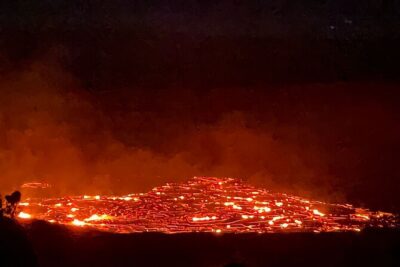
Fat Tire E-Bike Tour through Volcanoes National Park
Read our review →Browse the lists this tour appears in