
Reviewed · HISTORICAL TOURS
History & Culture Tour in Honolulu via Segway
Honolulu’s past covers a surprising amount of ground, from missionary homes and royal palaces to Chinatown markets and the harbor. This small-group Segway tour lets you cover that ground without spending the morning on foot, with a guide talking you through the people and events that shaped modern Hawaii.
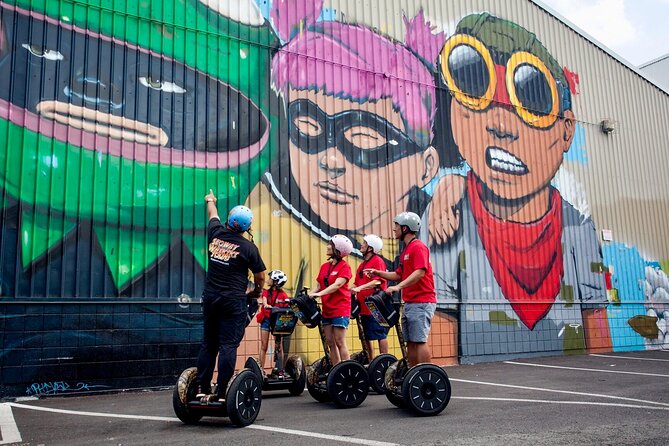
I like the two-way headsets, which let you hear the guide while riding in a line, and the small maximum of eight people, which makes it easier to ask questions. I also like the route’s range: this is not only a palace tour, but a broad look at downtown Honolulu, the waterfront, and Kakaʻako.
The main consideration is the price: $254.14 per person is a serious spend for two and a half hours. You also need to reach Kakaʻako, unless you pay an additional $20 per person for round-trip transport from Waikiki.
Key points to know before booking
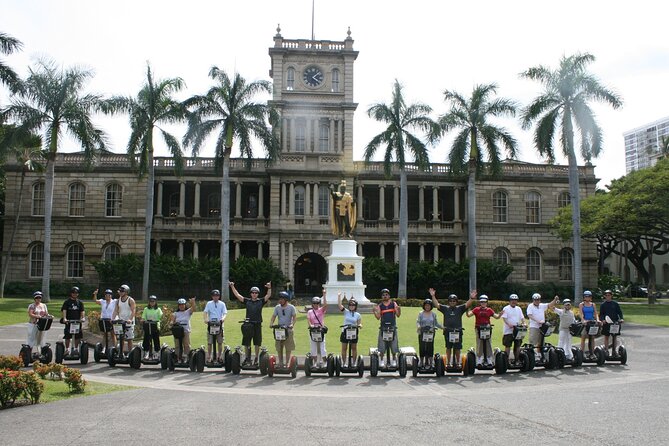
- Small groups of up to eight: You get more direct help and a better chance to ask about Hawaii’s past.
- A full downtown route: The ride links the Mission Houses, Kawaiahaʻo Church, Iolani Palace, Chinatown, Bishop Street, Aloha Tower, and Kakaʻako.
- Headsets make the history easier to follow: You can hear the guide while moving between stops.
- Good for first-time riders: Guides help new riders get comfortable, and the tour moves at a manageable pace.
- Waikiki pickup costs extra: Round-trip transport to the Kakaʻako meeting point is $20 per person.
- A useful alternative to walking: You see more of Honolulu while saving your feet for the rest of your day.
Why a Segway works well for Honolulu history
A walking tour of downtown Honolulu can feel scattered. Important sites sit along busy streets, and the distance between the royal district, Chinatown, the harbor, and Kakaʻako is enough to limit how much you can cover on foot.
The Segway solves that problem. You glide between stops instead of waiting for a vehicle or walking long blocks under the sun. That gives the guide time to connect the places into one story: Hawaii as an independent kingdom, the arrival of missionaries, the overthrow of the Hawaiian government, the growth of Honolulu’s commercial center, and the city’s changing waterfront.
I would choose this format if I wanted a history lesson but did not want to spend two or three hours listening from one fixed spot. The ride keeps the morning active, and the route includes plenty of places where you can stop for photographs.
You do not need prior Segway experience according to the information provided for the tour, and first-time riders have found the instruction approachable. Still, you should be comfortable following directions, maintaining control, and riding in a group. The guides use colorful helmets, two-way radio headsets, and direct instruction to keep the group together.
More historic sites around Honolulu:
- Oahu: Mauka Warriors Luau Honoring Polynesia’s Forgotten History
★ 5.0 · 3,013 reviews - Pearl Harbor with USS Arizona and Hawaiian Kingdom History Tour
★ 4.5 · 184 reviews - Pearl Harbor [Early Access], USS Arizona & Historic Honolulu Tour
★ 4.5 · 87 reviews
Starting in Kakaʻako at 9:00 am
The tour begins at Segway of Hawaii’s Kakaʻako location in the StoreKeeer Building at 1687 Kalauokalani Way. It starts at 9:00 am and returns to the same place after roughly two hours and 30 minutes.
Kakaʻako is outside the central Waikiki hotel zone, so plan this part before booking. Four pickup locations in Waikiki are available for an extra $20 per person round trip, but you need to contact the operator to arrange the ride. Public transportation is also nearby.
Starting in Kakaʻako gives the tour a practical shape. You head into old Honolulu first, then work back toward the ocean and finish near the starting area. That avoids wasting time returning across the city by car.
Bring a little patience for the opening instructions. A first ride can feel strange for a few minutes, especially if you have never used a Segway. The payoff comes once you are comfortable with the controls and can pay attention to the buildings, statues, and shoreline instead of your feet.
Mission Houses and Kawaiahaʻo Church
The first major stop is the Mission Houses, a group of plain buildings built in 1820 by Hawaii’s first missionaries. Their simple appearance is part of the point. They offer a look at an early Honolulu that feels very different from today’s resort image.
Next door is Kawaiahaʻo Church, also built in 1820. The church graveyard is important because it contains the burials of former Hawaiian aliʻi, or royalty. This is one of the places where the tour’s cultural focus becomes clear. You are not only seeing an old structure, but also a site tied to the political and religious life of the Hawaiian kingdom.
Across King Street, Honolulu Hale adds a civic note to the opening section. The city hall helps show how the area shifted from royal and missionary Honolulu into the administrative center of the modern city.
This portion may appeal most to people who want context rather than a quick photo stop. The tradeoff is that you will see the sites from the outside or as part of a guided route rather than spending hours inside each museum or church.
King Kamehameha’s statue and Hawaii’s government
The route then reaches the gold-covered statue of King Kamehameha, one of three such statues in the world. It sits in front of the Hawaii State Supreme Court building, a location with its own political weight because the building once served as the seat of Hawaii’s government when Hawaii was a nation.
The pairing is useful. The statue points to the unification of the Hawaiian Islands under Kamehameha, while the government building points to the later development of Hawaii’s legal and political institutions.
Your guide can add meaning that a photograph alone cannot provide. This is where a small group helps. You can ask about the king, the symbolism of the statue, or the way Hawaii’s government changed over time without holding up a large crowd.
A few more Honolulu mornings worth comparing
- Oahu Grand Circle Island and Haleiwa Tour: 9-Hr Deluxe Experience
★ 5.0 · 17,387 reviews - Oahu: Grand Tour Around Island 16 Locations plus Snorkeling
★ 5.0 · 8,669 reviews - Salute to Pearl Harbor Including USS Arizona
★ 4.5 · 7,433 reviews - Majestic Circle Island Tour with Lunch
★ 5.0 · 7,014 reviews
Iolani Palace and Queen Liliʻuokalani
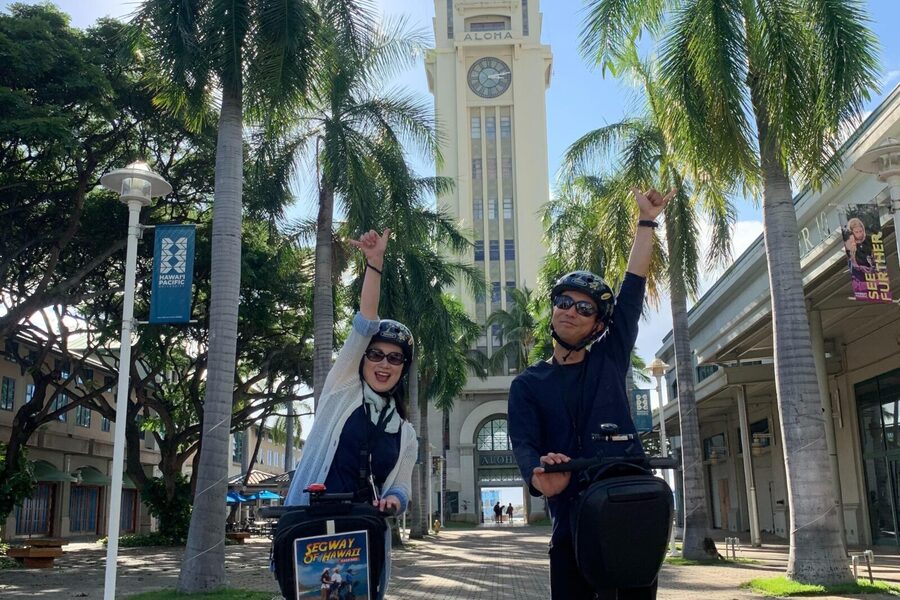
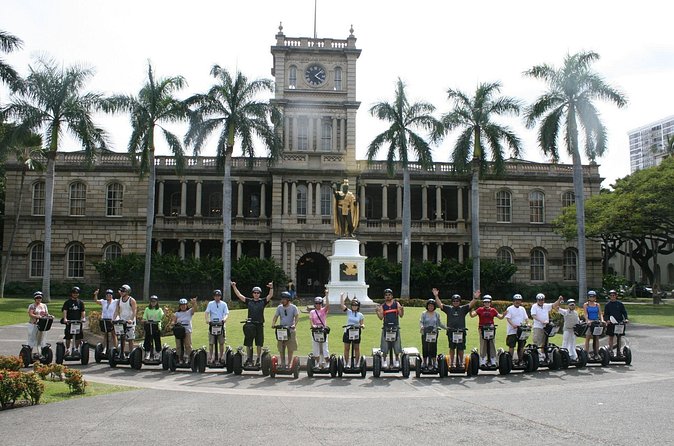
Crossing King Street brings you to the grounds of Iolani Palace and the Royal Barracks. Iolani Palace is the only palace on American soil built by a king, Kalakaua, and today it operates as a museum.
The Segway portion circles the palace grounds, taking in banyan trees and the statue of Queen Liliʻuokalani. She was Hawaii’s last ruling monarch before American forces overthrew her government and the Hawaiian nation.
This is likely the emotional center of the tour. The palace is not just an impressive building. It represents the Hawaiian monarchy, its public life, and the loss of political independence. Seeing the palace, barracks, and queen’s statue together gives you a clearer sense of the scale of that change.
The tour does not replace an interior visit to Iolani Palace. If you want to see the rooms and learn about royal life inside the building, plan a separate palace visit. The Segway tour is better for setting the palace into the wider story of Honolulu.
The State Capitol and Honolulu’s public buildings
Behind Iolani Palace, the route reaches Hawaii’s State Capitol. Its design is distinctive, and the building provides another useful contrast with the palace.
Here, you move from royal government to the present-day state government. The sequence makes sense: first the Hawaiian monarchy, then the political structures that followed. The tour does not treat Honolulu as a collection of disconnected monuments. It uses the short ride between them to show how authority and public life moved from one building to another.
You also pass the Hawaii State Art Museum. Even if you do not go inside, the stop adds another layer to the area, showing that this old government district is still used for public culture and civic life.
Hotel Street, Chinatown, and the everyday city
From the state buildings, the route passes along historic Hotel Street toward Chinatown. Hotel Street has a colorful past, and Chinatown introduces a more commercial and multicultural side of Honolulu.
The Chinatown section includes a shopping mall, noodle factories, open markets, and a population drawn from many parts of the world. That change in atmosphere matters. The royal district can make Honolulu feel like a museum, but Chinatown shows the city as a working place where food, trade, migration, and neighborhood life continue.
A Segway is especially useful here because you can move through the district without committing to a long walk between the major sights. At the same time, you should expect an active urban setting rather than a quiet historic site. The route passes through city streets and commercial areas, so stay alert and follow the guide’s instructions.
If food is your main reason for visiting Chinatown, this tour gives you an introduction but not a meal or a dedicated tasting program. You may want to return later for more time in the markets and shops.
Merchant Street and Bishop Street
The tour then reaches Merchant Street, described as Honolulu’s first paved street, before heading toward Bishop Street, the city’s former financial center, sometimes called Honolulu’s Wall Street.
The value here is architectural. Historic commercial buildings and transportation structures more than 150 years old show how Honolulu grew from a royal capital into a port and business city. This is the kind of detail that can easily disappear when you focus only on beaches and resort districts.
I like this part because it fills in the middle of the story. The palace explains political power. Chinatown explains community and commerce. Merchant and Bishop Streets show the systems that allowed the city to expand.
The route also keeps the pace moving. You are not standing for long stretches in front of one facade, but the headset lets the guide keep talking as the group travels.
Aloha Tower and Honolulu Harbor
At Honolulu Harbor, you reach Aloha Tower. When it was built in 1926, it was the tallest building in Hawaii. The tower is closely tied to Honolulu’s identity as a port city and a gateway for people and goods.
The harbor section also includes a restored coral reef and fish that now feed close by. This gives the tour a small natural-history pause after the streets and buildings. It also shows how the waterfront has changed and how restoration can bring marine life back toward the city.
The tour description makes a nice point here: you are using modern riding technology to move through an older port story. That contrast is one of the experience’s best ideas. Honolulu’s history is not locked in the palace district. It reaches the water, the shipping routes, and the working harbor.
Kakaʻako Waterfront Park and the ocean finish
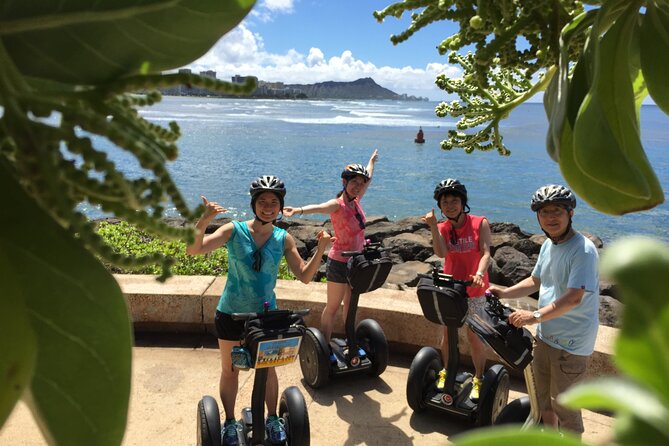
After the harbor, the route heads toward Kakaʻako Waterfront Park. The promenade offers ocean views and a look toward surfers at Point Panic. You then glide uphill to the Ehime Maru Memorial and the Echo Stone.
These stops broaden the tour beyond the 19th century. The Ehime Maru Memorial connects Honolulu with a more recent and painful event, while the Echo Stone adds a reflective note to the ride. The tour does not end with another government building. It moves toward the sea and gives you space to think about the city’s wider connections.
The final stretch returns along the ocean through Ala Moana Regional Beach Park. That is a pleasant way to close the morning. After the dense streets, statues, and civic buildings, the open shoreline gives the route breathing room.
You finish back at the Kakaʻako meeting point. The full circuit means you see a broad slice of Honolulu without needing a separate bus transfer between districts.
Guides, group size, and communication
The tour allows a maximum of eight people. That is small enough for the guide to keep an eye on the line and offer individual help, but it is still a group ride rather than a private tour.
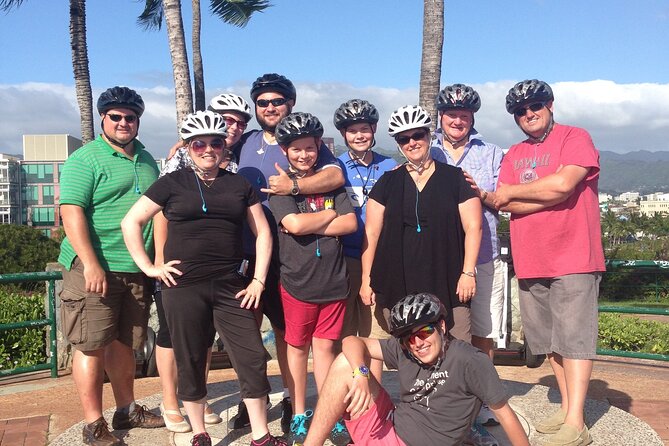
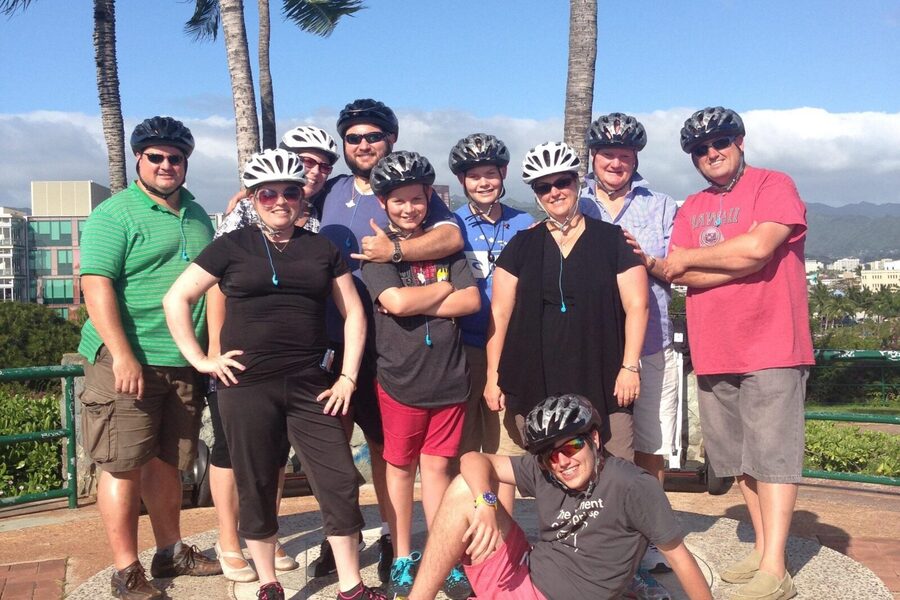
Guides named in the feedback include Jeanne, Michael, Zach, and Allen. Jeanne is especially associated with the history route, while Michael and Zach have helped first-time riders feel at ease. Guides also take photographs during the tour, which is useful when you want a picture of the whole group rather than another selfie.
The two-way radio headset is more important than it may sound. Without it, a riding tour can turn into a series of stops followed by a short speech that only the people at the front hear. Here, you can listen while moving, and the guide can communicate with the group as the route changes.
The experience is offered in English. Bottled water is included, and you receive a helmet and radio headset. Gratuity is not included, so budget separately if your guide gives you a helpful and engaging morning.
Is $254.14 a fair price?
At $254.14 per person, this is not a budget activity. The price makes the most sense if you value three things: covering a lot of ground, receiving live historical explanation, and avoiding a long walking route.
The small group and two-way equipment add real value. So does the route itself, which links sites that are usually spread across several separate outings. You are paying for a guide, equipment, water, instruction, and a carefully planned route rather than simply renting a Segway for a short ride.
Still, the cost is harder to justify if you mainly want photographs or have plenty of time to explore downtown on foot. I would compare it with the cost of separate palace admission, transport, and other tours before deciding. The added $20 per person for Waikiki transfers also matters for couples and families.
Who should book this tour?
I would recommend it to history-minded people who want a faster alternative to walking, first-time visitors who want an overview of central Honolulu, and repeat visitors who have already seen Waikiki and want a more civic, royal, and local side of the city.
It also suits people who enjoy active sightseeing but do not want a strenuous excursion. The ride is easier on your feet than a walking tour, though you still need to control the Segway and follow city-route instructions.
I would hesitate if you dislike group activities, want long indoor visits at each museum, or are looking for a low-cost introduction to Honolulu. The tour moves through many places, so it gives you useful context rather than hours at any one site.
Practical details and cancellation
Confirmation arrives when you book. The activity is offered in English, is near public transportation, and most people can participate. It requires good weather and a minimum number of participants. If weather or minimum numbers force a cancellation, you can choose another date or receive a full refund.
You can cancel for a full refund up to 24 hours before the 9:00 am start. Cancellations or changes made inside that 24-hour window are not refunded or accepted.
Should you book it?
Book this tour if you want Honolulu’s story told across the city rather than confined to one palace or museum. The combination of Mission Houses, Kawaiahaʻo Church, Iolani Palace, Chinatown, Aloha Tower, and the waterfront gives you a strong framework for understanding the capital.
The price is high, but the small group, headsets, wide route, and experienced guides make it more than a simple ride. If $254.14 fits your budget and you want to see a lot without walking all morning, this is a practical and unusually active way to meet Honolulu.
FAQ
Where does the tour begin?
It begins at Segway of Hawaii in the Kakaʻako StoreKeeer Building, 1687 Kalauokalani Way, Honolulu, Hawaii 96814.
What time does the tour start?
The tour starts at 9:00 am.
How long does the tour last?
The experience lasts approximately two hours and 30 minutes.
Does the tour return to the starting point?
Yes. The activity ends back at the Kakaʻako meeting point.
Is transportation available from Waikiki?
Yes. Round-trip transportation from Waikiki is available for $20 per person. There are four pickup locations, and you need to contact Segway of Hawaii Kakaʻako to arrange pickup.
How many people can join the tour?
The tour has a maximum of eight participants.
What is included in the price?
The tour includes bottled water, a tour guide, a colorful helmet, and a two-way radio headset.
What is the cancellation policy?
You can cancel at least 24 hours before the start time for a full refund. Cancellations or changes made less than 24 hours before the start time are not accepted or refunded. Weather or minimum-participant cancellations offer a different date or a full refund.
Just added around Honolulu
- “The Dole Plantation” & “North Shore” Private Limousine VIP Tour!★ 5.0 · 6 reviews
- Private Half-Day Circle Island Highlights Tour in Oahu★ 4.5 · 10 reviews
- Battleships of World War II Departing from Waikiki Area★ 5.0 · 10 reviews
- Honolulu Private Transfer: Airport, Port, Hotel (1-12 Passengers)★ 5.0 · 169 reviews
- Private Bucket List Adventure Day- Hikes, Beaches, Waterfalls★ 5.0 · 48 reviews
- North Shore / Waimea, Falls Day & Swim with Turtles★ 5.0 · 106 reviews
- Waikiki Sunset – 50 Min Helicopter Tour – Doors Off or On★ 5.0 · 8 reviews
- Half-Day Waterfall Tour – Hike, Scenic, Food and Photo★ 5.0 · 3 reviews
Historical Tours, compared.
Big Island in a Day: Volcanoes Waterfalls Sightseeing and History
Read our review →
Mauka Warriors Luau Honoring Polynesia’s Forgotten History
Read our review →
Big Island Historical Dinner Cruise to Kealakekua Bay
Read our review →
Pearl Harbor History Remembered Tour from Ko Olina
Read our review →
Kona Shore Excursion: Sea Turtles, Historic Kona & Coffee
Read our review →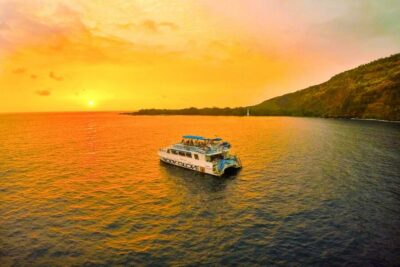
Historical Dinner Cruise Tour to Kealakekua Bay
Read our review →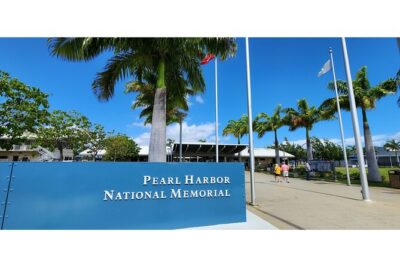
Pearl Harbor with USS Arizona and Hawaiian Kingdom History Tour
Read our review →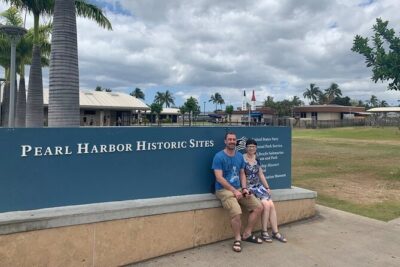
Pearl Harbor [Early Access], USS Arizona & Historic Honolulu Tour
Read our review →Browse the lists this tour appears in