
Reviewed · CHOCOLATE FARM TOURS
Kauai Chocolate Farm Tasting Tour
Kauai’s Lydgate Farms tour is not just a stop for chocolate samples. It is a close look at how cacao grows in Hawaii, from a ripe fruit on the tree to a finished bar. You also taste apple bananas, honey, vanilla, macadamia nuts, and several chocolates along the way.
I like the mix of farm science and generous tasting portions, and I like that the tour connects chocolate with Hawaiian crops and sustainable agriculture. The main caution is time: three hours can feel long if you prefer a quick tasting instead of a talk-heavy, educational outing.
Key points
- See cacao at several stages: Walk among trees and learn how pods, seeds, and processing fit together.
- Taste more than chocolate: Fresh tropical fruit, honey, vanilla, macadamia nuts, and bananas are part of the experience.
- Expect a teaching-focused tour: Guides such as Mason, Sheri, Jess, Brooke, and Jenna are known for clear explanations and lively delivery.
- Limited walking, plenty of seated learning: The pace suits many visitors, though some may find the information portions lengthy.
- Small-group setting: The tour accepts a maximum of 25 people and returns to the farm meeting point.
- Plan ahead: It averages about 33 days of advance bookings, and children must be over 7.
Walking into Lydgate Farms’ cacao world
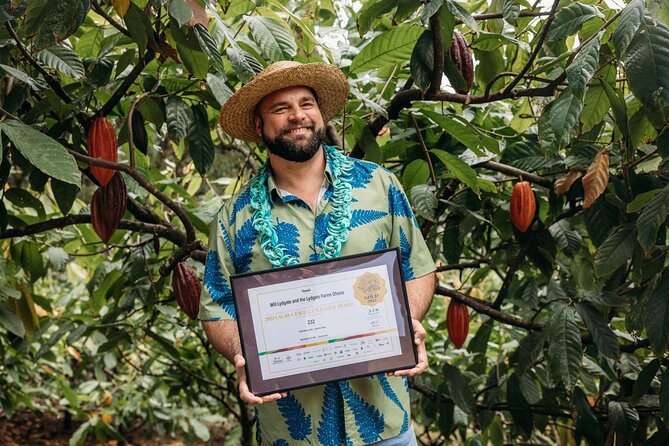
The most useful thing to understand before booking is that this is a farm tour with a chocolate tasting, not a chocolate shop visit with a quick garden stroll. You spend about three hours learning how cacao grows, how the fruit is harvested, and how raw seeds become chocolate.
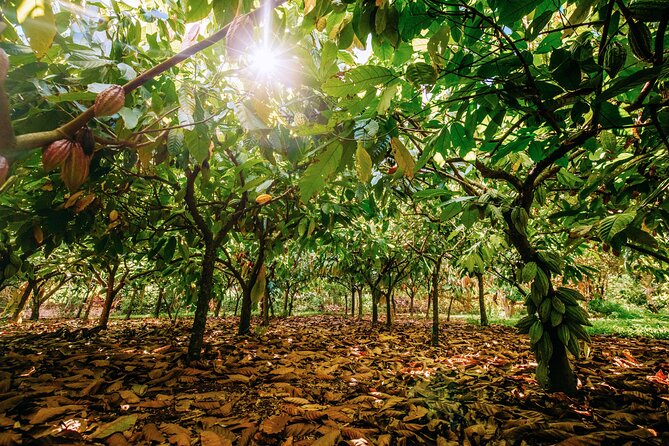
The setting gives the subject more meaning. Instead of tasting a finished bar with no context, you see cacao trees, pods, tropical plants, and the agricultural work behind the final product. That makes the dark chocolate taste less like a simple dessert and more like the last step in a long chain.
The tour begins at Lydgate Farms, at 5730 Olohena Road in Kapaʻa. You meet there and return to the same spot at the end. Hotel pickup and drop-off are not included, so you need to arrange your own way to the farm and back.
The farm visit requires a reservation. You cannot simply arrive and wander through the property on your own. If you want a less formal stop, the company directs visitors to its tasting room in Kapaʻa town instead.
More cacao farm tours and tastings:
- Princeville Botanical Gardens Tour and Chocolate Tasting Ticket
★ 5.0 · 774 reviews - Lahaina: Maui Ku’ia Estate Guided Cacao Farm Tour and Tasting
★ 5.0 · 1,103 reviews - Award Winning Farm Tour: Coffee, Chocolate and Unique Gifts
★ 5.0 · 484 reviews
The botanical garden walk and first tastes
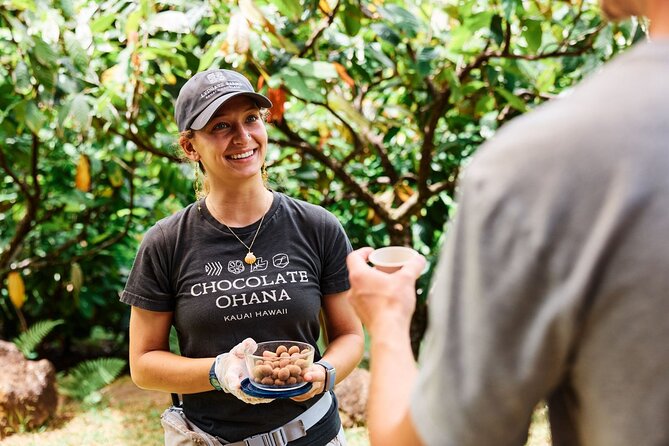
The first portion takes you through the farm’s botanical gardens. This is where the tour broadens beyond chocolate. You taste fruit picked from the farm and learn how tropical plants fit into the agricultural life of the island.
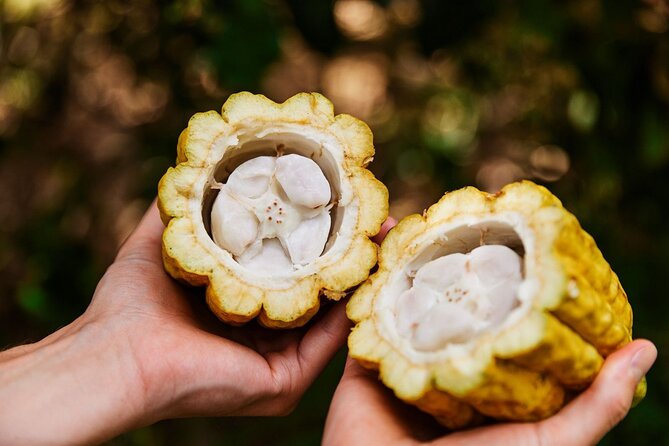
The exact selection can vary, but the experience includes Hawaiian apple bananas and other exotic tropical fruit. The rare cacao fruit is a key tasting, since most people know chocolate as a bar but have never tasted the fruit that surrounds the seeds.
That fresh cacao fruit helps explain a basic point: chocolate does not begin with something that tastes like a candy bar. You get to see and taste the fruit before learning how the seeds are processed. For food lovers, that connection is one of the best reasons to choose a farm-based tour.
Vanilla beans and farm honey are also part of the tasting. The honey has won awards, and sampling it beside fruit and chocolate gives you a better sense of how local ingredients differ in flavor and texture.
This section is especially good for families with older children, people interested in plants, and anyone who enjoys food with a clear sense of place. The tour is not limited to chocolate fans. It also works for anyone curious about island farming and the plants growing around them.
Seeing cacao trees instead of only tasting bars
The cacao trees provide the tour’s central lesson. You see trees at different ages and examine cacao pods as your guide explains how the crop develops. This turns an unfamiliar ingredient into something concrete and easy to follow.
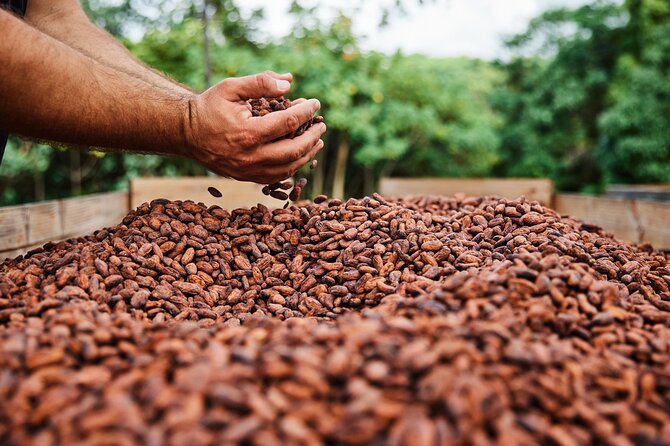
The guides explain the path from planting and care to harvesting and processing. You learn about the fruit, the seeds inside it, and the work needed to transform those seeds into chocolate.
The subject can become technical, but the strongest guides keep it understandable. Mason is described as upbeat and funny, while Sheri is praised for clear, engaging explanations. Jess, Brooke, Jenna, Henry, and Beth have also led tours, and the quality of the experience depends partly on the guide’s style.
You should expect a fair amount of explanation. One visitor found the tour too focused on facts and lectures, while another appreciated the amount of information and felt the three hours passed quickly. Both reactions make sense. If you enjoy food production, botany, and craft chocolate, the detail is a benefit. If you want constant movement, it may feel slow.
The walking itself is not the main physical challenge. The pace includes stops and seated portions, and one account described the tour as having limited walking with plenty of sitting. That can be welcome in Kauai’s warm weather, though it may disappoint anyone hoping for a long farm hike.
From raw cacao seed to finished chocolate
The heart of the experience is the explanation of chocolate making. Your guide walks you through the steps that turn raw cacao seeds into a finished product, with the farm’s own estate-grown cacao as the focus.
You learn why the source of the cacao matters and how processing affects flavor. The tasting is designed to help you notice differences between chocolates, not simply eat as much as possible.
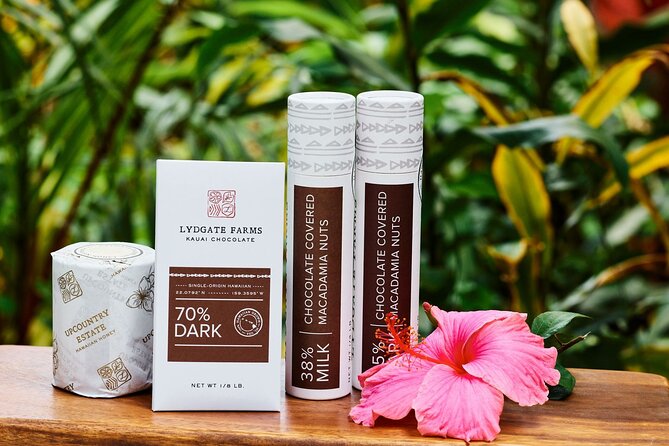
The main sample includes 70 percent dark chocolate made from award-winning Hawaiian-grown cacao. That percentage gives it a stronger cocoa character than ordinary sweet milk chocolate. If you usually prefer very sweet candy, the darker samples may be an adjustment. If you enjoy less processed dark chocolate, this is likely to be one of the tour’s strongest parts.
Another sample is a 55 percent dark chocolate covering a roasted and caramelized Hawaiian-grown macadamia nut. It is a useful pairing because the crisp, rich nut changes the way the chocolate tastes.
The guides also explain how to savor the chocolate and notice its different qualities. This is not a formal cooking class, and you do not make your own bar. The hands-on element comes through examining cacao and learning about harvesting, while the finished tasting lets you compare farm-crafted chocolates.
The tasting is substantial enough that you should arrive ready to eat. Chocolate is served along with fruit and honey, so this is more than a single sample at the end of a garden visit.
More farm visits and tastings in Kauai:
- Maui Pineapple Farm Tour in Haliimaile
★ 5.0 · 2,855 reviews - Maui: Road to Hana Adventure with Farm to Table Lunch
★ 5.0 · 877 reviews - Oahu Beachfront ATV Adventure and Farm Tour
★ 4.5 · 769 reviews - Hawaiian Salt Farm Tour in Kona
★ 5.0 · 767 reviews
Why the Hawaiian setting matters
Kauai gives the tour a useful agricultural context. The experience links cacao to tropical fruit, vanilla, honey, pollinating insects, and sustainable farm practices. That broader view helps you understand that chocolate depends on an entire growing system, not just one ingredient.
You also hear about the cultural background of cacao and the way chocolate developed over time. Since historical explanations can be presented too casually on any tour, pay attention and treat broad claims with care. The farm’s strongest material is the direct, practical lesson about its plants and production.
The sustainability discussion is another worthwhile part. You learn how the farm uses its resources and how cacao fits into island agriculture. This adds value beyond the samples, especially if you want your food experiences to include how ingredients are grown.
At its best, the tour changes the way you look at a chocolate bar. You begin to notice the difference between a mass-produced sweet and chocolate that reflects the crop, the growing conditions, and the maker’s choices.
The guides make or break the pace
The individual guide matters here. Mason’s upbeat humor, Sheri’s clear teaching, and Jess’s evident affection for the farm have all been singled out in the feedback provided for this experience. Brooke is also praised for combining information with a funny delivery, while Jenna is described as strong on both plant and chocolate knowledge.
That does not mean every session will feel identical. A guide who enjoys long explanations can make the tour fascinating for a chocolate enthusiast and tiring for someone who prefers a faster pace.
You should book this with the right expectation: it is a guided lesson, not a quiet self-guided garden walk. The group may include couples, families with older children, and solo visitors. With a maximum of 25 people, it is not a private tour, but the group size is limited enough for a structured presentation.
The language offered is English. The tour is family-friendly for children over 7, but no children under 7 are allowed on the farm tour. You must list the ages of children when reserving.
Is $145 a fair price?
At $145 per person, this is a costly tasting. You are paying for more than chocolate, but the value depends on how much you enjoy the educational side.
The price includes the three-hour guided farm visit, the chocolate tasting, and instruction from a local guide. It does not include transportation, private guiding, or purchases from the farm shop.
I would consider the price reasonable for someone who wants a full afternoon built around cacao, tropical agriculture, and guided tasting. You see the farm, taste a range of ingredients, and receive a detailed explanation of chocolate production. That is a much fuller experience than buying a chocolate bar at a shop.
I would be more cautious if you are mainly looking for dessert. A shorter tasting room visit in Kapaʻa may suit you better. The full tour earns its price through time, access, and instruction, not through a single premium sample.
The advance booking pattern matters too. This experience averages about 33 days booked ahead, so do not leave it until the last day of your Kauai plans if it is important to you.
Practical planning for the three-hour visit
Wear something suitable for a farm setting and plan for both walking and sitting. The information provided does not specify a required dress code or exact trail conditions, so keep your preparation simple and comfortable.
Allow the full three hours. Some people find that the time passes quickly because there are many samples and explanations. Others feel the tour could be shortened to two hours. You should choose it only if you are comfortable with a relaxed, teaching-heavy pace.
Bring a plan for getting home. There is no hotel pickup or drop-off, and the meeting point is outside central Kapaʻa. One visitor specifically advised arranging a ride back before leaving, so do not assume you can easily find last-minute transport.
The tour requires good weather. If poor conditions cause a cancellation, you are offered another date or a full refund. Otherwise, you can cancel for a full refund up to 24 hours before the start time. Changes or cancellations made inside that window are not accepted for a refund.
Who will enjoy this most?
I would choose this tour for:
- Chocolate lovers who prefer dark chocolate and want to understand production
- Food-focused visitors who enjoy tasting fruit, honey, vanilla, and local ingredients
- Families with children over 7 who can listen and participate for several hours
- Couples looking for a quieter, educational afternoon
- Solo visitors who enjoy guided learning and farm settings
- Anyone curious about sustainable Hawaiian agriculture
I would hesitate if you dislike lectures, have very young children, or want a short activity with little structure. The tour has plenty of sitting and explanation, and it is not a self-guided visit.
It is also not the right choice if you expect a private experience. The group can include up to 25 people, and private guiding is not included.
Should you book Lydgate Farms?
Book it if you want to see the entire path from cacao fruit to dark chocolate and you enjoy learning while you eat. The combination of farm-grown fruit, honey, vanilla, cacao pods, and estate-grown chocolate gives the experience more substance than a standard tasting.
Skip it if you want only a quick chocolate stop or if three hours of guided explanation sounds tiring. For the right person, $145 buys a detailed look at one of Kauai’s most interesting crops, with enough food to make the afternoon feel full. For everyone else, the Kapaʻa tasting room may be the better fit.
FAQ
How long is the Kauai Chocolate Farm Tasting Tour?
The guided experience lasts approximately three hours.
Where does the tour begin and end?
It begins at Lydgate Farms Chocolate Tours, 5730 Olohena Road, Kapaʻa, Hawaii 96746. The activity ends back at the same meeting point.
What is included in the price?
The price includes a three-hour guided tour of Lydgate Farms, a chocolate tasting, and educational instruction from local guides.
Is hotel transportation included?
No. Hotel pickup and drop-off are not included, so you need to arrange your own transportation to and from the farm.
What foods are included in the tasting?
The tasting can include tropical fruit, farm-grown Hawaiian apple bananas, award-winning honey, fresh vanilla beans, chocolate-covered macadamia nuts, and dark chocolate.
Do you taste cacao fruit on the tour?
Yes. The experience includes tasting ripe cacao fruit and learning how the fruit and seeds connect to chocolate production.
What kind of chocolate is included?
Samples include 55 percent Hawaiian-grown dark chocolate covering a roasted and caramelized macadamia nut, as well as 70 percent dark chocolate made from estate-grown Hawaiian cacao.
Are young children allowed?
Children must be over 7 years old. Children under 7 are not allowed on the farm tour.
Can you visit the farm without a tour reservation?
No. Farm visits require a tour reservation, and self-guided farm visits are not offered. The company directs visitors to its tasting room in Kapaʻa town instead.
What happens if the weather is poor?
The activity requires good weather. If it is canceled because of poor weather, you are offered a different date or a full refund.
More Food & Drink in Kauai
- Food Tour of Kaua’i
★ 4.5 · 338 reviews - Walking Food Tour Exploring Hanalei
★ 5.0 · 282 reviews - Oahu Catamaran Waikiki Sunset on 40 Foot Catamaran: Food and BYOB
★ 5.0 · 836 reviews - Hawaii Off The Beaten Path Food Tour
★ 5.0 · 665 reviews
Just added around Kauai
- Kalapaki Beach: Surfing Lesson with Kauai Beach Boys★ 4.9 · 26 reviews
- Kauai: Full-Day Waimea Canyon & Wailua River Tour★ 4.6 · 58 reviews
- From Princeville: Discover Kauai Helicopter Tour★ 5.0 · 13 reviews
- Kauai: Waimea Canyon and Waterfall Adventure Day Tour★ 4.3 · 4 reviews
- Kauai: Allerton Garden Guided Group Walking Tour★ 4.6 · 159 reviews
- Kauai: Allerton Garden and Estate Tour with Sunset Dinner★ 4.6 · 55 reviews
- Corner Store Kauai Cooking Class★ 5.0 · 18 reviews
- Creative Soul Scavenger Hunt of Hanalei Kauai★ 5.0 · 39 reviews
Chocolate Farm Tours, compared.
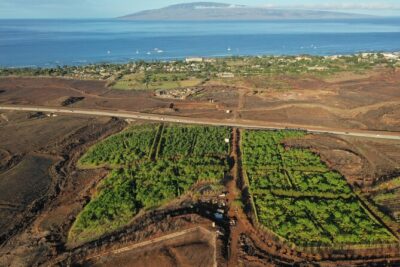
Lahaina: Maui Ku’ia Estate Guided Cacao Farm Tour and Tasting
Read our review →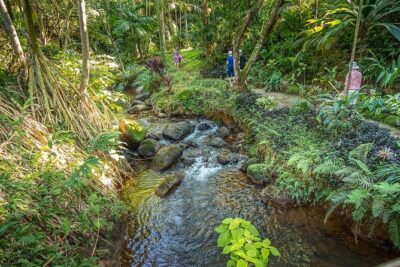
Princeville Botanical Gardens Tour and Chocolate Tasting Ticket
Read our review →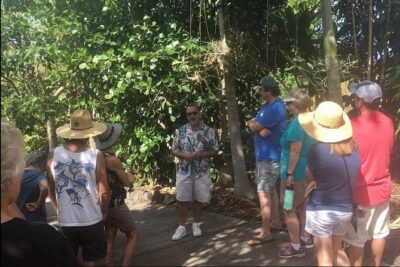
Award Winning Farm Tour: Coffee, Chocolate and Unique Gifts
Read our review →
Volcano, Chocolate and Waterfalls of the Big Island
Read our review →
Big Island Hawaii: Craft Chocolate Tasting and Farm Tour
Read our review →Browse the lists this tour appears in