
Reviewed · TROLLEY & HOP-ON HOP-OFF TOURS
Waikiki Trolley Red Line Heroes & Legends Hop-on Hop-off Tour
The most useful thing about this trolley is its reach. It carries you beyond Waikiki to Punchbowl Crater, Chinatown, the State Capitol, and Honolulu Harbor, giving you a quick look at the city’s royal, military, and cultural sides. I like the open-air ride and the chance to get your bearings before choosing where to spend more time.
I also like the live commentary. Guides including Chico, Turk, Sam, Chuck, and Big Tony have earned praise for humor, Hawaiian names, and clear stories about island history. The main catch is the irregular wait between trolleys. Some passengers report waits of an hour or more, and full vehicles may pass by.
Key points to know before you ride
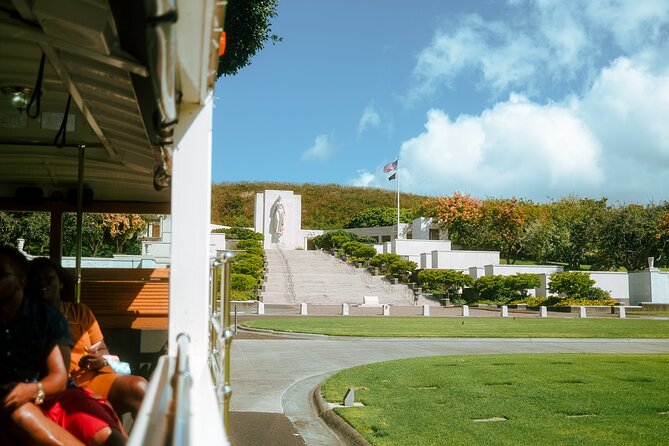
- Punchbowl adds real historical weight: The National Memorial Cemetery of the Pacific gives this city tour a quiet, moving stop above Honolulu.
- The first half offers the strongest sightseeing: HoMA, the State Capitol, Punchbowl, Foster Botanical Garden, and Chinatown give you more than a simple Waikiki loop.
- Guides make a big difference: Chico, Turk, Sam, Chuck, and Big Tony have been singled out for friendly, funny, informative narration.
- Hop-on hop-off does not mean instant service: You may wait close to an hour for the next trolley at some stops.
- Wind and engine noise affect the ride: Sit toward the front if hearing the commentary matters to you.
- The $35 price pays for orientation and narration: It is useful for a first look at Honolulu, but less attractive if you only need basic transport.
Why this route is more than a Waikiki ride
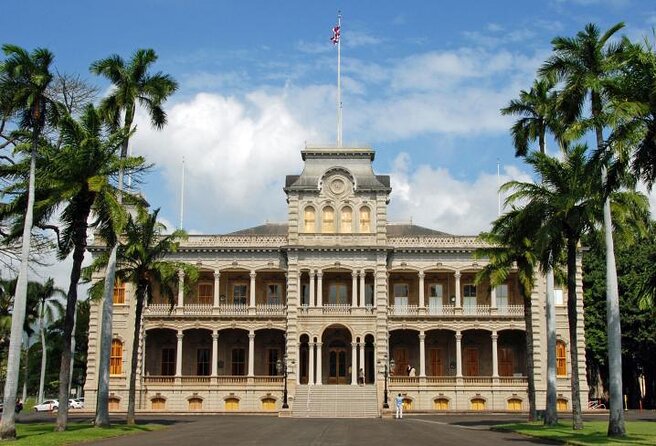
Many Waikiki sightseeing rides stay close to the beach and hotel towers. The Red Line takes a wider view of Honolulu. You begin among Waikiki’s shops and surf culture, then head toward museums, government buildings, memorials, gardens, Chinatown, the harbor, and Kakaʻako.
That mix gives the route its purpose. You are not just looking at pretty streets. You are seeing how Honolulu connects the Hawaiian monarchy, state government, immigration, military service, commerce, and modern arts.
The ride is listed at about 1 hour 20 minutes, but that figure works best as a rough moving time. Traffic, parade closures, boarding delays, and stopovers can stretch the outing to about two hours or more. If you hop off, you need patience. The next trolley may not arrive quickly.
I would use this as a first-day orientation ride, not as a tightly timed transfer service. It helps you mark places for a later visit, and it saves you from trying to decode city buses on your first morning. If you have an appointment, dinner reservation, or flight to catch, leave plenty of room.
More trolley and hop-on hop-off passes:
- Waikiki Trolley Hop-On Hop-Off Tour of Honolulu
★ 4.5 · 4,783 reviews - Waikiki Trolley Blue Line Coastline & Local Grindz Hop-on Hop-off
★ 5.0 · 4,159 reviews - Oahu: Waikiki Trolley Hop-on Hop-off All-Line Pass
★ 4.4 · 810 reviews
Starting at Waikiki Shopping Plaza
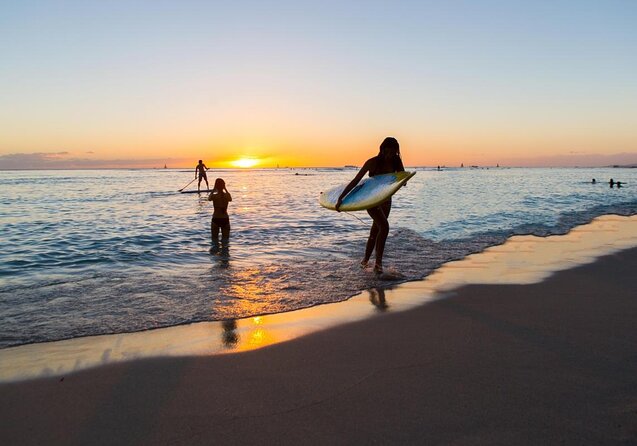
The usual starting point is Waikiki Shopping Plaza, a practical place to begin if you are staying in the resort district. The route then calls at the Duke Paoa Kahanamoku Statue, one of Waikiki’s familiar meeting points.
Duke Kahanamoku is closely tied to Waikiki’s identity as a beach and surfing center. The stop is especially useful for first-time visitors because it places you near the sand, hotels, shops, and the broad public face of Waikiki.
The Twin Fin Hotel is another early stop. At this point, you are still in the easy, tourist-friendly part of the route. You can ride through this section without stopping, or use it to reach another Waikiki point if walking is inconvenient.
One practical warning: pickup signs are not always easy to spot. At some locations, you may need to ask a trolley representative or watch carefully for the vehicle. Confirm the pickup side before you get off, and do not assume the trolley will wait.
Honolulu Museum of Art and the city’s cultural side
The Honolulu Museum of Art, usually called HoMA, gives the Red Line a welcome change of pace. The museum adds art and culture to a route that could otherwise focus only on monuments and shopping.
If you want to visit inside, check the museum’s opening days before planning your stop. It is closed on Monday and Tuesday, so those days are better for riding past it or choosing another stop.
I would not hop off here unless you can give the museum proper time. A quick dash inside and back out may not be worthwhile when the next trolley could be far away. If art is a priority, plan this as one of your main stops and accept that the route may take much of your afternoon.
The ride itself gives you a useful introduction even if you stay aboard. Guides point out buildings and explain what you are seeing, which helps turn a passing street into a place you may want to revisit.
The State Capitol and Hawaii’s public story
The Hawaii State Capitol is one of the route’s best stops for understanding modern Hawaii. You move from the royal associations of Waikiki and downtown statues into the seat of state government.
The building is part of a cluster of important civic sights, so this section works well for visitors who want more than beach time. The commentary may connect Hawaii’s statehood, public institutions, and earlier monarchy, giving the ride a broad timeline.
This is a good place to take photos and get a sense of Honolulu as a working capital. It is less of a conventional attraction than a museum, so your enjoyment depends on how much you like architecture, government, and local history.
The stop also shows why this is not really a simple hop-on hop-off circuit. The trolley functions partly as a narrated city tour. You may find yourself staying aboard because the guide’s explanation is more useful than a short walk around the building.
A few more Oahu mornings worth comparing
- Oahu Grand Circle Island and Haleiwa Tour: 9-Hr Deluxe Experience
★ 5.0 · 17,387 reviews - Oahu: Grand Tour Around Island 16 Locations plus Snorkeling
★ 5.0 · 8,669 reviews - Parasailing Experience in Waikiki, HI
★ 5.0 · 7,692 reviews - Salute to Pearl Harbor Including USS Arizona
★ 4.5 · 7,433 reviews
Punchbowl Crater and the National Memorial Cemetery
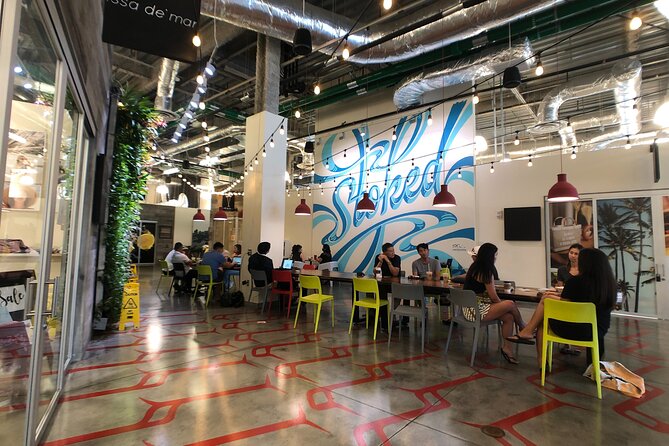
The National Memorial Cemetery of the Pacific at Punchbowl Crater is the emotional center of the route. The cemetery sits inside an old volcanic crater above Honolulu, and the setting gives the stop a calm, solemn character.
The memorial honors service members, and its location offers a different view of the city from the beach-level streets. The large trees, entrance, and quiet grounds make this a place where you should slow down and show respect.
I would give Punchbowl extra weight when deciding if this tour suits you. It is not a quick novelty stop. Even from the trolley, it adds meaning to the day, especially if you have an interest in military history or the Pacific theater.
At the same time, you need to watch the clock. If you get off here, you may face a long wait for the next vehicle. The route’s hop-on design gives you freedom, but that freedom comes with less predictable timing.
Foster Botanical Garden and the Izumo Taishakyo Mission
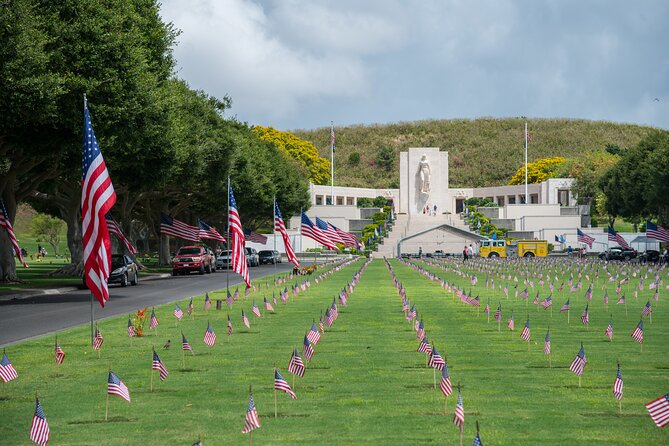
Foster Botanical Garden brings plants and quiet paths into the middle of the city. It offers a break from streets, traffic, and commercial Waikiki, though the supplied information does not give a visit length or admission detail.
If you are hoping to stop, ask the driver about the best return point before leaving the trolley. That small question can prevent a long wait or a confusing search for the boarding location.
The Izumo Taishakyo Mission of Hawaii adds a Japanese religious and cultural presence to the route. Its pairing with Royal Kitchen gives this section a distinctly local mix of worship, food, and community history.
I like this part because it shows Honolulu as a Pacific crossroads. You see more than one version of Hawaii here, and the route makes those connections without requiring you to plan several separate bus trips.
Chinatown, Downtown Honolulu, and Hawaii Theatre
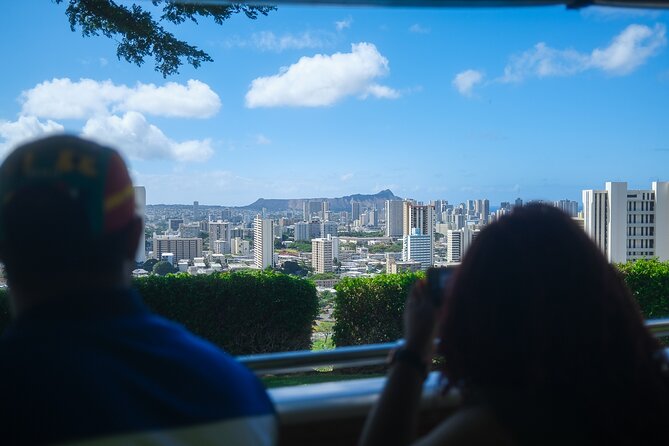
Chinatown is one of the route’s more revealing stops. It can feel rougher and less polished than Waikiki, and that contrast is part of what makes it useful. You see a working urban district rather than a resort zone designed mainly for vacation spending.
The area is also a good choice if food interests you. The route includes downtown Honolulu and the Hawaii Theatre, so you can combine street scenes, older architecture, and a meal if you are comfortable planning around the trolley schedule.
Do not expect the same atmosphere as the beach district. You may prefer to ride through Chinatown first, then decide if you want to return on foot later. The key is to avoid treating the stop as a quick in-and-out excursion if you are concerned about the next pickup.
The Hawaii Theatre gives the downtown portion a strong architectural marker. The King Kamehameha Statue nearby adds another major historical image, linking the city center to the Hawaiian monarchy.
King Kamehameha Statue and Honolulu Harbor
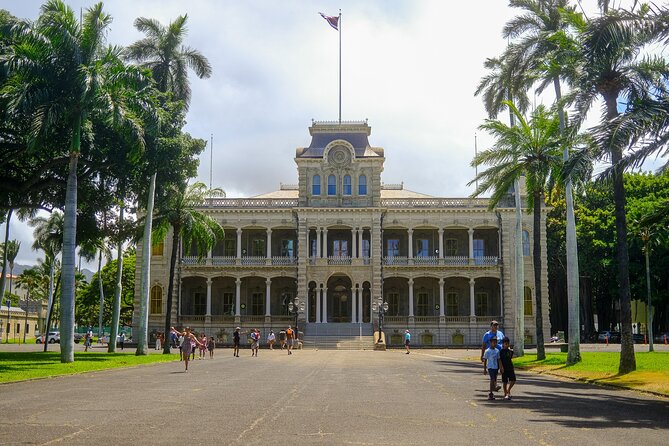
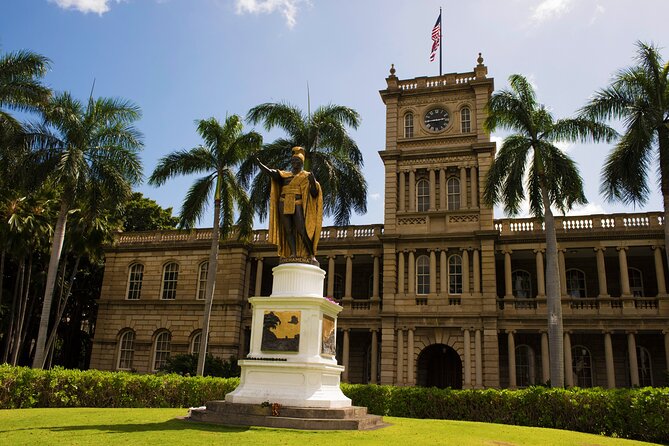
The King Kamehameha Statue is one of Honolulu’s most recognizable landmarks. It is a natural photo stop, but the guide’s explanation is what gives it context. The route’s theme of heroes and legends comes together here more clearly than at many of the shopping stops.
The statue also sits near important downtown sights, making this a good place to compare Honolulu’s ceremonial past with its present-day offices and streets. I would stay aboard if you mainly want a narrated overview, or hop off for photographs if you have time to spare.
Aloha Tower Marketplace and Honolulu Harbor provide a short sightseeing break. The harbor connects Honolulu to shipping, arrival, and the city’s role as a major Pacific port.
The stop is not a long cruise or harbor excursion. Think of it as a chance to stretch, look around, and take in the waterfront before the trolley continues. Because the break is brief, keep an eye on the vehicle and confirm the boarding point.
Kakaʻako, Ward Centre, and Ala Moana
The route continues through SALT at Our Kakaʻako, Ward Centre, and Ala Moana Regional Park. These stops show a more modern side of Honolulu, with shopping, restaurants, public spaces, and broad coastal views.
SALT at Our Kakaʻako and Ward Centre are useful if you want food or retail time during your day. They are not substitutes for the historic stops, but they help explain how Honolulu has grown beyond its older downtown core.
Ala Moana Regional Park gives you a more open setting near the water. It is a pleasant final section after the denser city streets, though pickup details can be confusing. One passenger had trouble finding the trolley at the park and eventually caught it near Ala Moana Mall.
That detail matters. If you hop off at Ala Moana Regional Park, ask exactly where the trolley returns. The stop name alone may not tell you which road or entrance to use.
How the guides shape the experience
The guide is the most important variable on this tour. A strong driver turns the ride into a moving history lesson, while a weak sound system can make even good information hard to follow.
Chico has been praised for clear explanations, humor, and his pronunciation of Hawaiian names. Turk is known for a lively style, while Sam was singled out for making the ride educational and relaxing. Chuck and Big Tony also received praise for warmth, humor, and strong storytelling.
You should expect commentary about Hawaiian monarchy, local culture, historic buildings, and World War II. The narration is not a formal lecture. It is more conversational, with jokes and quick explanations as the trolley moves.
Sound quality is a real issue. Wind, engine noise, and the open-air design can make parts of the commentary difficult to hear, especially toward the back. Sit near the front when possible, and do not be shy about asking the driver to repeat an important point.
Timing, seating, and the hop-on problem
The biggest weakness is the gap between vehicles. At some stops, you may wait about an hour. A full trolley may also pass you, leaving you to wait for the next one.
That creates three problems: missed plans, standing-room rides, and stress for anyone who cannot stand comfortably. One severe account describes an oversold trolley with no seat for more than an hour. I would not choose this route for someone recovering from surgery or anyone who needs guaranteed seating.
The open-air design is pleasant when the ride is calm and uncrowded. It is less pleasant when wind makes the commentary hard to hear or when wooden seats and standing passengers leave little room.
Traffic can add another complication. A parade or road closure once caused a major delay, and passengers were let off away from their expected stop. This is not a daily certainty, but Honolulu traffic is enough reason to keep your schedule flexible.
Is $35 a fair price?
At $35 per person, the Red Line is not the cheapest way to move around Honolulu. Local buses cost less, and one review specifically compared the tour with a $3 city bus fare and all-day transfers.
But price is not the whole calculation. The trolley gives you a direct sightseeing route, open-air views, a driver-guide, and a simple introduction to parts of Honolulu that can be awkward to connect on your own. If you are short on time or unsure how to use public transport, that convenience has value.
I think the price works best on your first day, when you want orientation and historical context. It works less well if you already know the city, need reliable point-to-point transport, or plan to spend most of the day at one attraction.
The Red Line may also overlap with a Pearl Harbor visit, especially in its World War II references and broader military context. That does not make it pointless, but you should not pay for it expecting every story to be new.
Who should book the Red Line?
I would recommend it for first-time visitors who want a broad look at Honolulu without planning several separate routes. It also suits anyone who enjoys live commentary, historic statues, civic buildings, and a relaxed ride between stops.
It is a good choice for a free afternoon between beach days, particularly if you want a break from the water. The ride can be educational without demanding much walking.
I would hesitate if you have mobility concerns, a strict schedule, or little patience for waiting. I would also think twice if your main goal is a fast ride between Waikiki and Ala Moana. In that case, local transport may offer better value.
The mobile ticket is convenient, confirmation arrives when you book, and service animals are allowed. Most people can participate, but the seating and boarding issues mean you should ask questions before committing if you need special support. The booking is non-refundable and cannot be changed, so choose your date carefully.
Should you book this Honolulu trolley tour?
Book the Red Line if you want a narrated introduction to Honolulu’s history, a look at Punchbowl and downtown, and the freedom to get off at several points. Plan it early in your stay, sit near the front, and treat the schedule as flexible rather than exact.
Skip it if you need dependable transport or guaranteed seating. At $35, the tour earns its price through the guide and the broad route, not through speed. For the right visitor, it is a pleasant and useful first look at Honolulu. For a tightly planned day, the long waits can undo the convenience.
FAQ
How long does the Red Line tour take?
The listed ride time is about 1 hour 20 minutes. Traffic, commentary, boarding, sightseeing breaks, and hopping off can extend the outing to around two hours or longer.
What sights are included on the route?
Stops include Waikiki Shopping Plaza, the Duke Kahanamoku Statue, the Twin Fin Hotel, Honolulu Museum of Art, Hawaii State Capitol, Punchbowl and the National Memorial Cemetery of the Pacific, Foster Botanical Garden, Izumo Taishakyo Mission, Chinatown, Hawaii Theatre, King Kamehameha Statue, Aloha Tower Marketplace, SALT at Our Kakaʻako, Ward Centre, and Ala Moana Regional Park.
How much does the tour cost?
The price is $35 per person.
Is the tour narrated?
Yes. The driver provides commentary about Hawaii’s history and culture, including the monarchy and World War II. Guides named Chico, Turk, Sam, Chuck, and Big Tony have been praised for informative and entertaining narration.
Can I hop off and board again?
Yes. The route is designed for you to get on and off at your leisure. Keep in mind that waits between trolleys can be long, and a full trolley may pass by.
Is the tour available in English?
Yes. The experience is offered in English and includes a mobile ticket.
Just added around Oahu
- Kailua: Mokulua Islands Guided Kayak and Snorkeling Tour★ 4.9 · 46 reviews
- Honolulu, Oahu: Waikiki Whale Watching Cruise★ 3.5 · 166 reviews
- Oahu: Sips & Secrets of Hawaii Pub Crawl★ 5.0 · 19 reviews
- Oahu: Honolulu Turtle Canyon Snorkeling Tour★ 4.6 · 136 reviews
- Oahu: USS Arizona Memorial and City Highlights Tour★ 4.2 · 32 reviews
- Honolulu: Waikiki Food Tour with Local Guide★ 5.0 · 3 reviews
- Oahu: Traditional Canoe Sunset Cruise with Dinner★ 5.0 · 4 reviews
- Oahu: Hilton Waikiki Beach Hotel Magical Mystery Show★ 4.7 · 39 reviews
Trolley & Hop-On Hop-Off Tours, compared.
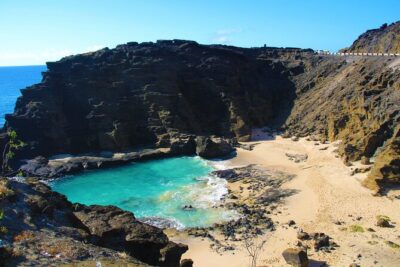
Waikiki Trolley Blue Line Coastline & Local Grindz Hop-on Hop-off
Read our review →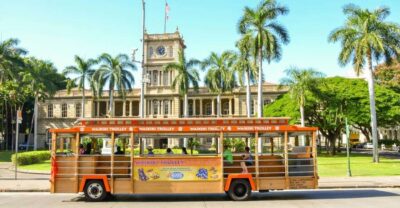
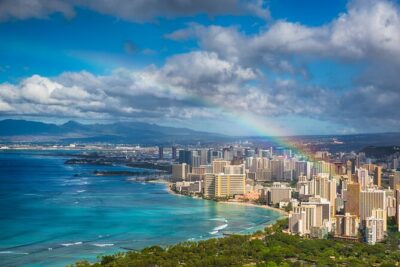
Waikiki Trolley Green Line Diamond Head Shuttle
Read our review →Browse the lists this tour appears in