
Reviewed · COOKING CLASSES
Hands-On Hawaiian Imu Cooking and Cultural Dining Experience
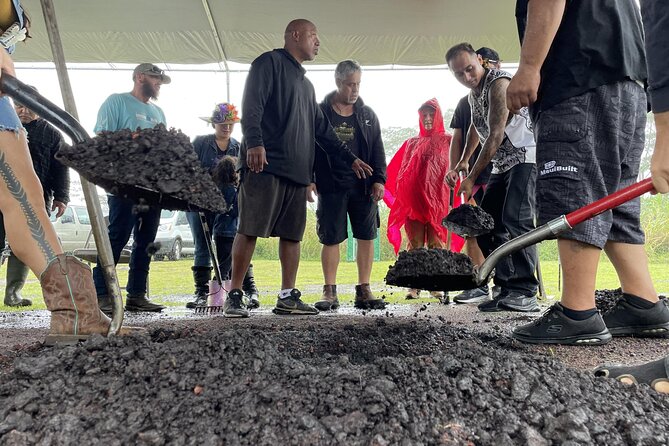
An imu is not just a cooking pit. It is an underground oven built from earth, heat, and care, and this experience lets you help make one before eating the food it produces. With the Men of Pa’a, you’ll learn traditional preparation from Native Hawaiian hosts, then gather around a backyard-style meal in Pāhoa.
I like the hands-on format, since you are involved instead of simply watching a cultural demonstration. I also like the strong sense of family and ohana woven through the gathering, along with the chance to taste kalua pork, chicken, vegetables, and kulolo cooked in the imu.
The main consideration is time and location. This is a four-hour activity starting at 10:00 a.m. in Pāhoa, and the experience ends where it begins, so you’ll need to arrange your own way to 15-1380 Auina Street.
Key points at a glance
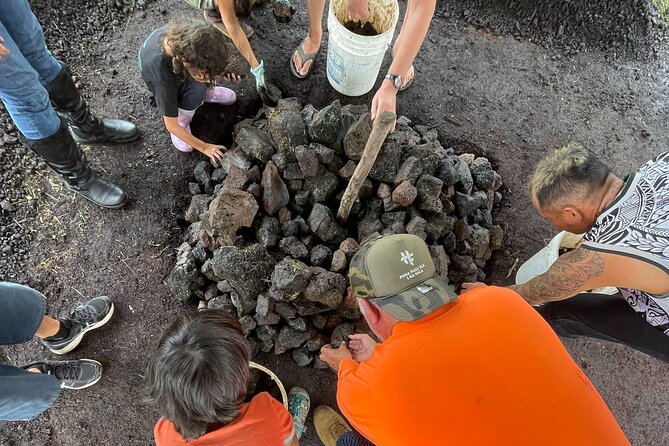
- You help build the imu: The underground oven is made from scratch with guidance from Native Hawaiian hosts.
- The cooking is also the lesson: You learn why food, land, family, and gathering are closely connected in Hawaiian culture.
- The meal is cooked underground: Lunch includes kalua pork, kalua chicken, island vegetables, and taro-based kulolo.
- The setting is personal: This is a backyard-style cultural meal rather than a stage performance.
- The hosts are the heart of it: The Men of Pa’a create a welcoming setting built around participation and shared food.
- Plan for a half day: The experience lasts about four hours, begins at 10:00 a.m., and accepts up to 50 people.
Why building an imu changes the meal
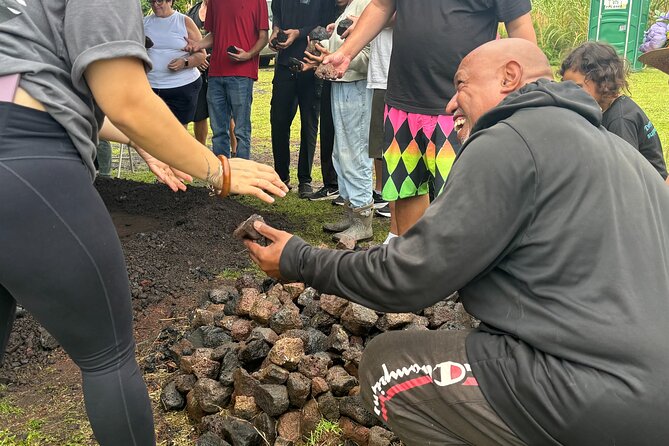
The most interesting part of this experience comes before lunch. An imu is an underground oven that uses materials from the Earth to cook food slowly. You do not simply arrive at a table and receive a plate. You take part in the process that makes the meal possible.
The hosts guide you as you help build the imu from scratch. The supplied details do not specify every task or material you will handle, so you should not expect a fixed cooking class with a printed sequence of steps. Instead, expect a guided group activity centered on the traditional method and its cultural meaning.
That distinction matters. A demonstration can show you something; building the oven gives you a physical connection to it. You see that this style of cooking requires preparation, shared effort, and patience. The food is not rushed, and neither is the lesson.
The Men of Pa’a bring family knowledge to the activity. Their families have cooked this way for generations, so the imu is presented as a living practice, not a museum display. That gives the morning more weight than a standard food tasting.
A few more Big Island mornings worth comparing
- Farm to Table Cooking Class at Kulaniapia Falls
★ 4.5 · 36 reviews - Baumkuchen Campfire Baking Class
★ 5.0 · 3 reviews - Farm to Taco: A Farm to Table Cooking Class
★ 5.0 · 41 reviews
The 10:00 a.m. start in Pāhoa
You meet at 15-1380 Auina Street in Pāhoa at 10:00 a.m. The activity ends back at the same meeting point. No transportation is included, so you need to make your own plans to reach the address and return to your accommodation or next stop.
The four-hour length is useful for planning. This is not a quick morning stop that fits between two unrelated attractions. It takes most of the late morning and early afternoon, with enough time for the imu work, explanation, uncovering, and meal.
Pāhoa also gives the experience a different feel from a resort dining event. The gathering is described as backyard-style, which suggests a more direct social setting. You are there to work with the hosts and share a meal, not to sit in a polished dining room while a performance happens around you.
The maximum group size is 50 people. That is large enough for a lively gathering but not necessarily intimate, especially if the activity fills completely. If you prefer very small food tours, keep that limit in mind. The hands-on structure should still give the group a shared role, but individual time with the hosts may vary.
Learning with the Men of Pa’a
The strongest part of the experience is the connection between food and culture. The hosts explain the meaning of Hawaiian words, family, history, and gathering, with ohana at the center of the discussion. You learn that the meal is not only about what is on the plate. It is also about how people come together and care for one another.
Iopa Maunakea is identified with Imu Mea ’Ai, the provider of the experience. The activity is presented by the Men of Pa’a, whose approach is warm, inclusive, and personal. The available information also describes chanting and thoughtful exchanges as part of the cultural setting, though the exact order of those elements may vary.
This is where the experience differs from a meal sold simply as local food. Kalua pork is familiar to many people who visit Hawaii, but here you see the work and meaning behind it. You are encouraged to understand why cooking in the Earth matters, not just how the finished dish tastes.
The cultural material is shared in English. One family who attended included Chinese speakers, and the hosts allowed time for translation during the gathering. That does not make the activity a formal multilingual tour, but it suggests a patient and welcoming approach when language needs extra care.
The imu cooking process and the wait for lunch
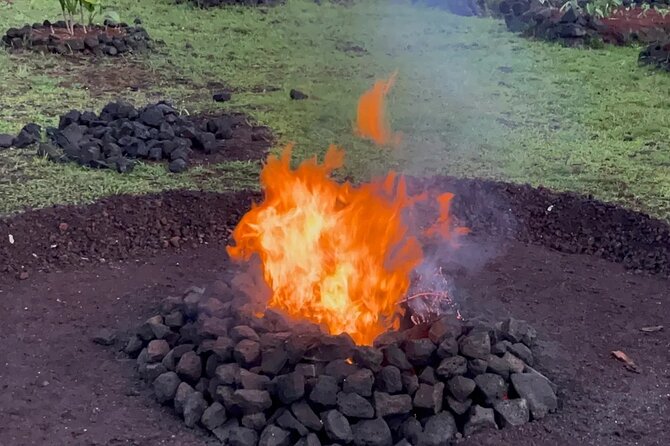
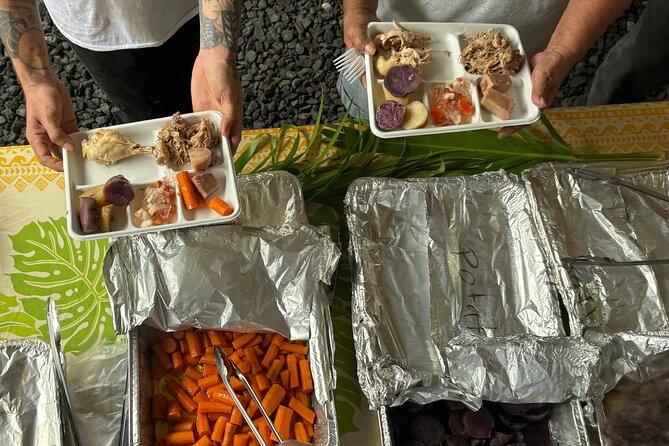
After the oven is built, the food cooks slowly underground. The menu centers on kalua pork and kalua chicken, both steamed in the imu. You also get kalua vegetables, including local sweet potato, kalo, carrots, celery, and other vegetables.
The underground method gives the cooking its character. Steam and enclosed heat soften the food over time, producing the tender texture associated with kalua preparation. You are not choosing a dish from a menu or watching a chef plate separate courses. The food is prepared as part of a communal process.
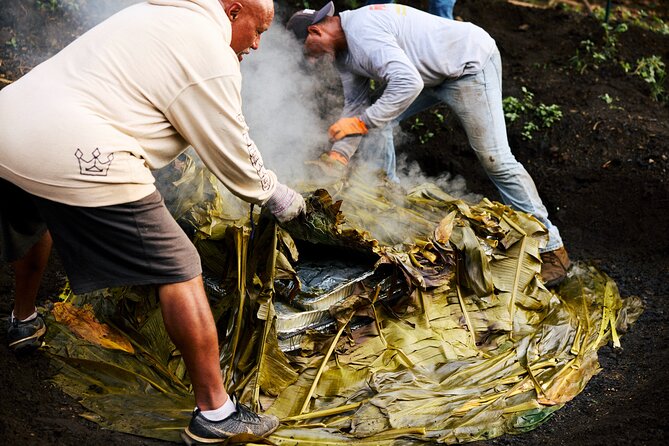
The exact moment when the imu is uncovered is one of the natural highlights of the morning. The food has been hidden from view while it cooks, so opening the oven connects the lesson to the meal in a clear, satisfying way. It also gives you a better sense of the work involved before anyone sits down to eat.
Because the food cooks slowly, the pace may feel different from a typical tour. You should arrive ready for a morning built around conversation, preparation, and waiting. If you need constant activity or a tightly timed schedule, this may feel leisurely. If you like understanding where your food comes from, the slower rhythm is part of the appeal.
Same island, a completely different kind of day:
- Big Island in a Day: Volcanoes Waterfalls Sightseeing and History
★ 5.0 · 6,569 reviews - Big Island Manta Ray Night Snorkel
★ 5.0 · 5,656 reviews - Big Island: Kona Manta Ray Snorkel Tour in Keauhou Harbor
★ 4.5 · 2,465 reviews - Hilo Shore Excursion: Volcanoes National Park & Black Sand Beach
★ 4.5 · 2,338 reviews
What you eat at the backyard-style feast
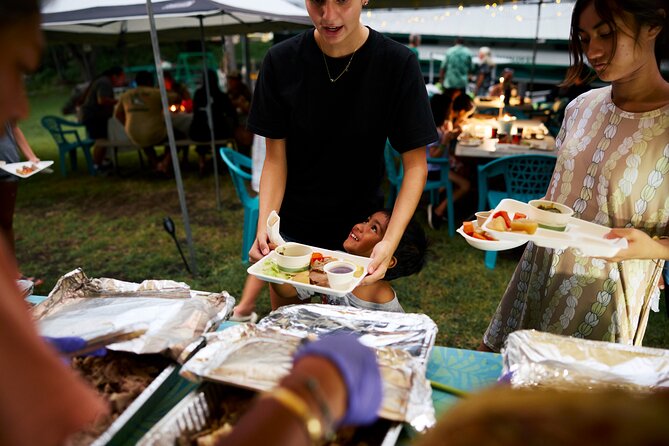
Lunch is included, along with bottled water. The main dishes are:
- Kalua pork cooked in the underground oven
- Kalua chicken cooked in the underground oven
- Kalua vegetables, including sweet potato, kalo, carrots, celery, and more
- Kulolo for dessert, made with kalo, coconut milk, and honey
The menu gives you more than one way to experience the imu. Pork shows the classic kalua preparation, while chicken offers a different texture and flavor. The vegetables make the meal feel tied to local produce, especially the sweet potato and kalo.
Kalo, also known as taro, appears in both the savory food and the dessert. That makes kulolo a particularly useful part of the meal because it shows how one important island ingredient can move from the main course to the sweet finish.
Kulolo is made with kalo, coconut milk, and honey. It is not a generic cake or fruit dessert, so it may be unfamiliar if you have not tried Hawaiian sweets before. The menu information does not list common substitutions or dietary alternatives. If you have food restrictions, ask about them before booking rather than assuming the hosts can change the meal.
The feast is intended to be shared. That social format may be more important than the number of dishes. You are eating food connected to the lesson you just took part in, with the hosts and other participants gathered together. For me, that gives the lunch more meaning than a separate restaurant meal would have.
The cultural value beyond the plate
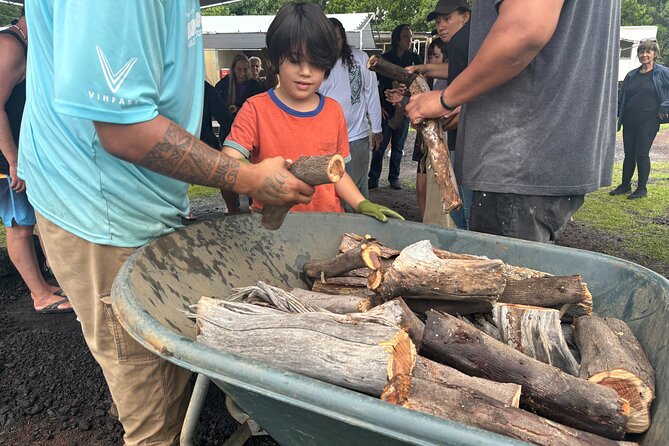
The most praised qualities of this experience are the welcome, the sense of togetherness, and the chance to participate in Hawaiian culture instead of watching a performance. The hosts are described as kind, inspiring, and generous with their explanations.
You also get a direct lesson in how food can bring people together. The idea of ohana is not treated as a decorative word for a tourism brochure. It is tied to family, community, and the practice of sharing a meal.
The gathering includes cultural explanation, chanting, and conversation. Those details make the experience feel more personal, but they also mean you should approach it with respect. This is not a costume show or a quick photo stop. You are being invited into a tradition and asked to listen as well as participate.
The activity is a good choice if you want contact with local culture that has a practical focus. You do not need to be a serious cook. The main value comes from understanding the process and joining in, not from mastering a recipe you can repeat at home.
Families may find the communal structure appealing, especially if children are old enough to follow instructions and stay engaged during the cooking period. The experience can also suit couples, solo visitors, and small groups who prefer a shared table to a formal meal. The maximum of 50 people means the atmosphere can include a broad mix of ages and backgrounds.
Is $150 a fair price?
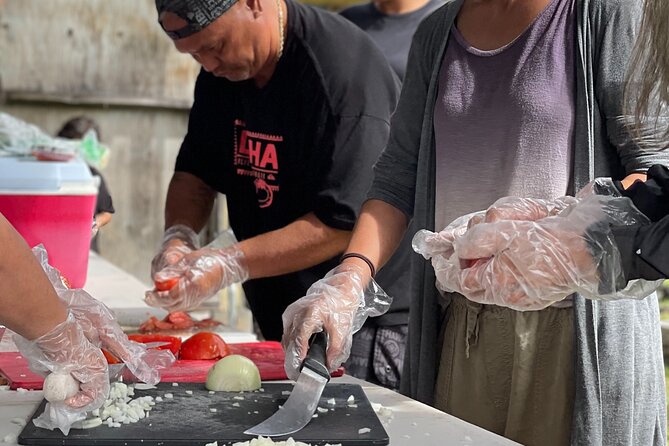
At $150 per person, this is more expensive than an ordinary lunch. It is also not priced like an attraction you can finish in an hour. You are paying for about four hours of instruction, cultural context, hands-on participation, lunch, bottled water, and the work of preparing an imu.
The value depends on what you want from your Big Island visit. If you only want a filling meal, the price is hard to justify. You can find food for much less. If you want a meaningful activity that combines food preparation, cultural teaching, and a communal feast, the cost becomes easier to understand.
I would compare it with the price of several separate activities rather than with lunch alone. You get a cooking experience, a cultural presentation, and a meal in one booking. The hands-on element is important here. You are not just paying to watch the Men of Pa’a cook.
The experience is booked an average of 25 days ahead, so you should not leave it until the last day of your trip. It is offered in English, with mobile ticketing and confirmation at booking. The activity is also offered monthly according to the supplied information, so dates may be limited.
Timing, weather, and cancellation details
You can cancel for a full refund if you do so at least 24 hours before the 10:00 a.m. start time. Changes or cancellations made less than 24 hours before the start are not accepted for a refund.
The activity depends on good weather. If poor weather forces a cancellation, you will be offered another date or a full refund. The same applies if the minimum number of participants is not reached, with the option of a different date, another experience, or a full refund.
These rules are worth noting because the activity takes place outdoors and depends on building an imu. I would avoid placing it immediately before a flight or an important timed reservation. The schedule is straightforward, but weather or minimum attendance can affect the date.
Who should book this experience?
I would recommend it most strongly if you:
- Want a hands-on cultural activity rather than a staged show
- Care about traditional food preparation and local ingredients
- Enjoy communal meals and conversation
- Are interested in Hawaiian ideas about family, land, and gathering
- Have about four hours available in or near Pāhoa
- Are comfortable paying more for a cultural activity than for lunch alone
I would be more cautious if you want a small, quiet group, a formal cooking class, or a tightly timed itinerary. The group can include up to 50 people, and the exact balance of instruction, conversation, and participation may depend on the day.
You should also check the menu carefully if you have dietary restrictions. The listed meal includes pork, chicken, kalo, coconut milk, honey, and several vegetables. No alternative menu is specified.
Should you book the Men of Pa’a imu experience?
Yes, if your priority is a genuine connection between Hawaiian food and culture. The best reason to book is not simply the kalua pork. It is the chance to help build the imu, learn from Native Hawaiian hosts, and eat a meal shaped by the work you just witnessed.
The price is high for lunch, but reasonable for a four-hour cultural activity that includes food, guidance, and participation. Book it well ahead, leave your schedule flexible, and arrive ready to listen and work with the group. If that sounds like your kind of morning, this could become one of the most meaningful food experiences on the Big Island.
FAQ
Where does the imu cooking experience take place?
It begins at 15-1380 Auina Street, Pāhoa, Hawaii 96778, USA. The activity ends back at the same meeting point.
What time does the activity start?
The start time is 10:00 a.m.
How long does the experience last?
The activity lasts approximately four hours.
What is an imu?
An imu is an underground oven that uses materials from the Earth to slow cook food.
Will I help build the imu?
Yes. You take part in building the imu from scratch with guidance from Native Hawaiian hosts.
Who leads the experience?
The experience is provided by Imu Mea ’Ai Food Tour Hawaii and presented by the Men of Pa’a. Iopa Maunakea is identified with the provider.
What food is included?
Lunch includes kalua pork, kalua chicken, kalua vegetables, and kulolo for dessert. Bottled water is also included.
What is kulolo?
Kulolo is a Hawaiian dessert made with kalo, or taro, coconut milk, and honey.
Is the activity offered in English?
Yes. The experience is offered in English.
What happens if the weather is poor?
The experience requires good weather. If it is canceled because of poor weather, you will be offered a different date or a full refund.
More Dining Experiences in Big Island
- Big Island, Hawaii: Volcano and Stargazing Tour with Dinner
★ 4.8 · 179 reviews - Farm-to-Table Chef’s Dinner at Kulaniapia Falls
★ 4.5 · 42 reviews - Hawaii: Big Island Volcanoes Day Tour with Dinner and Pickup
★ 4.5 · 34 reviews - Big Island: Mauna Kea Summit, Stargazing & Dinner
★ 4.9 · 11 reviews
More Dinner Experiences in Big Island
- Big Island Historical Dinner Cruise to Kealakekua Bay
★ 4.5 · 1,279 reviews - Deluxe Volcano Experience with Restaurant Dinner
★ 5.0 · 620 reviews - Kailua-Kona: Voyagers of the Pacific Luau with Buffet Dinner
★ 4.4 · 564 reviews - From Hawaii: Historical Dinner Cruise Tour to Kealakekua Bay
★ 4.8 · 198 reviews
Just added around Big Island
- Volcanoes Adventure Tour from Hilo★ 4.0 · 29 reviews
- Volcanoes National Park and Hilo Private Tour★ 5.0 · 3 reviews
- Volcano National Park and Rainbow Fall in Hilo, Hawaii★ 5.0 · 53 reviews
- Private Shore Excursion Hilo Volcanoes National Park up to 10 PPL★ 5.0 · 36 reviews
- Majestic Waterfall Tour★ 5.0 · 31 reviews
- Private VAN Tour Hilo★ 4.5 · 5 reviews
- Volcanoes National Park Adventure Tour – Hilo Shore Excursion★ 4.5 · 104 reviews
- Hawai’i’s Volcanoes National Park from Hilo Only★ 5.0 · 167 reviews
Cooking Classes, compared.
Farm to Table Cooking Class at Kulaniapia Falls
Read our review →
Browse the lists this tour appears in