Reviewed · TICKETS
Bishop Museum General Admission Ticket
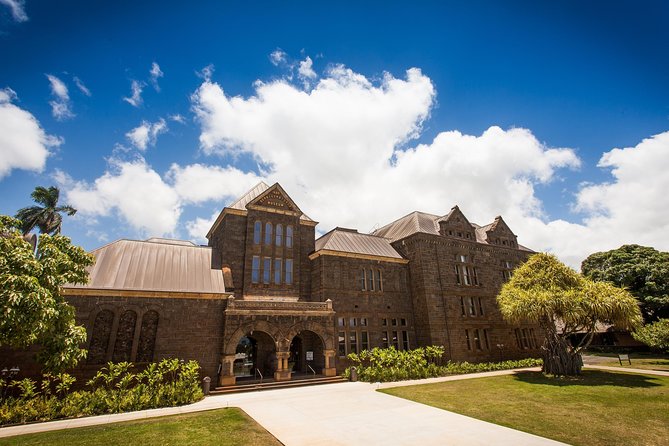
Bishop Museum is the place to go when you want more than beaches and postcards. Its collections connect Hawaiian culture with the wider Pacific, while the science center explains how lava formed the islands. I especially like the Hawaiian Hall Complex, with its ornate woodwork, royal artifacts, feathered kahili, woven mats, and fishing hooks. I also like the Pacific Hall, where migration routes give useful context to the people and cultures of Polynesia.
The catch is scale. Two hours is a quick visit, not a full one, and some important features may be closed or require an additional fee. Check the planetarium schedule, science demonstrations, and special exhibits before you commit, particularly if those are your main reasons for coming.
Key things to know before you go
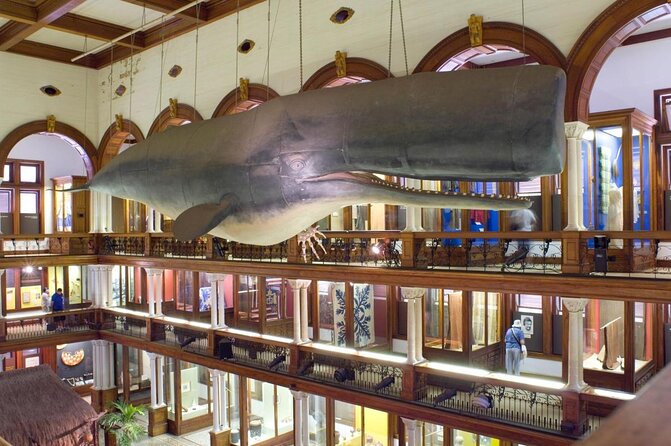
- Hawaiian Hall is the heart of the museum: Allow time for its art, royal objects, cultural displays, and striking historic interiors.
- Pacific Hall puts Hawaii in a wider setting: Maps and exhibits explain Pacific migration, traditions, and shared values.
- The planetarium is an optional extra: Shows focus on Hawaiian and Polynesian skies, astronomy, and traditional navigation.
- The Science Adventure Center suits families: Interactive displays cover lava, volcanoes, and the natural forces that formed the islands.
- Plan for at least half a day: The campus has several buildings, and a one-hour stop will leave much unseen.
- Check what is open: Planetarium shows, special exhibits, the lava demonstration, and individual buildings may not always be available.
Why Bishop Museum belongs on your Honolulu plans
Many Honolulu visits concentrate on Waikiki, Diamond Head, and the water. Bishop Museum gives you a different key to Hawaii. It helps explain the people, traditions, migration routes, natural forces, and political past behind the scenery you see outside.
Founded in 1889, the museum occupies a large campus with several exhibition buildings. You are not simply walking through one series of rooms. You are moving between different parts of Hawaiian and Pacific life, from royal objects and woven materials to astronomy and volcanic science.
I find that range especially useful on a first visit. The cultural displays give meaning to practices and objects you may encounter elsewhere in the islands, while the science exhibits show why Hawaii looks the way it does. The result is a better sense of place, not just a collection of isolated facts.
The museum is rated 4.5 out of 5 from 243 reviews, and the strongest praise centers on the quality of the displays, the beautiful buildings, the breadth of Hawaiian material, and the way the museum also includes other Pacific cultures. Those are fair reasons to make room for it.
A few more Honolulu mornings worth comparing
- Honolulu: Bishop Museum General Admission Ticket
★ 4.7 · 20 reviews
Start with Hawaiian Hall’s woodwork and royal treasures
Begin at the Hawaiian Hall Complex. This is the main cultural draw, and it deserves more than a hurried walk through. The building itself is part of the experience, with detailed woodwork and an ornate interior that gives the displays a fitting setting.
Inside, you can expect objects tied to Hawaiian leaders, daily life, craft, ceremony, and older traditions. Feathered kahili receive special attention, as do woven mats, fishing hooks, historic photographs, and other preserved materials. Displays about Hawaiian leaders and their culture help connect objects to real people and social traditions.
I like exhibits that explain not only what an object is, but also why it mattered. That approach is important here. A fishing hook is more than a clever piece of old equipment, and a woven mat reflects skill, materials, and a way of life. Allow yourself time to read the labels if Hawaiian culture is new to you.
The collection can feel large and dense. If you read every panel, you could spend much of the day in this building alone. That is rewarding for history-minded visitors, but children or companions who prefer hands-on activities may need a break at the Science Adventure Center.
You might also find displays or rooms closed during your visit. The museum has a wide program of changing exhibits, so the exact mix can vary. Ask at admission which areas are operating that day, then shape your route around the sections you most want to see.
Follow Pacific migration routes in Pacific Hall
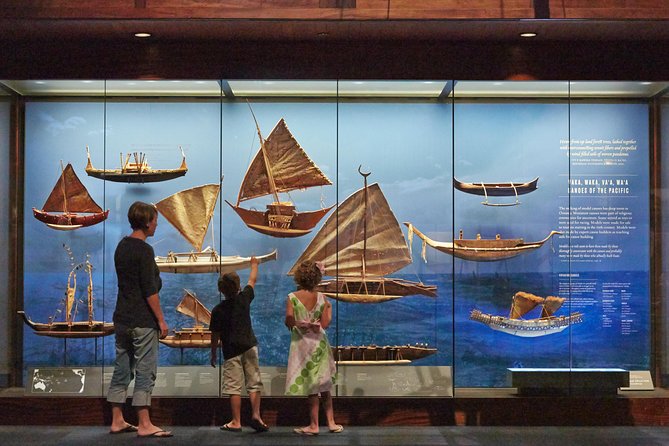
Pacific Hall broadens the story beyond Hawaii. Its exhibits examine where Pacific peoples came from, how they moved across the ocean, and how communities developed their own values and traditions.
The large migration map is one of the most useful features because it gives a clear visual guide to a subject that can otherwise feel abstract. It helps you place Hawaii within a much larger movement of people across the Pacific. If you have little background in Polynesian history, this section gives you a framework before you encounter more specialized displays.
You can also expect material connected with navigation, island settlement, woven objects, and Pacific cultural practices. The point is not to treat the islands as separate curiosities. Instead, the exhibits show connections between peoples while allowing each culture its own story.
This is a good area to visit before or after Hawaiian Hall. Start with Pacific Hall if you want broad context first. Begin with Hawaiian Hall if you would rather focus on Hawaii and then widen your view.
I would not rush this building simply because the artifacts may look less familiar than the royal displays. The migration story is one of the museum’s most valuable lessons, and it gives you a better understanding of why Hawaiian culture cannot be separated from the wider Pacific.
Look up at the Jhamandas Watumull Planetarium
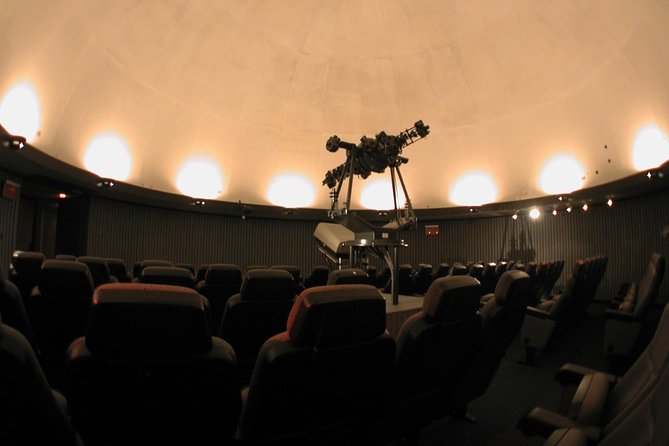
The Jhamandas Watumull Planetarium focuses on the skies of Hawaii and Polynesia. Its subject is not astronomy in isolation. It also explores how ancient Pacific voyagers read the sky and used it as part of ocean navigation.
That makes the planetarium a strong companion to Pacific Hall. One section explains movement across the ocean, while the other shows the heavens that helped make such journeys possible. A planetarium program about navigation by the stars can be one of the most memorable parts of a visit.
There is an important practical catch: the planetarium show is not included in general admission. It requires an optional fee, and availability can change. Some visitors have found it closed, so check the day’s schedule before building your visit around it.
The waiting area has received criticism for needing improvement, but that should not obscure the value of the program itself when it is operating. If celestial navigation interests you, this is one of the experiences worth prioritizing.
Because the museum is large, plan the show time early. A scheduled planetarium program can help organize the rest of your visit. It also prevents the common mistake of discovering at closing time that you have seen the main hall but missed the feature you most wanted.
Same island, a completely different kind of day:
- Oahu Grand Circle Island and Haleiwa Tour: 9-Hr Deluxe Experience
★ 5.0 · 17,387 reviews - Oahu: Grand Tour Around Island 16 Locations plus Snorkeling
★ 5.0 · 8,669 reviews - Salute to Pearl Harbor Including USS Arizona
★ 4.5 · 7,433 reviews - Majestic Circle Island Tour with Lunch
★ 5.0 · 7,014 reviews
See volcano science at the Science Adventure Center
The Richard T. Mamiya Science Adventure Center provides the museum’s most hands-on section. It focuses on science connected to Hawaii and the Pacific, with exhibits about lava, island formation, and the natural forces that created the archipelago.
This is the building I would choose for families with children. Young visitors who tire of labels and display cases can interact with the subject here. Adults also benefit because the center turns geology into something easier to picture.
The live lava melting demonstration is a major draw when it is operating. It gives you a direct look at the heat and material involved in volcanic activity. The experience can make the formation of the Hawaiian Islands feel less like a textbook explanation and more like an active process.
Do not assume every demonstration runs every day. The lava program has not always been available, and some parts of the science building may be closed. Ask about the schedule when you arrive.
The science center also works well on a rainy day. Much of the museum is indoors, and the mix of cultural displays and interactive science gives you a solid backup plan when outdoor activities are less appealing. The stated policy says the experience operates in all weather conditions, but poor weather can still lead to a cancellation or a date change, so check before setting out.
Allow time for Castle Memorial Building exhibits
The Castle Memorial Building is used for changing exhibits. It can add a fresh subject to the permanent Hawaiian and Pacific collections, but its content is not fixed, and parts of the building may not always be open.
That uncertainty means you should treat it as a bonus rather than the main reason to buy admission. If a special exhibit interests you, ask about its current status and any extra charge. Special exhibits are not included in the general ticket.
Some temporary displays may appeal strongly to adults interested in art, history, or cultural preservation. Other visitors may find the building less essential than Hawaiian Hall or the Science Adventure Center. Your priorities matter here, especially if you have only two hours.
How long should you stay?
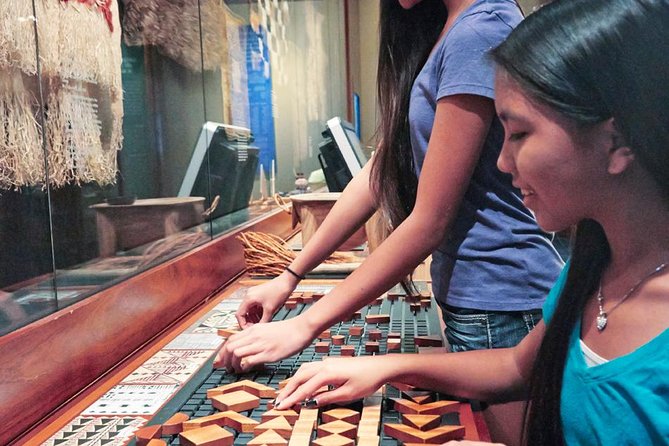
The advertised visit can last from one to eight hours, but the useful planning number is half a day. Two hours can cover the main museum at a brisk pace. It is not enough for careful reading, the planetarium, the science center, and changing exhibits.
I would use these time plans:
- One hour: Choose one priority, probably Hawaiian Hall, and accept that you will see only a small portion.
- Two hours: Visit Hawaiian Hall and one additional building, with limited time for reading.
- Half a day: Cover the main cultural buildings, the Science Adventure Center, and a planetarium show if available.
- Most of a day: Read more labels, take breaks, see changing exhibits, and avoid feeling hurried.
Arrive early if you want to make full use of the campus. The museum can absorb far more time than expected, and the on-site restaurant may close before you finish if you arrive late. Eating beforehand or planning a meal break is sensible.
Wear comfortable clothing and shoes. You should expect walking between buildings and extended periods on your feet. The required fitness level is described as moderate, and service animals are allowed.
Is $38.95 a fair price?
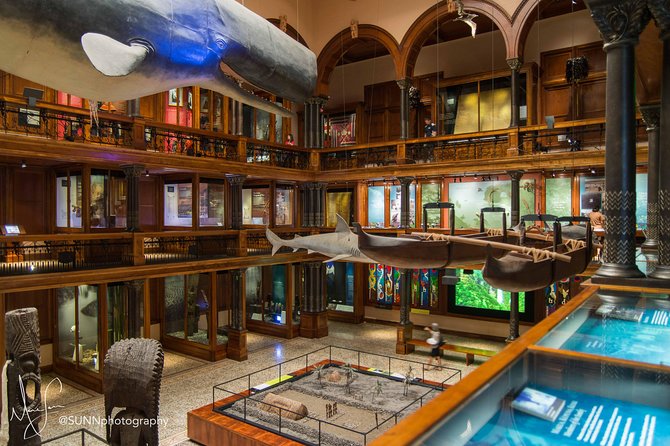
At $38.95 per person, general admission is not a cheap quick stop. The value depends almost entirely on how long you stay and which buildings are open.
For a one-hour visit, I would find the price hard to justify. For three to five hours, with Hawaiian Hall, Pacific Hall, and the science center all operating, the cost becomes more reasonable. The museum offers a much wider experience than a single gallery, and the buildings themselves add to the visit.
Remember that parking, planetarium shows, and special exhibits are optional extras. That matters when you compare the total cost for a family. A family that wants the planetarium and a temporary exhibit may spend more than the general admission price suggests.
There is also a practical price-check issue. Some admission days or on-site offers may cost less than the advance mobile-ticket price, and the ticket is nonrefundable inside the 24-hour window. Check the museum’s current admission information before buying so you know exactly what you are paying for and what is included.
The ticket does provide convenience, especially if you value a mobile confirmation and want to arrive with admission arranged. But convenience is not a substitute for checking hours, closures, and extra fees.
Who will enjoy this museum most?
I recommend Bishop Museum to anyone who wants cultural context for a Hawaii visit. It is particularly good for:
- First-time visitors who want to understand Hawaiian traditions.
- Families who can split time between cultural displays and interactive science.
- History and museum fans who enjoy reading labels and examining objects.
- Visitors looking for an indoor activity on a rainy or uncertain-weather day.
- Anyone interested in Polynesian migration and traditional navigation.
- Teenagers who prefer exploring at their own pace.
It may be less satisfying if you want a short, highly guided attraction with one simple storyline. The museum is spread across several buildings, and some sections may be closed. Children who dislike display cases may find the main museum slow, although the science center offers a better fit.
No guide name is provided because this is general admission rather than a named guided tour. You set your own pace, which is useful if one person wants to read every label while another prefers interactive displays.
Booking, cancellation, and practical checks
You receive confirmation at booking and can use a mobile ticket. The museum is near public transportation, and service animals are permitted.
Free cancellation is available up to 24 hours before the experience starts. Inside 24 hours, the amount paid is not refunded, and changes are not accepted. The stated policy also allows a new date or full refund if the experience is canceled because of poor weather.
That weather rule is worth noting even though much of the museum is indoors. Check the local conditions and operating status before you leave, especially if you have limited time in Honolulu.
Before booking, confirm four things:
- Which buildings are open.
- Whether the planetarium has a show that day.
- Whether the lava demonstration is scheduled.
- Whether parking, special exhibits, or planetarium admission will add to your cost.
Should you book Bishop Museum?
Yes, if you want a serious look at Hawaiian and Pacific culture rather than another brief sightseeing stop. I would book it for a half-day, start with Hawaiian Hall, and then add Pacific Hall and the Science Adventure Center. If astronomy is important to you, confirm the planetarium first.
I would skip or reconsider it if you have only one hour, dislike museums, or are paying mainly for a feature that may be closed. The ticket offers its best value when several buildings are operating and you give the campus enough time.
For most visitors, Bishop Museum is one of Honolulu’s most useful cultural stops. It explains the islands through objects, stories, migration, stars, and lava. Go early, check the schedule, and resist the urge to rush.
FAQ
What does the Bishop Museum general admission ticket include?
It includes general admission to Bishop Museum and access to its regular museum areas, including Hawaiian Hall, Pacific Hall, the Science Adventure Center, and available changing exhibits.
How much does admission cost?
The listed price is $38.95 per person. Parking, planetarium shows, and special exhibit fees are not included.
How long should I plan for Bishop Museum?
The visit can take from one to eight hours. Plan at least half a day if you want time for several buildings and detailed displays.
Is the planetarium included in admission?
No. The Jhamandas Watumull Planetarium show is optional and requires an additional fee.
What does the planetarium cover?
The planetarium explores the skies of Hawaii and Polynesia, astronomy, and the way ancient voyagers used the stars for navigation.
Is the lava demonstration included?
The Richard T. Mamiya Science Adventure Center features a live lava melting demonstration, but availability can vary. Confirm that it is scheduled when you arrive.
Is parking included?
No. Parking fees are optional and are not included in the general admission ticket.
Is Bishop Museum suitable for children?
The Science Adventure Center offers interactive exhibits that are especially suitable for children. The main cultural displays may appeal more to older children, teenagers, and adults who enjoy reading and examining artifacts.
Is the museum open in bad weather?
The experience operates in all weather conditions, but the stated policy allows cancellation because of poor weather, with a different date or full refund offered.
What is the cancellation policy?
You can cancel for a full refund up to 24 hours before the experience start time. Cancellations or changes made less than 24 hours before the start time are not refunded or accepted.
Just added around Honolulu
- Honolulu: Waikiki Food Tour with Local Guide★ 5.0 · 3 reviews
- Honolulu: 90 Minute Catamaran Sunset Sail★ 4.8 · 64 reviews
- Honolulu: SUP (Standup Paddleboard) Yoga Class★ 5.0 · 5 reviews
- Honolulu: Sunset 5 Course Dinner Cruise with Entertainment★ 4.4 · 28 reviews
- Honolulu: Stunning Views of Oahu! Half-day Scenic Tour★ 4.8 · 107 reviews
- Honolulu: Pacific Star Sunset Buffet and Show★ 4.1 · 51 reviews
- Honolulu: Magic Island & Beach Segway Tour★ 5.0 · 10 reviews
- Honolulu: Liljestrand House Architectural Tour★ 5.0 · 5 reviews
Tickets, compared.

Waikiki Luau Buffet with Optional Rock-A-Hula Show Ticket
Read our review →
Princeville Botanical Gardens Tour and Chocolate Tasting Ticket
Read our review →

Polynesian Cultural Center: Islands of Polynesia Admission Ticket
Read our review →
Diamond Head Hike Shuttle with Reservation Tickets Included
Read our review →
Polynesian Cultural Center Island Villages Ticket
Read our review →