
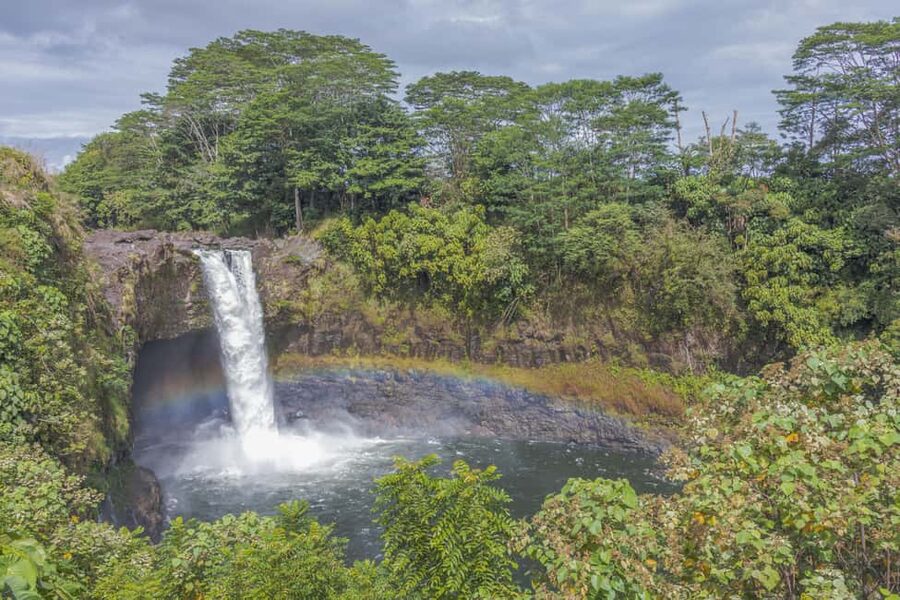
Reviewed · VOLCANO TOURS
Hawaii: All-Inclusive Volcanoes and Waterfalls Private Tour
Hawai‘i’s Big Island gives you waterfalls, steaming ground, giant volcanoes, and fresh lava rock in one long day. This private tour links those sights without asking you to plan the roads, park stops, meals, or equipment yourself. Halema‘uma‘u Crater and the Thurston Lava Tube are the major draws.
I like two things here: first, the route moves from the wet, green east side to the stark volcanic country around Kilauea; second, guide Shawn adds real detail about geology, plants, animals, and Hawaiian culture. The main drawback is the length. At 8.5 to 12.5 hours, this is a full day in a vehicle with several walks, stairs, and changing weather.
- Saddle Road connects two giant volcanoes: Travel between Mauna Kea and Mauna Loa before reaching the lush east side.
- Waterfalls come early: See Boiling Pots, Rainbow Falls, and Akaka Falls before the main park visit.
- Kilauea offers several kinds of volcanic scenery: Expect a crater rim, steam vents, a lava tube, and possibly additional volcanic sites.
- The tour is private for up to two people: Your guide can adjust the route for age, ability, and comfort.
- Useful gear is supplied: Rain jackets, warm jackets, hiking poles, headlamps, binoculars, food, drinks, and park admission are included.
- You receive 20 to 25 edited photos: The images are delivered through Adobe Cloud after the tour.
A Big Island day built around Kilauea
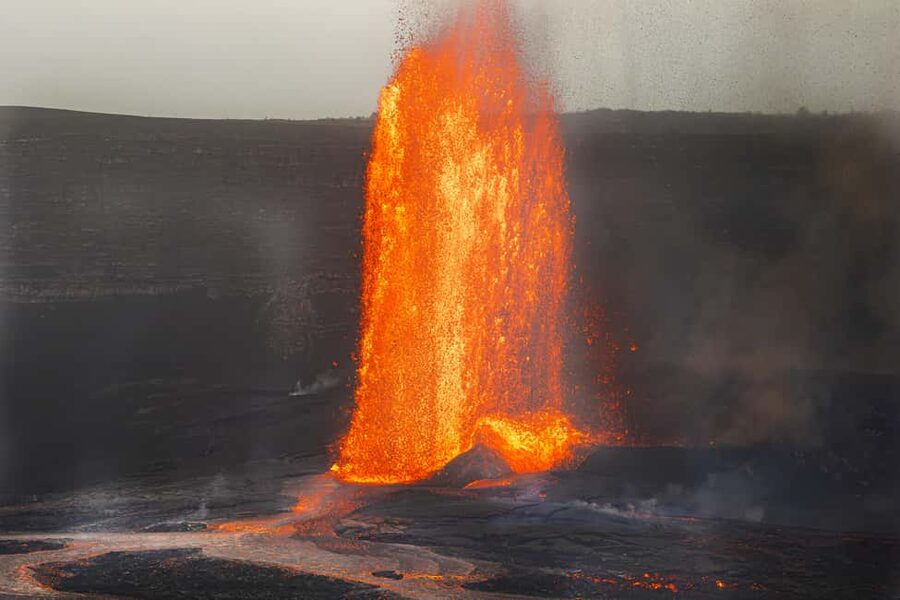
This is not a quick park stop with a drive-by waterfall attached. It is a long cross-island outing that lets you see how dramatically Hawai‘i changes from one side to the other.
Your day begins with pickup in Kailua-Kona, Mountain View, Volcano, or Hilo. From there, you cross Saddle Road between Mauna Kea and Mauna Loa. In winter, snow can cap the summits, a striking sight above an island better known for palms and beaches.
The route then turns toward the wetter east side. That change matters. Around Hilo, water shapes the scenery, with rivers, falls, thick plant growth, and mist. At Hawai‘i Volcanoes National Park, the mood shifts again to broad caldera views, black rock, steam, and the active volcanic heart of the island.
I like this structure because the drive itself becomes part of the lesson. You are not only collecting three separate attractions. You are seeing how elevation, rainfall, and volcanic activity create very different parts of the Big Island.
Boiling Pots and Rainbow Falls near Hilo
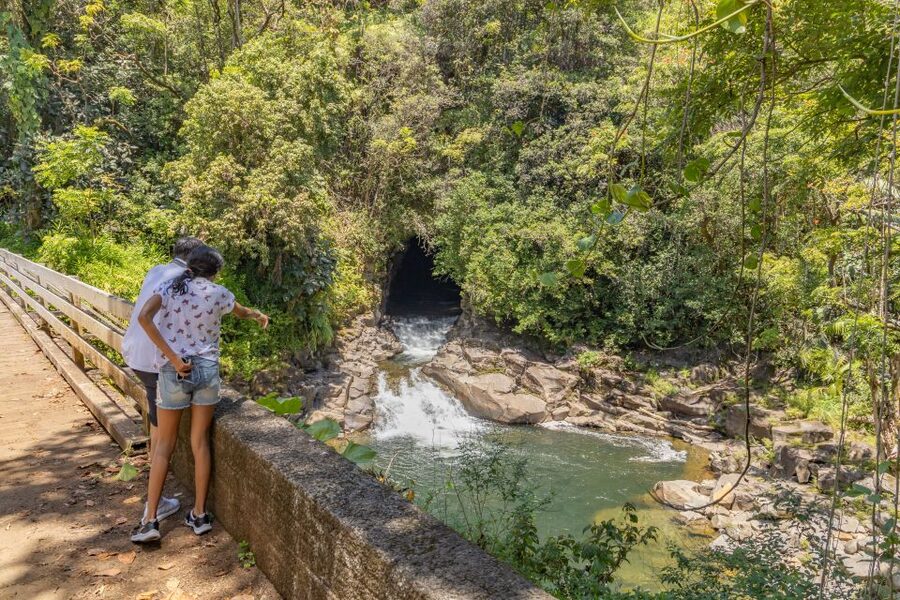
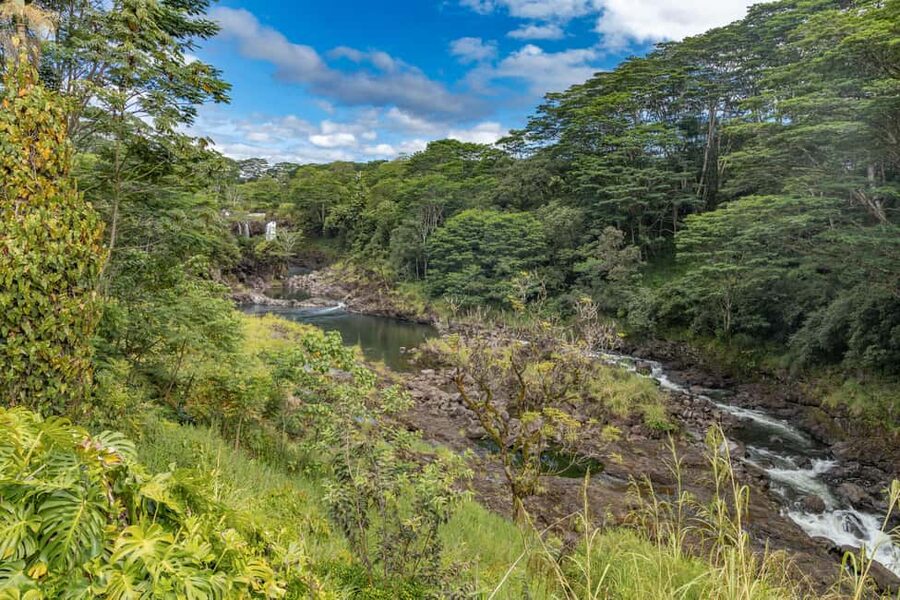
Boiling Pots is the first listed stop, with about 30 minutes for a guided visit, photos, walking, and free time. The Wailuku River runs through a series of rock pools and channels here, creating a rough, broken appearance that gives the place its name.
This is a short stop, not a long hike. That makes it a useful first pause after pickup, especially if you need time to stretch your legs and get settled with your guide. Bring your camera, but keep your attention on the river and wet rock rather than trying to rush toward the water.
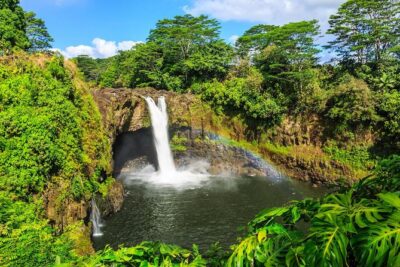
Rainbow Falls follows, also with about 30 minutes. The waterfall drops over a cave associated in Hawaiian legend with Hina, the mother of the demigod Maui. Early morning can bring a rainbow in the mist, though that effect depends on sun, water, and timing.
The waterfall is close to Hilo, so it is easy to reach, but it still feels tied to local stories and the natural force of the river. Ask your guide about the cultural meaning of the site rather than treating it as only a photo stop. The scheduled time is enough for views and pictures, though not for a long walk.
More Waterfall Tours in Big Island
- Big Island: Volcanoes, Waterfalls, & Coffee Farm Day-Trip
★ 4.9 · 414 reviews - Hilo Shore Excursion: Active Volcano, Lava Tube, Waterfall and Gardens
★ 5.0 · 393 reviews - Big Island: Volcano, Black Sand Beach, Waterfall, with Lunch
★ 4.9 · 44 reviews
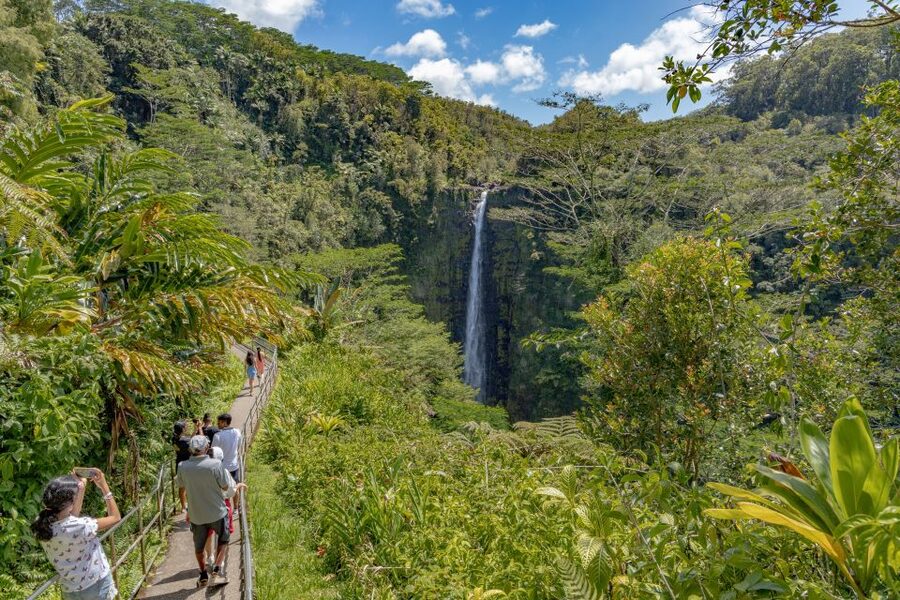
Akaka Falls adds a short rainforest walk
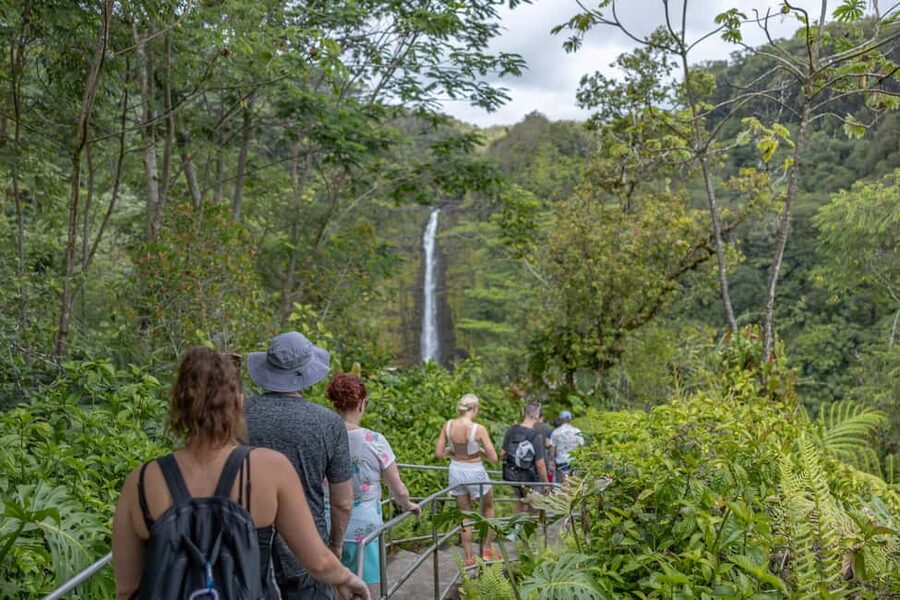
The next stop is Akaka Falls State Park, with about 45 minutes for a visit and hike. This gives the day a different kind of waterfall experience. Rainbow Falls is viewed as a powerful river drop near Hilo, while Akaka Falls is reached within a state park setting and requires walking.
The time here is fairly tight. You should wear comfortable shoes and be ready for stairs or uneven ground. The tour information calls for the ability to walk one to two miles with some stairs across the day, not necessarily at this stop alone.
Akaka Falls is valuable because it breaks up the long drive before the national park. It also shows why weather gear belongs in your day pack. Conditions can be cool, wet, or muddy, and the tour runs in weather-dependent conditions.
You do not need to pack a full hiking kit. The company supplies Black Diamond hiking poles, Patagonia rain jackets, Nano Puff jackets, and headlamps. Still, bring your own comfortable shoes, hat, camera, weather-appropriate clothing, and reusable water bottle.
Crossing into Hawai‘i Volcanoes National Park
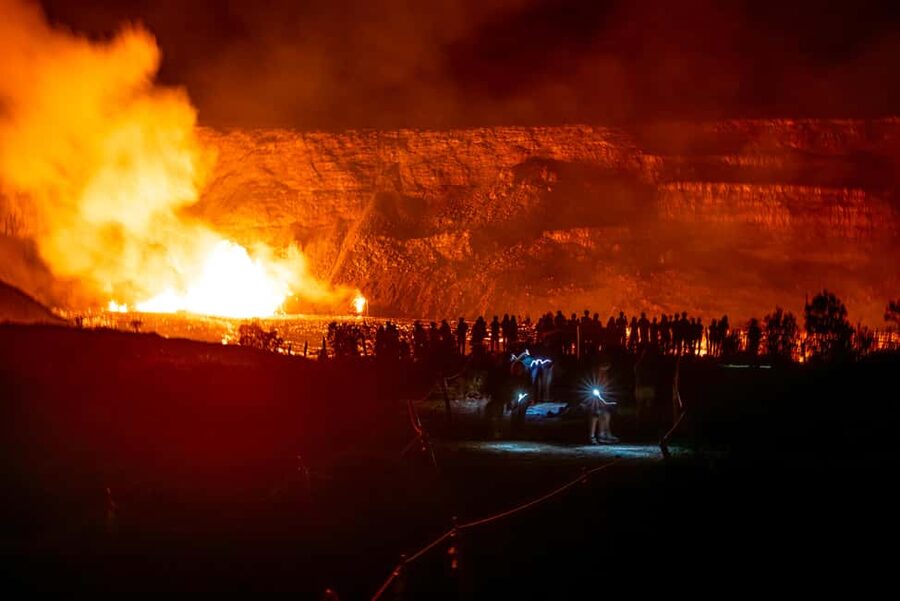
The national park receives about three and a half hours, making it the center of the day. Hawai‘i Volcanoes National Park reaches from sea level to the 13,677-foot summit of Mauna Loa and protects an unusual mix of geological, biological, and cultural sites.
The park is also a UNESCO World Heritage Site and an International Biosphere Reserve. Those designations matter less as labels than as a reminder that this is a place of global scientific and cultural importance. Critically endangered wildlife lives here, and the volcanic ground continues to change.
Your guide can shape the park portion around conditions, time, and your abilities. Possible stops include Devastation Trail, Kilauea Iki, Ha‘akulamanu sulphur banks, Maunaulu, and upper sections of Chain of Craters Road. You may not see every one of these places. The route is customizable, and weather or park conditions can affect access.
That flexibility is a major advantage of a private tour. A fixed bus route has to keep moving. Here, you can discuss how much walking you want, how cold or wet you are willing to get, and which volcanic features interest you most.
Halema‘uma‘u Crater and the story of Pele
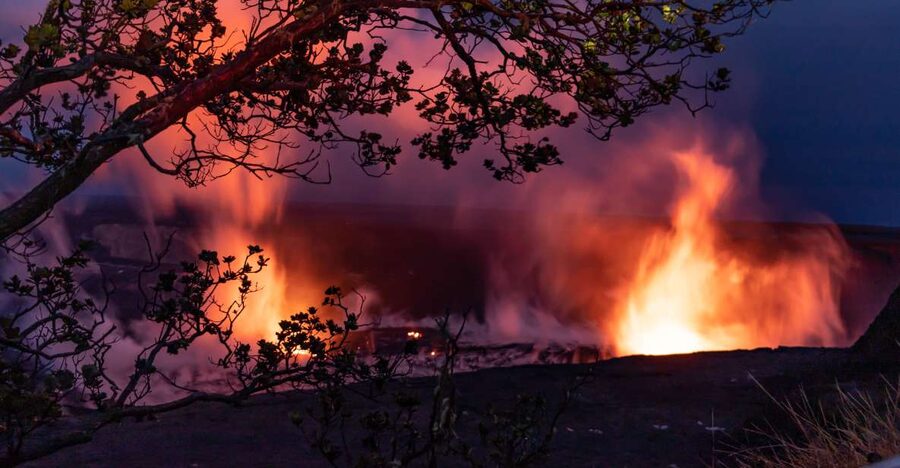
A walk along the rim of Halema‘uma‘u Crater gives you the park’s defining view. Collapses in 2018 nearly doubled the crater’s size, so the shape you see reflects a major recent change in Kilauea.
Halema‘uma‘u is traditionally linked with Pele, the Hawaiian goddess of fire and volcanoes. That cultural connection gives the crater a deeper meaning than a simple geological viewpoint. Your guide can help connect the physical features with Hawaiian traditions and the island’s ongoing relationship with volcanic fire.
The supplied experience describes views of volcanic activity from multiple viewpoints, but conditions can change. Do not book this expecting a guaranteed eruption display or a particular level of glow. Volcanoes are not scheduled attractions. The value comes from seeing the crater, learning how it changes, and understanding the forces beneath the island.
Bring layers. The park can feel cool, especially after the warmer coastal areas, and cloud or rain can change visibility quickly. The included warm jacket and rain jacket are practical here, not decorative extras.
More volcano and lava-country days:
- Volcano Adventure: Hilo Sightseeing w/ Optional Helicopter Tour
★ 4.5 · 412 reviews - Hawaii Volcanoes National Park and Hilo Highlights Small Group Tour
★ 5.0 · 260 reviews - Hilo: Hawaii Volcanoes National Park Flight
★ 4.4 · 248 reviews - Big Island: Hawaii Volcanoes National Park and Hilo Tour
★ 5.0 · 118 reviews
Steam vents at Wahinekapu Steaming Bluff
At Wahinekapu Steaming Bluff, groundwater heated below the surface escapes through cracks as steam. This is one of the easiest volcanic processes to understand in person. Instead of viewing old lava as something finished, you can see heat still moving beneath the ground.
You may feel warmth from the steam, but take your guide’s instructions seriously. Volcanic areas are not places for casual wandering. Stay on the route and avoid touching ground, rocks, or vapors unless specifically told it is safe.
This stop also gives you a sensory change after the crater views. The air, temperature, and smell can shift around steam vents. If you use the supplied binoculars, they may be more useful at crater viewpoints and for spotting wildlife than at the vents themselves.
Thurston Lava Tube: walking through former fire
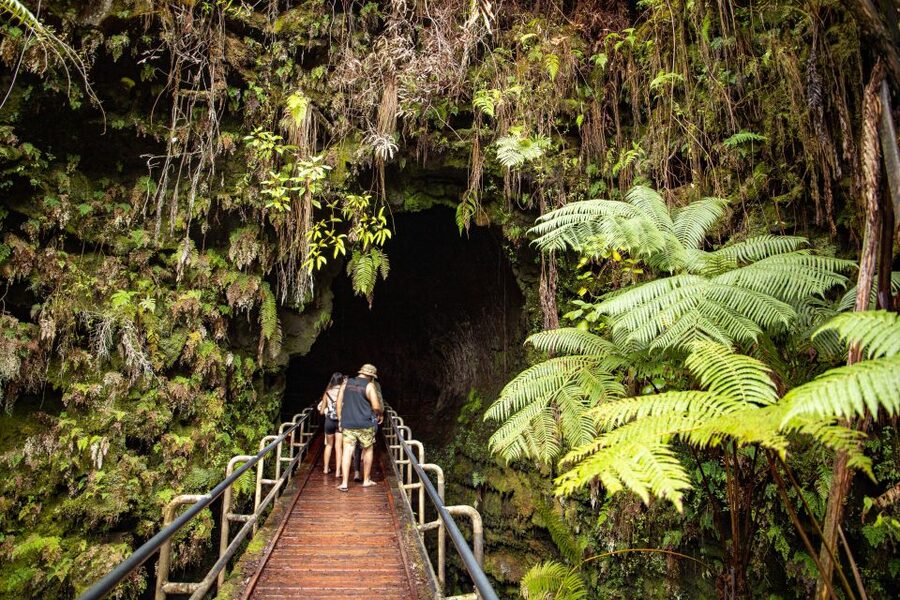
Thurston Lava Tube is about 600 feet long and more than 20 feet tall in places. A lava tube forms when the outside of a lava flow cools while molten material continues moving inside. Once the flow drains, a tunnel remains.
Walking through a tube makes volcanic geology much easier to understand than looking at a diagram. You are inside the path once used by lava, with the shape of the flow preserved overhead and along the walls.
The passage is a short walk, but the wider day includes uneven or rocky ground and stairs. Headlamps are included, which is helpful if the tube or nearby walking areas are dim. You should still bring shoes with a solid grip.
The tube is one of the most memorable parts of the route because it turns a large geological process into a physical place you can enter. It also contrasts nicely with the open crater views and exposed lava fields.
Additional park stops and an inactive lava field
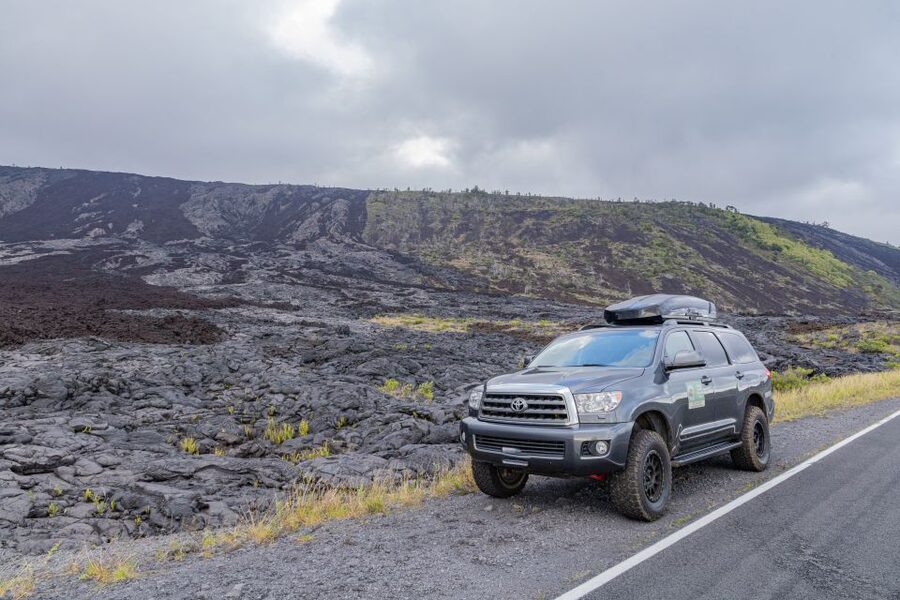
Depending on the route, time, and conditions, you may visit Devastation Trail, Kilauea Iki, the sulphur banks at Ha‘akulamanu, Maunaulu, or upper Chain of Craters Road. Each offers a different view of volcanic change.
Devastation Trail focuses on the effects of an eruption. Kilauea Iki gives you another way to see a volcanic depression. The sulphur banks bring you closer to volcanic gases and altered ground, while Maunaulu and Chain of Craters Road can add broader views of lava formations.
The tour can also include walking on an inactive lava field. This is not the same as walking beside active lava. It is a chance to read the surface, notice the shapes left by cooling rock, and see how difficult the ground can be for plants to reclaim.
Your guide’s role matters most here. Shawn has been praised for explaining volcanoes, geology, ecology, flora, fauna, lava formations, and Big Island culture while checking that the pace remains comfortable. That combination is useful because raw volcanic rock can look similar from a distance. Good explanations help you notice why one area differs from another.
What the private format changes
The price is $1,305 for a group of up to two people. At the maximum group size, that works out to $652.50 per person. That is a serious price, but you are paying for more than transport to a park.
The package includes hotel pickup and drop-off, admission to all venues and parks, a naturalist guide, lunch, snacks, non-alcoholic drinks, and dinner in Volcano on the 12-hour version. It also includes the outdoor equipment that you might otherwise need to rent or pack.
You receive 20 to 25 professionally edited photos through Adobe Cloud. That adds value if you want a record of the day without spending the tour constantly framing pictures. Souvenirs are not included, so budget separately for those.
The private format is especially useful for couples or two friends who want a flexible day. The guide can adapt the tour for different ages and abilities, though everyone should still be able to walk one to two miles with some stairs unless another plan is arranged.
The price makes less sense if you only want a short waterfall outing or a quick crater photo. It makes more sense if you would otherwise rent a car, pay park and attraction costs, buy food, bring rain and cold-weather gear, and spend time building your own route.
Timing, meals, weather, and comfort
The duration ranges from 510 to 750 minutes, or about 8.5 to 12.5 hours. Confirm the exact start time and length when you book, since the shorter version does not include the listed dinner in Volcano.
This is a long day, and the cross-island route means you should not plan another major activity afterward. Lunch, snacks, and drinks are included, which keeps the day moving and reduces the need to search for food between stops.
Weather can affect both comfort and sightseeing. You might encounter cool, wet, or muddy conditions, especially around waterfalls and the volcano park. The supplied Patagonia rain jacket and Nano Puff jacket help, but bring clothing that you are willing to walk in and shoes that can handle uneven ground.
The tour is wheelchair accessible, but the activity information also says participants should be ready for uneven or rocky terrain and some stairs. Discuss your needs with the company before the day so the route can be adjusted properly.
Cancellation is free up to 24 hours before the activity, and you can reserve now and pay later. Pickup is available from Kailua-Kona, Mountain View, Volcano, and Hilo, with drop-off at those same four locations.
Who should book this Big Island tour?
I would choose this for a couple staying on the Big Island who wants one carefully planned day covering waterfalls and volcanoes. It is also a good fit if you care about explanations, culture, ecology, and geology rather than simply collecting photos.
The experience suits you if you are comfortable with a long day, changing weather, and several walks. The private setup is helpful for families or mixed-ability groups because the pace and stops can be discussed with the guide.
I would hesitate if you dislike long drives, want a relaxed half-day, or need a guaranteed view of active lava. Volcanic activity and visibility are not fixed, and the most interesting park stops depend on conditions.
Final call: a strong choice for a first volcano day
Book this tour if you want the Big Island’s major natural contrasts in one outing: river pools, two waterfall settings, a lava tube, steaming ground, crater views, and old lava fields. The included gear, food, admission, transport, and edited photos help explain the high cost, especially for two people who would otherwise organize every detail themselves.
Skip it if your priority is beach time or a short scenic drive. The day is long and active. For the right pace, though, this gives you a practical way to understand the island, not just look at it. Shawn’s clear explanations and regular comfort checks add the human touch that can turn volcanic rock into a story you remember.
FAQ
How long does the private volcano and waterfall tour last?
The duration is between 510 and 750 minutes, which is about 8.5 to 12.5 hours. Check the available start times and exact duration when booking.
Where can pickup and drop-off take place?
Pickup and drop-off are available in Kailua-Kona, Mountain View, Volcano, and Hilo. The company contacts you after booking to confirm the location.
What places are included during the tour?
The route includes Boiling Pots, Rainbow Falls, Akaka Falls State Park, and Hawai‘i Volcanoes National Park. Park stops can include Halema‘uma‘u Crater, Wahinekapu Steaming Bluff, Thurston Lava Tube, Devastation Trail, Kilauea Iki, Ha‘akulamanu sulphur banks, Maunaulu, and upper Chain of Craters Road.
Is food included?
Yes. Lunch, snacks, and non-alcoholic drinks are included. Dinner in the town of Volcano is included on the 12-hour tour version.
What equipment does the company provide?
The tour provides Patagonia rain jackets, Nano Puff jackets, Black Diamond hiking poles, headlamps, and Nikon Prostaff binoculars. You also receive 20 to 25 professionally edited photos through Adobe Cloud.
How much walking is involved?
Unless you arrange a modification, you should be able to walk at least one to two miles with some stairs. You must also be prepared for uneven or rocky ground and possible cool, wet, or muddy conditions.
Can the tour be adapted for different ages and abilities?
Yes. The experience is customizable and can be adapted for different ages and abilities. Discuss needed changes with the guides after booking, since activities are also dependent on weather and conditions.
More Waterfall Tours in Hilo
- Hilo: Waterfall Hike and Swim with Native Hawaiian
★ 4.9 · 8 reviews - From Big island-Volcanoes & waterfall tour in a small group
★ 3.8 · 4 reviews - Hilo: Kilauea Fissure 8 Hiking, Volcanoes and Waterfalls
★ 4.7 · 3 reviews - Big Island in a Day: Volcanoes Waterfalls Sightseeing and History
★ 5.0 · 6,569 reviews
Just added around Hilo
- Hilo: Waterfall Hike and Swim with Native Hawaiian★ 4.9 · 8 reviews
- Hilo: Walking Ghost Tour★ 4.7 · 8 reviews
- Hilo: Kilauea Fissure 8 Hiking, Volcanoes and Waterfalls★ 4.7 · 3 reviews
- Hilo: Elite Volcano Hike★ 4.8 · 8 reviews
- Hilo: Discover Hilo Helicopter Tour★ 4.1 · 35 reviews
- From Big island-Volcanoes & waterfall tour in a small group★ 3.8 · 4 reviews
- From Hilo: Hawaii Volcanoes National Park Tour★ 4.9 · 70 reviews
- Big Island: Volcano, Black Sand Beach, Waterfall, with Lunch★ 4.9 · 44 reviews
Volcano Tours, compared.
Big Island in a Day: Volcanoes Waterfalls Sightseeing and History
Read our review →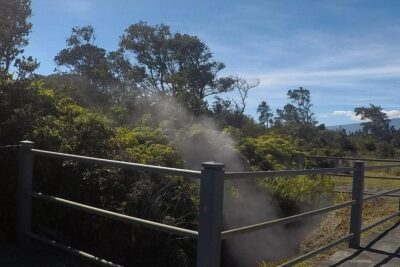
Hilo Shore Excursion: Volcanoes National Park & Black Sand Beach
Read our review →
Small Group Big Island Twilight Volcano and Stargazing Tour
Read our review →
Big Island Highlights: Coffee, Volcano, Black Sands & Waterfall
Read our review →
Deluxe Volcano Experience with Restaurant Dinner
Read our review →
Captain Cook Snorkel Tour with Sea Caves and Lava Tubes
Read our review →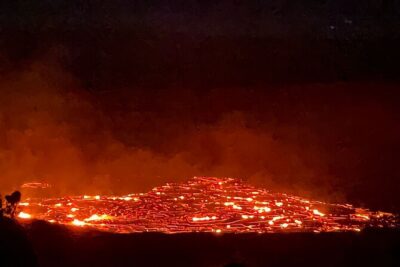
Fat Tire E-Bike Tour through Volcanoes National Park
Read our review →Browse the lists this tour appears in