
Reviewed · MAUNA KEA STARGAZING
Hilo: Mauna Kea Summit, Sunset, & Stargazing Experience
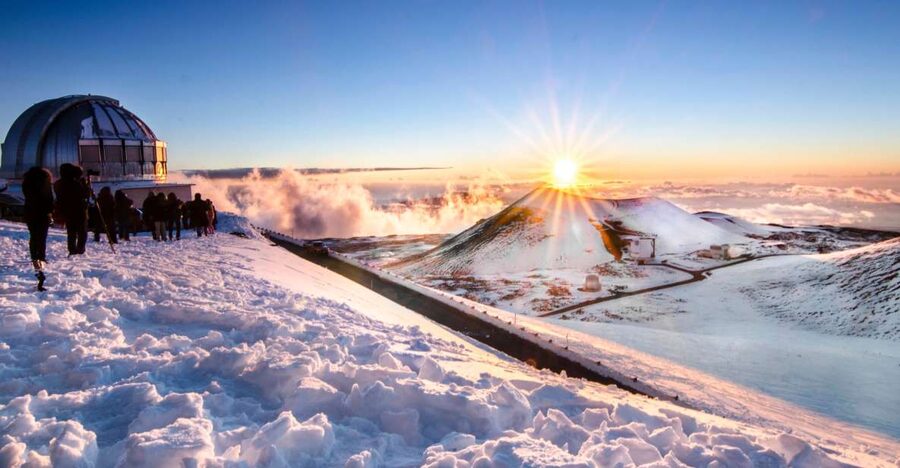
Mauna Kea gives you two big shows in one evening: a sunset above the clouds and a sky crowded with stars after dark. At nearly 14,000 feet, you’ll also see the mountain’s famous research telescopes, including two linked to the first image of a black hole.
I like the warm parkas, gloves, hot chocolate, and snacks, which turn a very cold outing into a comfortable one. I also like having guides such as Val, Tay, John, and Jess explain the stars through both science and Hawaiian tradition. The drawback is serious: this is a high-altitude trip requiring good physical condition, and poor weather can affect the summit or telescope viewing.
Key points to know before booking
- Sunset from nearly 14,000 feet: Watch the sun drop beneath a sea of clouds from Mauna Kea’s summit.
- Astronomy with a human touch: Guides connect constellations to science, navigation, Hawaiian culture, and Greek mythology.
- Warmth is supplied: Parkas, gloves, hot chocolate, and snacks matter once temperatures fall near freezing.
- Telescope viewing depends on weather: You may see nebulae, star clusters, planets, or galaxies, but clouds can change the program.
- Free night photography: Your guide takes portraits beneath the stars and emails the images after the tour.
- A demanding mountain outing: The altitude is about 14,000 feet, with roughly 40 percent less oxygen than at sea level.
Why Mauna Kea sunset is worth the long evening
This is not a quick scenic stop. You spend roughly six and a half to seven and a half hours on the outing, including pickup, the drive up the mountain, time at the summit, stargazing, and the return trip.
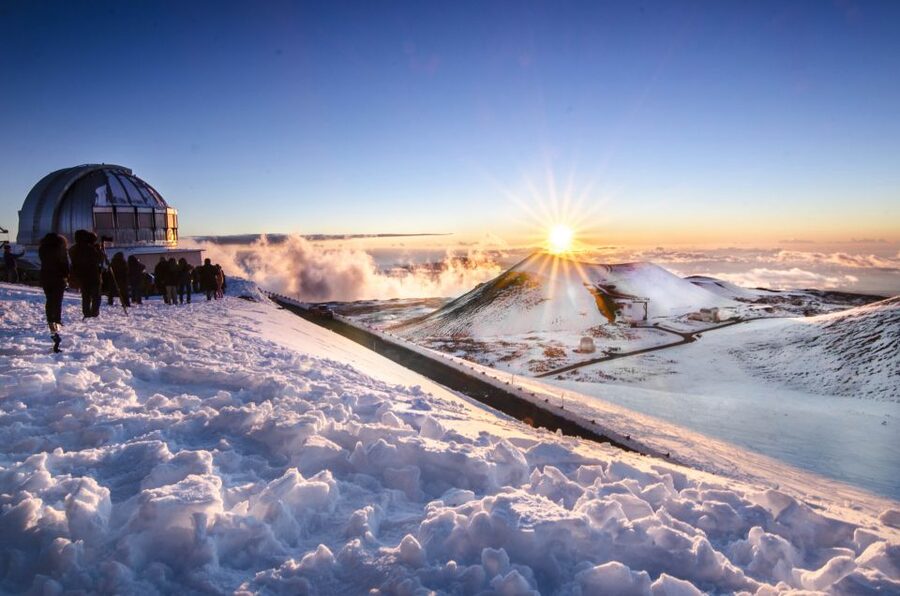
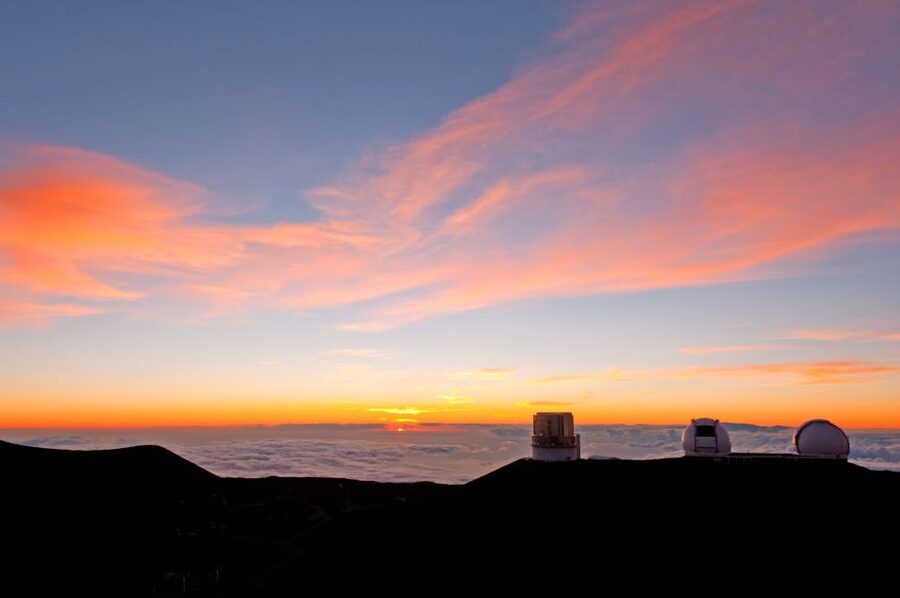
The payoff is the setting. Mauna Kea rises far above the rest of the island, so the summit can feel like a balcony over the Pacific. At sunset, clouds often sit below you, turning the view into a broad white layer that catches the last orange, pink, and purple light.
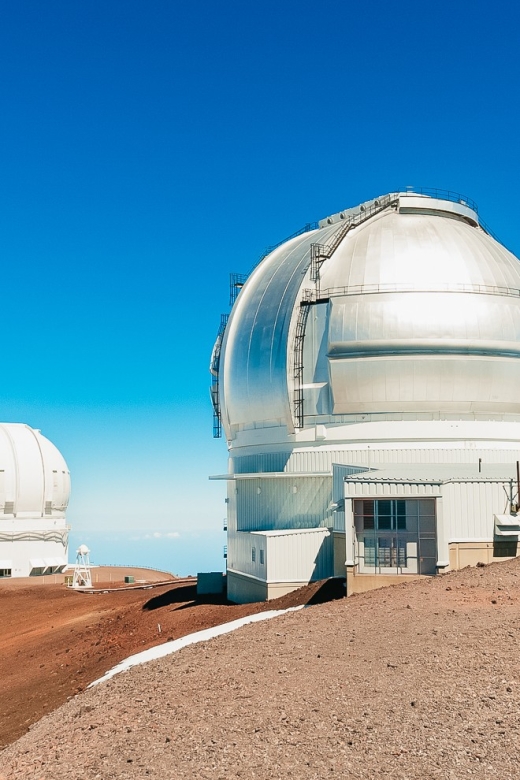
The summit is also one of the world’s great astronomy sites. The dry air, high elevation, and limited artificial light help explain why so many research telescopes operate here. You will see large observatories rather than ordinary visitor attractions, and your guide explains what they do and why the mountain matters to astronomy.
A particularly interesting detail is the connection to the first photograph of a black hole. Two of the eight telescopes involved in making that image are on Mauna Kea. You will not tour the interiors, but seeing the facilities in their working setting gives the visit more weight than a simple mountain viewpoint.
More Mauna Kea summit and stargazing nights:
- Big Island GOAT Experience: Mauna Kea Summit, Sunset & Stars
★ 5.0 · 1,706 reviews - Small Group Big Island Twilight Volcano and Stargazing Tour
★ 5.0 · 1,619 reviews - Big Island: Mauna Kea Summit and Stars Small-Group Adventure Tour
★ 5.0 · 1,545 reviews
Pickup in Hilo and the ride toward the mountain
Pickup is offered at three Hilo locations: Bank of Hawaii, Starbucks, or the Grand Naniloa Hotel Hilo, a DoubleTree by Hilton. Your exact meeting point depends on the option you book, so check it carefully and arrive at least 10 minutes early.
The drive is part of the experience. Guides may discuss the island’s volcanic rocks, plants, animals, geology, and Hawaiian history along the way. Some outings include Hawaiian music in the vehicle, and guides such as Mitch have also added local tips about food and other places to visit.
Transportation matters here. The road to the summit is not a casual drive, and the final ascent requires a four-wheel-drive vehicle. You could attempt part of the route yourself, but you would need to manage the road, the altitude, timing, weather, and parking without the benefit of a guide. The tour removes much of that pressure.
The ride is not necessarily a silent luxury transfer. You are sharing a vehicle and spending a long time on the road. Still, the comfortable vans, clear views from the seats, and steady commentary make the journey useful rather than wasted time.
The altitude stop is an important part of the plan
The summit sits at about 14,000 feet, where the oxygen level is roughly 40 percent lower than at sea level. That figure is not a footnote. It is the reason this outing has age and health restrictions, and it is why the tour includes time for adjustment before reaching the summit.
Some departures stop near the visitor center for about half an hour before continuing upward. This gives you time to get your bearings and notice how your body feels. Supplemental oxygen is available if needed, but you should not treat that as a guarantee that altitude problems will be harmless.
You should not book this trip if you are pregnant, have heart or lung conditions, respiratory problems, serious back or mobility issues, or a history of altitude sickness. The tour is limited to ages 13 through 80. You also must not scuba dive within 24 hours before the outing.
Take the physical warning seriously. This is not a regular sightseeing ride where you simply step out, take a photo, and return to the van. You should be able to walk and stand in cold, thin air. Comfortable shoes and long pants are required.
At the summit, the observatories share the stage
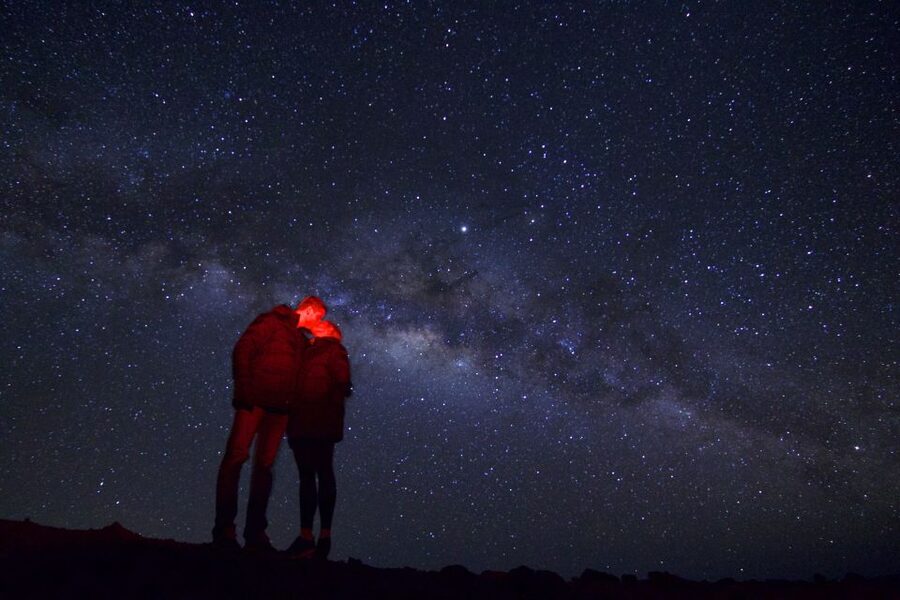
The summit portion focuses on the view, the observatories, and the story of Mauna Kea. You may visit scenic points near the summit and see the telescope buildings against the sky. Your guide explains the research facilities and the role of the mountain in astronomy.
This is a good place to ask questions. Guides including Tay, Val, John, Zac, Jess, and Mitch have been praised for explaining science in plain language while also discussing Hawaiian culture and the mountain’s volcanic past. The best talks move between geology, astronomy, navigation, and legends without turning the evening into a classroom lecture.
The sunset is the emotional center of the first half. Clear conditions can produce extraordinary color, but the weather controls the show. Clouds, ice, strong wind, or a closed summit can alter the plan. One departure had to be rescheduled because ice closed the summit road, so flexibility is wise.
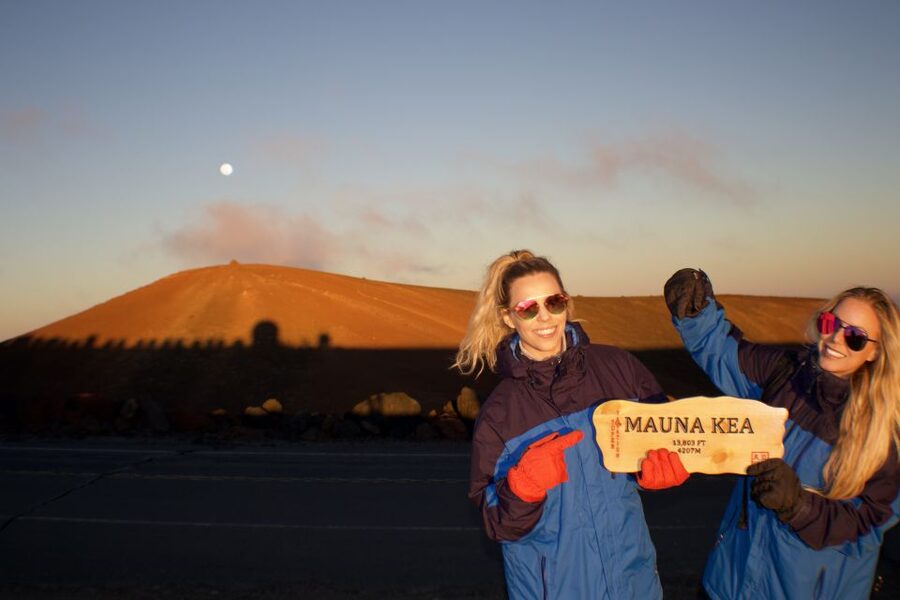
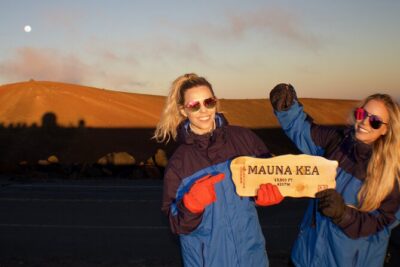
The wind and temperature also deserve attention. Mauna Kea may feel cold even when Hilo is warm and humid. The company supplies parkas and gloves, and the colorful parkas make cheerful photographs, but you should still bring layers. A sweater, warm shirt, beanie, tall socks, and sturdy shoes are sensible additions.
A few more Hilo mornings worth comparing
- Big Island Manta Ray Night Snorkel
★ 5.0 · 5,656 reviews - KONA Manta Ray Night Snorkel – FREE re-ride if no Sightings
★ 5.0 · 2,212 reviews - Oahu’s Waikiki Coast: Moana’s Sunset Cocktail Sail
★ 5.0 · 2,205 reviews - Manta Ray Night Snorkel at Kona, Big Island
★ 5.0 · 1,758 reviews
Stargazing below the summit
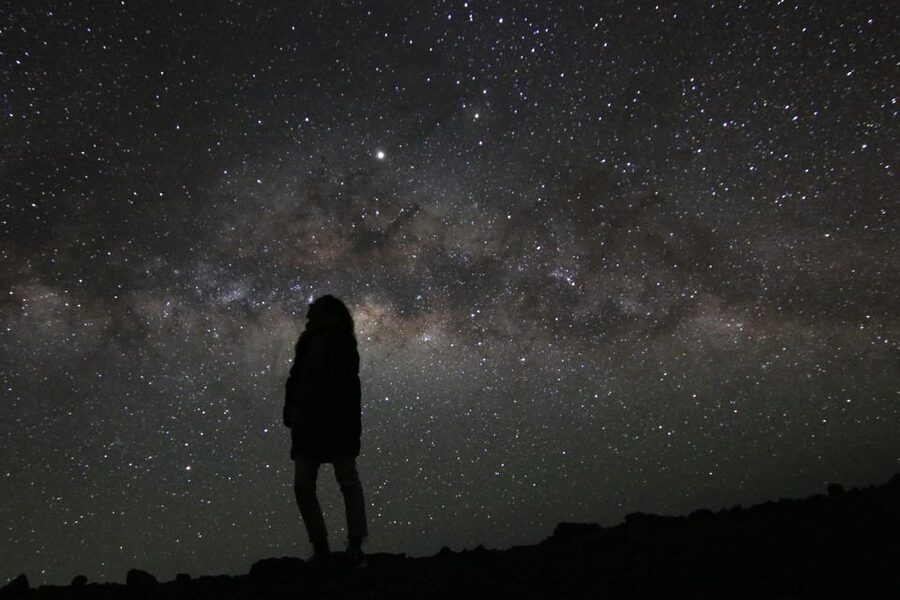
After sunset, the group generally moves to a lower elevation for stargazing, with several accounts placing the viewing area around 9,000 to 12,000 feet. This lower position can be less windy and easier to tolerate than the summit.
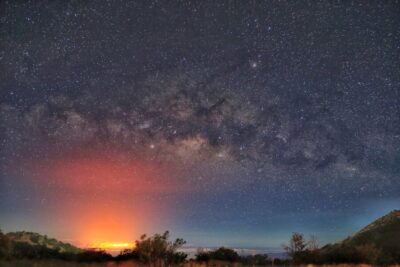
The viewing area may be semi-private, which helps preserve darkness around the group. Your guide gives a sky talk, pointing out major stars and constellations. The strongest part is the mix of viewpoints: you may hear the Greek stories attached to familiar constellations, then learn how Hawaiian navigators used stars at sea.
The telescope adds a useful second layer. Looking up at the naked sky gives you scale and wonder. Looking through the telescope gives you detail. Depending on the night, you might see nebulae, clusters, planets, or galaxies. Past outings have included views of Orion’s Nebula, Jupiter, several nebulae, star clusters, and other galaxies.
The phrase weather permitting matters. Cloud cover, wind, or poor visibility can prevent telescope viewing. Even then, the guide’s star talk and the unaided view may still make the stop worthwhile, but you should not pay expecting a guaranteed list of objects.
Hot chocolate and oatmeal are provided during the stargazing, along with snacks such as chips, crackers, candy, and other small treats. These are practical comforts at altitude. If local food is important to you, note that the snack selection may feel more like road-trip food than a distinctly Hawaiian spread. Bring your own water bottle as well.
The night photography is a real part of the value
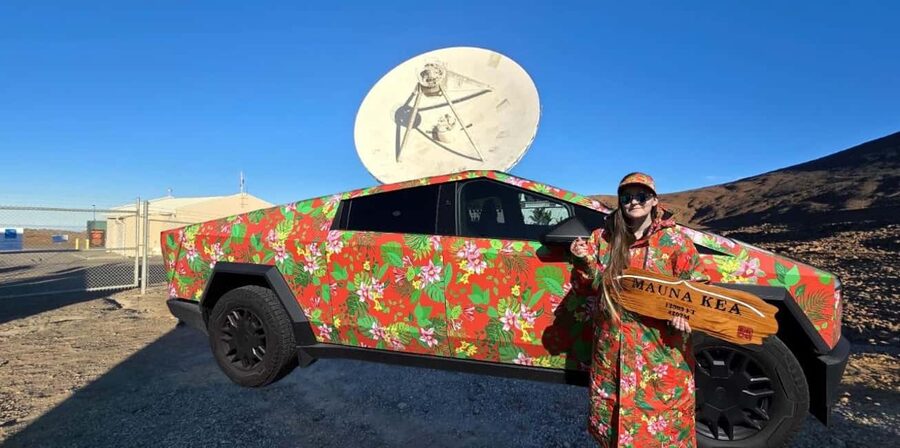
The guide takes photographs of your group beneath the stars and emails them after the outing. This is more useful than it may sound. Night photography is difficult without a tripod, camera settings, and patience, especially when you also want people visible in the frame.
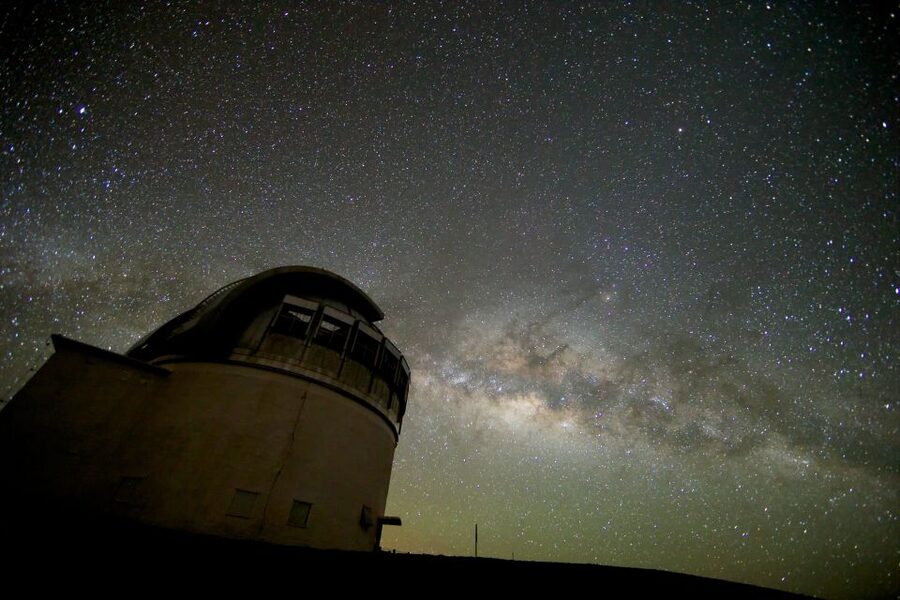
The photos can show the Milky Way behind you, and the colorful parkas make the portraits easy to identify. The company may also provide images of objects viewed through the telescope. You should not expect a private professional photo session, but the included pictures add lasting value to a night that is otherwise difficult to capture.
Bring your own phone or camera for the sunset, but do not let photography take over. The best part of the summit is often the view over the clouds, which is hard to improve with a screen.
How much value do you get for $289?
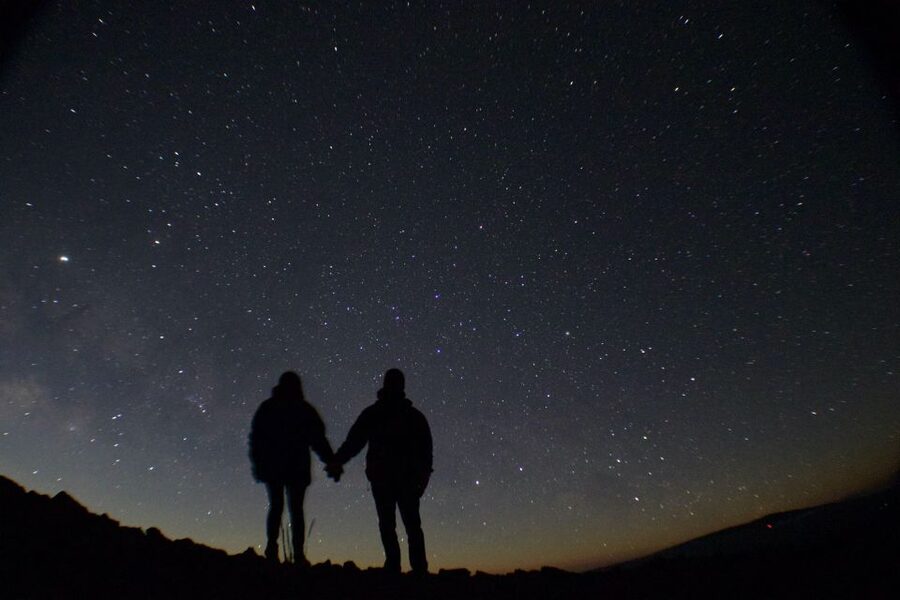
At $289 per person, this is an expensive half-day outing. You are paying for transportation, a four-wheel-drive ascent, guides, warm clothing, snacks, hot drinks, telescope equipment, and photography. The price also covers the convenience of not driving a demanding mountain road after dark.
I think the value is strongest if you want the full package. Renting or arranging the right vehicle would not reproduce the guide’s explanations, altitude planning, telescope setup, warm gear, or night photos. A self-drive visit might cost less, but it would also place the responsibility for navigation, road conditions, summit access, and timing on you.
The value is weaker if you mainly want a sunset photograph. Clouds or road conditions can limit the summit portion, and the telescope is never guaranteed. You are paying for access to a high-altitude setting and a carefully managed evening, not certainty about perfect weather.
The many top ratings make sense when the guides are in form. Val is frequently praised for keeping people comfortable while explaining astronomy and Hawaiian culture. Tay has a gift for turning star science and traditional navigation into a clear story. Jess, Rob, John, Mitch, Zac, and others have also been singled out for warmth, safe driving, and lively explanations.
Who will enjoy this most
I would choose this for adults and older teenagers who enjoy astronomy, geology, photography, or unusual natural views. It also suits you if you want a special evening for an anniversary, graduation, proposal, or final night on the Big Island.
It is less suitable for young children, anyone uncomfortable with cold or long van rides, and anyone with the listed medical restrictions. You should also think twice if you dislike fixed schedules or group transportation.
The experience works especially well for people staying in Hilo because pickup and drop-off are available there. The listed Hilo stops include Starbucks, Bank of Hawaii, and the Grand Naniloa Hotel Hilo. The return location options match the pickup choices.
Practical preparation for a better night
Wear long pants, comfortable shoes, and several warm layers. Add a beanie and warm socks if you have them. The supplied parka and gloves help, but they do not replace a proper base layer when wind picks up.
Eat normally before departure, and use the provided snacks and hot drinks as support rather than a full dinner. Dinner is not included, so plan to eat before pickup or after returning.
Arrive early at the correct pickup point. Bring water, and avoid alcohol or drugs. The age range is 13 to 80, and the physical and medical rules are part of the safety plan, not casual suggestions.
You can cancel up to 24 hours before departure for a full refund, and the booking option allows you to reserve now and pay later. Check the starting time and meeting point when booking because they can vary.
Should you book this Mauna Kea evening?
Book it if you want more than a pretty sunset. The combination of observatories, Hawaiian star traditions, telescope viewing, hot chocolate, warm gear, and night portraits gives the evening real depth.
I would not book it solely for a guaranteed telescope target or perfect sunset. Weather and road conditions control too much. But if you accept that uncertainty, have the required fitness, and value expert driving and explanation, $289 is a fair price for one of the Big Island’s most unusual outings.
FAQ
How long does the Mauna Kea experience last?
The experience lasts about 390 to 450 minutes, or roughly six and a half to seven and a half hours.
Where can I be picked up in Hilo?
Pickup options include Bank of Hawaii, Starbucks, and the Grand Naniloa Hotel Hilo, a DoubleTree by Hilton. The exact location depends on the option you book.
Where will I be dropped off?
Drop-off options include Starbucks, Bank of Hawaii, and the Grand Naniloa Hotel Hilo, a DoubleTree by Hilton.
How high is the summit?
The summit elevation is approximately 14,000 feet, with about 40 percent less oxygen than at sea level.
Is the tour physically demanding?
Yes. The activity requires strong physical condition because of the high altitude, cold, walking, and time spent standing outside.
Who cannot join the experience?
The tour is not suitable for children under 13, adults over 80, pregnant women, people with heart, lung, respiratory, back, or mobility problems, people with altitude sickness, or anyone who scuba dived within the previous 24 hours.
Are warm clothes provided?
Yes. Parkas and gloves are included. You should still bring long pants, comfortable shoes, and extra warm layers.
Is food included?
Snacks, hot chocolate, and oatmeal are included. Dinner is not included.
Will I look through a telescope?
The tour includes telescope viewing when weather permits. The objects visible depend on sky conditions.
Will I receive photographs?
Yes. Guides take night photos of the group, and the images are emailed after the experience.
Just added around Hilo
- Hilo: Waterfall Hike and Swim with Native Hawaiian★ 4.9 · 8 reviews
- Hilo: Walking Ghost Tour★ 4.7 · 8 reviews
- Hilo: Kilauea Fissure 8 Hiking, Volcanoes and Waterfalls★ 4.7 · 3 reviews
- Hilo: Elite Volcano Hike★ 4.8 · 8 reviews
- Hilo: Discover Hilo Helicopter Tour★ 4.1 · 35 reviews
- Hawaii: All-Inclusive Volcanoes and Waterfalls Private Tour★ 5.0 · 3 reviews
- From Big island-Volcanoes & waterfall tour in a small group★ 3.8 · 4 reviews
- From Hilo: Hawaii Volcanoes National Park Tour★ 4.9 · 70 reviews
Mauna Kea Stargazing, compared.
Big Island GOAT Experience: Mauna Kea Summit, Sunset & Stars
Read our review →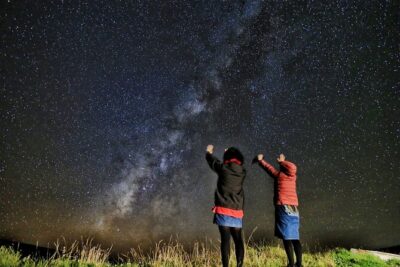
Small Group Big Island Twilight Volcano and Stargazing Tour
Read our review →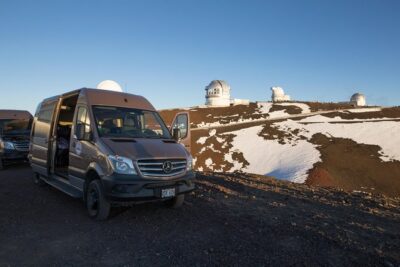
Mauna Kea Summit and Stars Small-Group Adventure Tour
Read our review →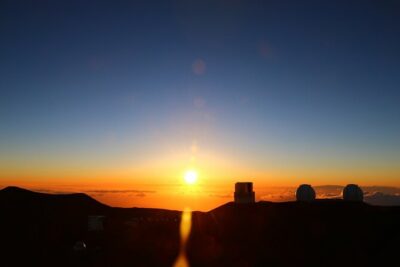
Mauna Kea Summit Tour with Free Night Star Photo
Read our review →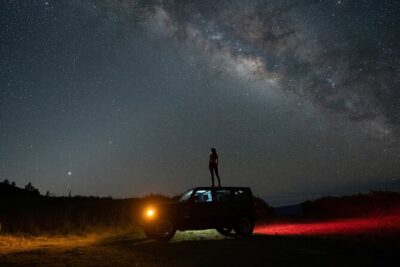
Big Island, Hawaii: Volcano and Stargazing Tour with Dinner
Read our review →
Browse the lists this tour appears in