
Reviewed · MAUNA KEA STARGAZING
Big Island GOAT Experience: Mauna Kea Summit, Sunset & Stars
Mauna Kea gives you two great shows in one evening: a sunset above the clouds and a star-filled sky from one of the world’s best astronomy sites. Guides such as Kella, Tay, John, Chris, and Val add Hawaiian legends, volcanic facts, and practical help as the temperature drops.
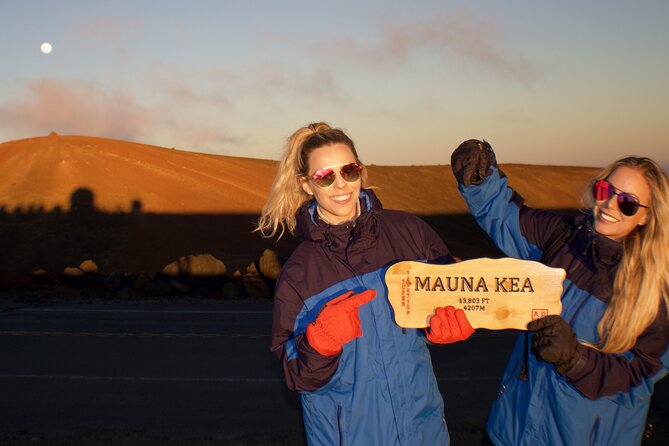
I like the included warm coats, gloves, hot drinks, snacks, and professional night photo. I also like that you do not have to handle the steep drive yourself, especially after dark. The catch is simple: this is a long, cold outing, and cloud, wind, road conditions, or a bright moon can reduce the stargazing.
Key points before you book
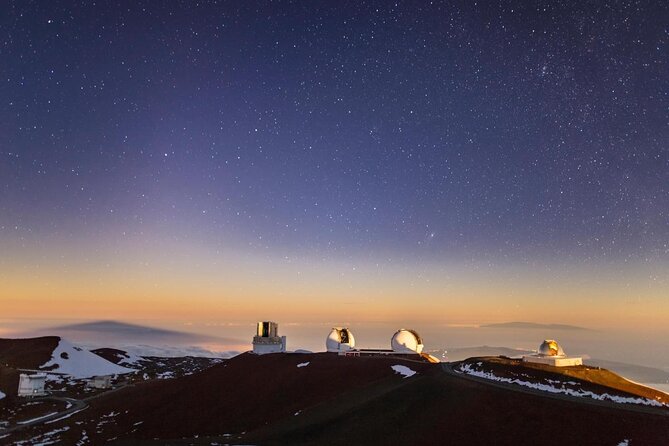
- Sunset at 13,796 feet: Watch the sun sink from Mauna Kea’s summit, often above a layer of clouds.
- Stargazing at lower altitude: The astronomy session usually takes place near the 9,200-foot visitor station, where you can spend more time outside.
- Warm gear is supplied: Coats and gloves help, but bring your own hat, warm socks, gloves, and layers.
- Small-group 4×4 transport: Pickup is offered in Hilo, Waikoloa Village, or Kailua-Kona, with a stated maximum of 14 people.
- Hawaiian culture matters here: Your guide explains Mauna Kea as a sacred place linked with Poli’ahu, Lilinoe, and Waiau.
- Weather controls the evening: A cloudy or windy night can change the plan, though poor-weather cancellations qualify for a new date or full refund.
Why Mauna Kea makes such a strong evening trip
Mauna Kea is not simply a high point with a view. It is a place where the physical scale of Hawaii, its cultural traditions, volcanic past, and modern astronomy meet in a single evening.
The summit reaches 13,796 feet, while the Onizuka Center for International Astronomy sits around 9,200 feet. That quick change in altitude is part of what makes the experience special, but it also explains why the tour takes care with warm clothing, rest stops, and the amount of walking.
I especially like the timing. You reach the summit for sunset, then return to a lower point for the main stargazing session. That gives you the best chance to enjoy the sky without standing at the coldest, windiest point for the entire night.
The mountain is also important in Hawaiian culture. Mauna Kea was considered the realm of the gods and was once kapu, or restricted, except to high chiefs and priests. The mountain is associated with Poli’ahu, Lilinoe, and Waiau. Your guide may explain these traditions alongside the modern observatories, giving the evening more meaning than a simple drive to a scenic lookout.
More Mauna Kea summit and stargazing nights:
- Small Group Big Island Twilight Volcano and Stargazing Tour
★ 5.0 · 1,619 reviews - Big Island: Mauna Kea Summit and Stars Small-Group Adventure Tour
★ 5.0 · 1,545 reviews - Big Island: Mauna Kea Summit Tour with Free Night Star Photo
★ 5.0 · 1,449 reviews
Pickup from Hilo, Waikoloa, or Kailua-Kona
The tour lasts about seven to eight hours, so pickup location affects how much of your day it uses. You can select pickup from Hilo, Waikoloa Village, or Kailua-Kona, then return to that original location at the end.
The drive is a major part of the outing. That is not necessarily a problem, since the route gives your guide time to explain lava types, island geology, Hawaiian stories, and the mountain ahead. Still, you should not book this expecting a short sunset stop.
Transportation is provided in a 4×4 passenger van. This matters because the route climbs rapidly and conditions can change. You can leave the driving to someone familiar with the road, the altitude, and the timing of the sunset.
The experience is advertised as a small-group trip capped at 14 people. That is a reasonable size for a guide-led astronomy talk. One account described about 30 people spread across two vans, so if a very intimate group is important to you, confirm the current vehicle arrangement before paying.
The climb to Halepōhaku and the summit
The first major stop is the summit. The van carries you up to the high point, where the air is thin, the wind can be sharp, and the views stretch across the island and above the clouds.
You will have time to put on the supplied jacket and gloves before going outside. Take that offer seriously. Several people found the cold much stronger than expected, with freezing feet, chilly hands, and strong wind even while wearing multiple layers.
Bring your own cold-weather basics:
- A warm hat or stocking cap
- Thick socks
- Closed shoes with good traction
- Lightweight personal gloves
- Long pants and several upper layers
- Hand or toe warmers if you use them
The supplied coats are a useful extra layer, but they are shared equipment and may be one-size-fits-all. Some coats may show wear, and the supplied gloves are not always enough for below-freezing conditions. You probably do not need to pack a full winter wardrobe for Hawaii, but warm socks and a hat take almost no room in your bag.
Walking is limited, but the altitude makes even short uphill sections feel harder. One account specifically described uphill walking at about 14,000 feet as difficult. Move slowly, avoid unnecessary exertion, and tell your guide if you feel unwell.
The summit stop lasts about four hours in the stated schedule. That includes time for the sunset, viewing the observatories from outside, photographs, and explanations about the mountain and sky. The large research telescopes are not public facilities for this tour, so you do not enter them or use their giant instruments.
Sunset above the clouds
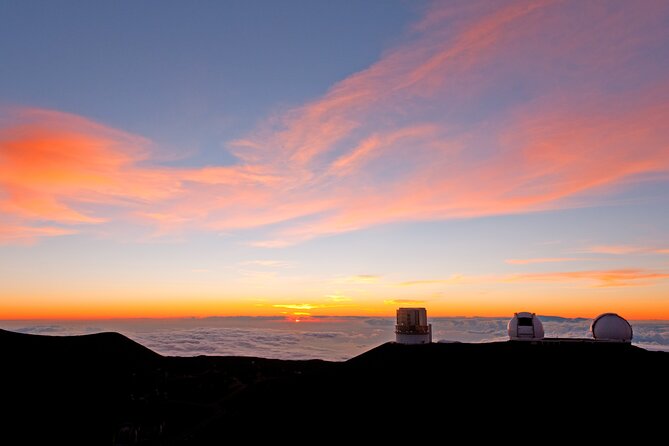
The sunset is the emotional high point for many people. From Mauna Kea, the sun can drop into a sea of clouds far below you, with snow sometimes visible on the summit in winter. Even when the evening clouds interfere with the stars, they can make the sunset more dramatic.
Your guide helps you find a good viewing area and explains what you are seeing. The surrounding observatories add a distinctly Mauna Kea feel, since the mountain is home to 13 international research facilities.
There is no guarantee of a clear horizon. Rain at the coast does not always mean rain at the summit, and one particularly wet day still produced a striking sunset. The reverse is also possible: a clear afternoon can turn cloudy or windy at altitude.
That uncertainty is part of the bargain. You are paying for access, transportation, guiding, warm equipment, and a chance at the view, not a guaranteed postcard. If you need a fixed, weather-proof activity, this is the wrong choice.
A few more Big Island mornings worth comparing
- Big Island Manta Ray Night Snorkel
★ 5.0 · 5,656 reviews - KONA Manta Ray Night Snorkel – FREE re-ride if no Sightings
★ 5.0 · 2,212 reviews - Manta Ray Night Snorkel at Kona, Big Island
★ 5.0 · 1,758 reviews - Glow of the Deep: Night Snorkeling with Manta Rays
★ 4.5 · 1,254 reviews
Hawaiian stories and the Onizuka Center
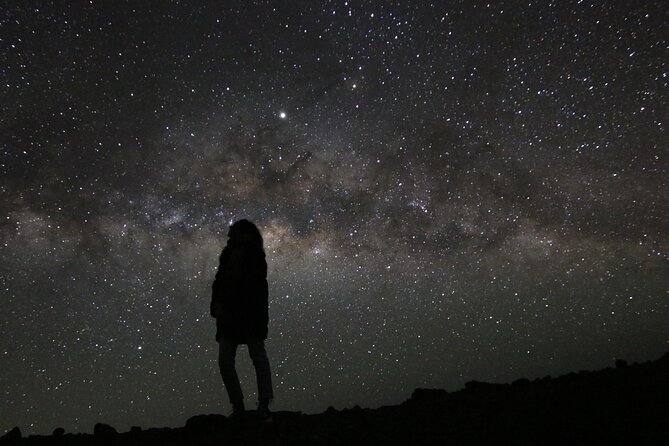
The stop at Halepōhaku, the Onizuka Center for International Astronomy area, adds useful context before or after the summit visit. This is more than a place to pause the van.
Your guide may discuss the mountain’s place in Hawaiian tradition, including its connection to Poli’ahu and the sacred Lake Waiau. Queen Emma made the difficult journey to the summit in 1881, leading companions on a six-hour climb. That detail helps you understand how demanding the mountain once was without roads or vehicles.
You also learn why Mauna Kea attracts astronomers. Its height, dark skies, and generally clear air make it valuable for observing distant objects. The tour does not turn you into an astronomer, but the explanation helps you understand why the summit is dotted with facilities from different countries and institutions.
I appreciate this cultural and scientific balance. The mountain is not treated only as a scenic platform or only as a research site. A good guide makes space for both the Hawaiian meaning of Mauna Kea and the modern work done there.
Stargazing with a Celestron telescope
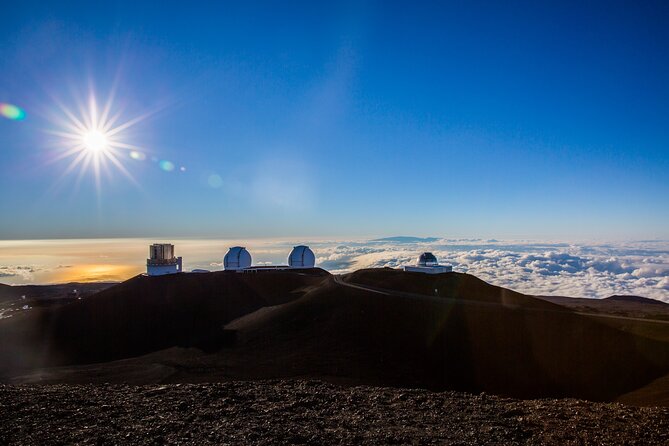
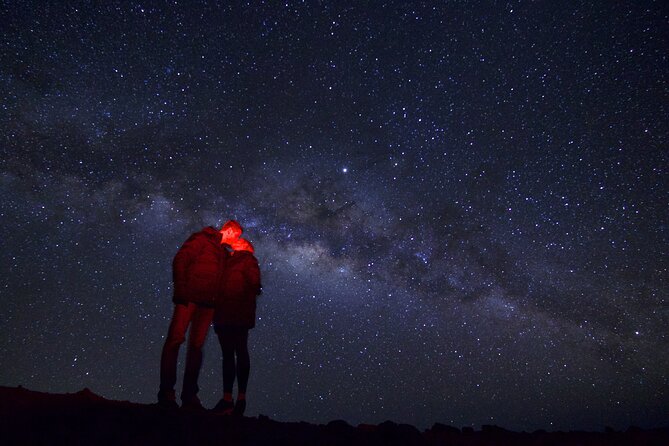
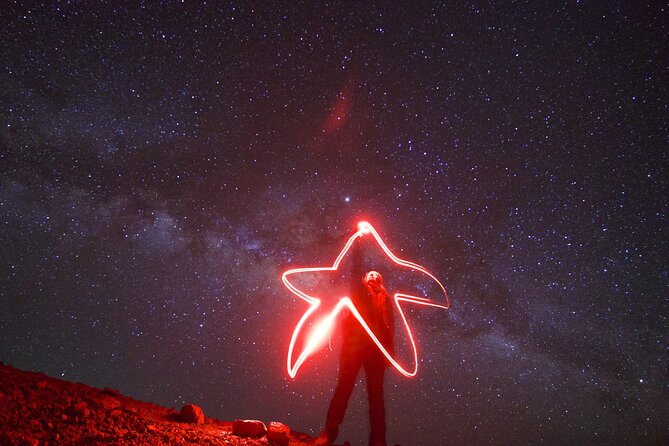
After sunset, the group usually spends more time at a lower point near the visitor facility. This is where the professional Celestron telescope and laser pointer become useful.
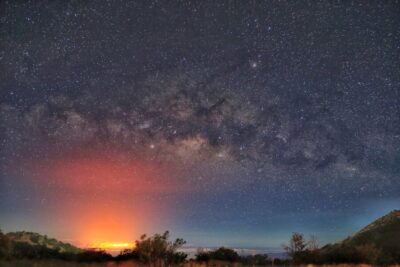
The guide may point out constellations, planets, galaxies, and nebulae. On a clear night, you might see the Andromeda Galaxy, the International Space Station, or Starlink satellites moving across the sky. The telescope view is shared, so do not expect a long private session or a large observatory instrument.
This is the part most affected by conditions. Cloud can cover the sky, and a bright moon can wash out some faint stars. Yet patience can pay off. A cloudy night may open briefly, giving you a short but memorable view.
The guides are an important part of the value. Tay is described as especially strong on astronomy, while Kella, Val, Chris, John, and others are praised for mixing facts with humor, Hawaiian stories, and attention to comfort. The best guide does not simply point upward. They explain how Polynesian navigators used the stars and connect the night sky to island culture.
Hot chocolate or another hot drink helps during the session. Snacks are also supplied in a small bag. Dinner is not included, so bring a packed meal if you need more than a snack, since food is not available for purchase at the mountain.
The included night photo
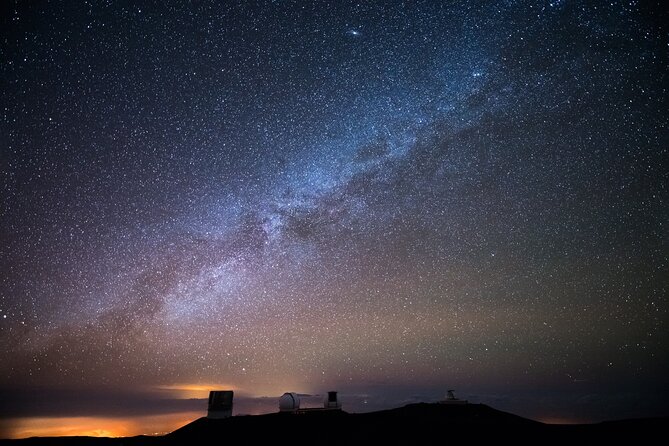
A professional camera is used to take a night photo of you or your group. This is a real benefit, since ordinary phone cameras struggle in the dark, cold conditions.
The photo gives you a better record of the evening than a quick snapshot. It also means you can spend more time looking at the sky instead of trying to adjust your own camera.
Save the photo link as soon as you receive it. One practical snag is that the download link may not work smoothly on every phone. If you care about the image, check it before leaving the area and ask the guide for help if needed.
What the $289 price includes
At $289 per person, this is not a cheap sunset outing. The value depends on how much you would pay for the separate pieces: round-trip transport, a long drive on a difficult mountain route, an experienced guide, warm outerwear, snacks, a drink, telescope equipment, and a professional photograph.
The price also buys convenience. You do not need to rent a suitable 4×4, plan the route, time the sunset, or drive back after spending hours at high altitude. You can listen to stories, watch the sky, and let someone else manage the road.
Still, the cost can feel high if clouds block the stars or if you expect extensive telescope time. The telescope viewing is shared and may last only briefly for each person. Most of the evening is spent riding, standing outside, listening, and waiting for the sky to cooperate.
I would call it good value for someone who considers Mauna Kea a top Big Island priority. It is weaker value for someone who dislikes long van rides, gets uncomfortable in the cold, or wants a guaranteed astronomy show.
Altitude, health, and comfort
The altitude is the main practical concern. The tour is not recommended for people under 13, pregnant people, anyone with heart problems or other serious medical conditions, or anyone in poor health. A moderate level of fitness is expected.
Even healthy people can feel the thin air. You may notice fatigue, shortness of breath, headache, or difficulty walking uphill. One person with diabetes had trouble adjusting and felt better after returning to a lower altitude. Tell the guide quickly if you feel dizzy or sick.
The trip includes restrooms at the visitor center and portable restrooms near the summit. Conditions can be basic, and one account suggested carrying emergency toilet paper. That is a small but sensible addition to your day bag.
The supplied jacket and gloves reduce the packing burden, but do not treat them as a complete cold-weather system. Your feet may be the hardest part to keep warm because you stand outside for long periods. Thick socks are one of the smartest things you can bring.
Who will enjoy this most
I would choose this tour if you want one major Big Island evening that combines scenery, science, culture, and a little adventure. It suits couples, families with older children, and anyone who wants to see the night sky without managing a mountain drive.
It is also a good match for people who enjoy guided interpretation. The trip is not just about taking a picture at sunset. You will hear about volcanic geology, Hawaiian deities, Polynesian navigation, research telescopes, constellations, and the changing conditions on the mountain.
I would hesitate if you are sensitive to cold, uneasy at high altitude, or bored by long drives. The summit can be windy and below freezing, and the ride takes up much of the evening. The experience also depends heavily on weather, so you need to accept some risk.
Free cancellation is available up to 24 hours before the scheduled start. If poor weather cancels the trip, you can receive a different date or a full refund. That policy helps, but it cannot remove the uncertainty of booking a mountain activity.
Should you book the Mauna Kea sunset and stars tour?
Book it if Mauna Kea is on your Big Island wish list and you are ready for a long, cold evening. The combination of a sunset above the clouds, Hawaiian mountain traditions, a professional telescope, and a night photograph is hard to match elsewhere on the island.
Pack warmer clothing than you think you need, bring dinner if you want a full meal, and keep your expectations flexible. You may get perfect stars, a moonlit sky, or only a short break in the clouds. Even the less perfect nights still offer the summit, the observatories, and a memorable view from one of Hawaii’s most unusual places.
FAQ
Where can I be picked up for the Mauna Kea tour?
Pickup is available from selected locations in Hilo, Waikoloa Village, and Kailua-Kona. You must select the correct pickup option when booking.
Can I change my pickup location after booking?
Pickup is tied to the location selected during booking. If you need to change it, contact the local operator using the phone number on your ticket.
How cold is Mauna Kea during the tour?
The summit can be extremely cold, windy, and sometimes below freezing. Jackets and gloves are provided, but bring warm layers, a hat, and thick socks.
How high is the Mauna Kea summit?
The summit is 13,796 feet, or 4,205 meters, above sea level. The visitor station is at about 9,200 feet, or 2,800 meters.
Can I use the large observatory telescopes?
No. The large observatories are operated by universities and organizations from several countries. The tour provides viewing through a professional Celestron telescope instead, weather permitting.
Is dinner included?
No. Snacks and a hot drink are included, but dinner is not. You may bring your own packed meal, since food is not available for purchase at the mountain.
What happens if bad weather cancels the tour?
You can choose a different date or receive a full refund if the operator cancels the experience because of poor weather. You can also cancel for a full refund if you cancel at least 24 hours before the start time.
Just added around Big Island
- Kailua-Kona: Pacific Humpback Whale Watch Excursion★ 5.0 · 4 reviews
- Kalaoa: Big Island and Kona Midday Whale Watching Tour★ 4.3 · 29 reviews
- Kailua Kona: Humpback Whale Watching Adventure Cruise★ 4.5 · 33 reviews
- Kona Hi, Sunset Manta Ray Tour 10 passengers maximum★ 5.0 · 14 reviews
- Kailua-Kona: Night Manta Snorkel or Dive★ 4.6 · 7 reviews
- Kona Tradewind Catamaran Sail with Cocktails★ 4.7 · 5 reviews
- Big Island: Kona Half-Day Boat Tour with Snorkeling & Lunch★ 5.0 · 34 reviews
- Kailua-Kona: Haunted History Ghost Walking Tour★ 4.1 · 8 reviews
Mauna Kea Stargazing, compared.
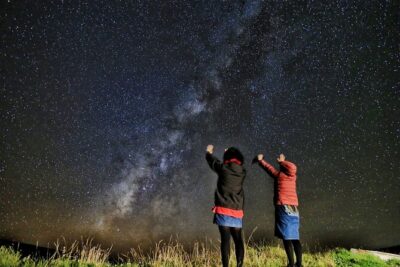
Small Group Big Island Twilight Volcano and Stargazing Tour
Read our review →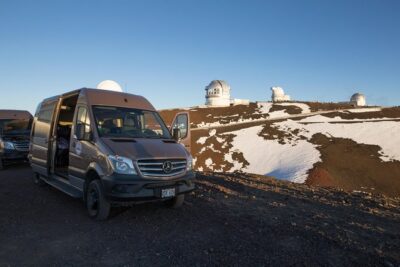
Mauna Kea Summit and Stars Small-Group Adventure Tour
Read our review →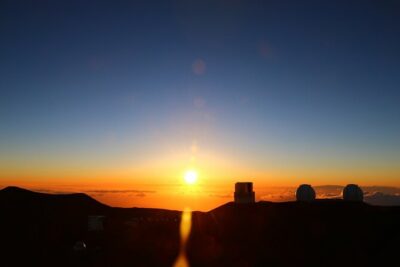
Mauna Kea Summit Tour with Free Night Star Photo
Read our review →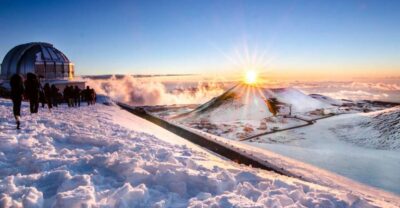
Hilo: Mauna Kea Summit, Sunset, & Stargazing Experience
Read our review →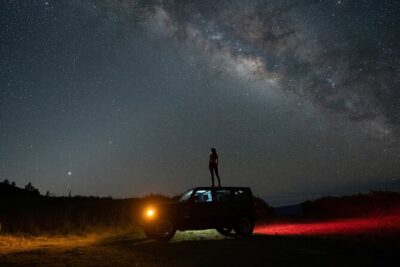
Big Island, Hawaii: Volcano and Stargazing Tour with Dinner
Read our review →
Browse the lists this tour appears in