
Reviewed · FARMS
Abalone Farm Tour
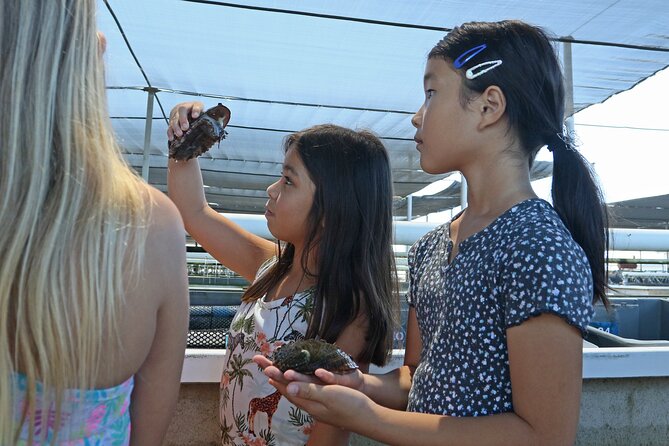
Abalone may look like a shell with a foot, but this one-hour visit shows you a surprisingly complex animal. At Big Island Abalone, you learn how these prized sea snails breed, grow, and reach harvest size, then get close enough to hold live abalone and inspect their shells, eyes, foot, and feeding parts. The tour also explains why raising abalone responsibly matters, especially as wild populations face pressure.
I like the hands-on format, which gives children and adults something real to see and touch. I also like the tasting at the end, with abalone and seaweed products such as sea grapes, dulse, or sea peas. The main consideration is that this is a working farm, not a polished aquarium attraction. Much of the visit takes place outdoors, so bring water and a hat, and keep the weather policy in mind.
Key points to know before you go
- Live abalone up close: You can handle abalone and, when available, other sea creatures while learning about their bodies and life cycle.
- Tasting is part of the tour: Expect samples of abalone and seaweed, with the final tasting often including a steamed abalone shell.
- Guides make the difference: Carlos, Kai, and Diana are noted for clear explanations, humor, and strong enthusiasm for the farm’s work.
- Easy one-hour outing: The tour involves low physical activity and suits children, older adults, and most people with limited mobility.
- Good Kona location: The farm is at 73-357 Makako Bay Drive, a practical stop near the airport, with the activity ending where it begins.
- Small groups help: The maximum group size is 20, though groups of around a dozen can make the discussion and handling time more comfortable.
Why this Kona farm visit is different
Most Hawaii farm visits focus on coffee, macadamia nuts, or tropical fruit. This one introduces you to a marine animal that many people know only as an expensive menu item. You do not just hear about abalone. You see it moving, learn what it eats, and handle one in a supervised setting.
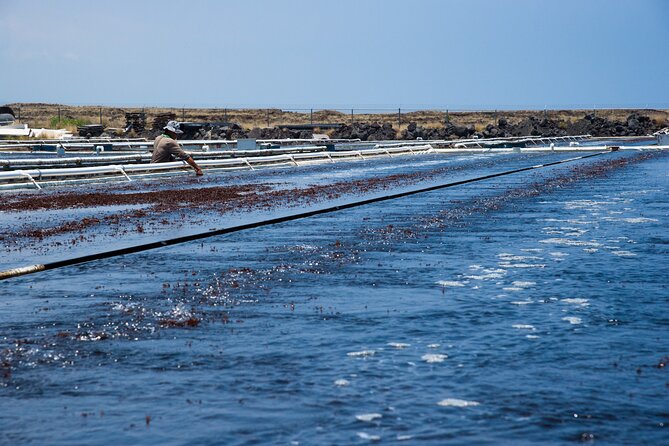
The farm also gives you a look at seafood production in a tropical island setting. The tour explains why abalone can be raised on the Big Island, how the animals are bred and grown, and why sustainable farming has value. The subject is practical rather than abstract: the farm is producing food while working to support the future of the species.
I find that combination useful for families. A young child may focus on the strange-looking animal, while an adult can follow the farming, ecology, and conservation discussion. The same activity works for a couple with an hour to spare, a family looking for something beyond the beach, or a returning Kona visitor seeking a different kind of stop.
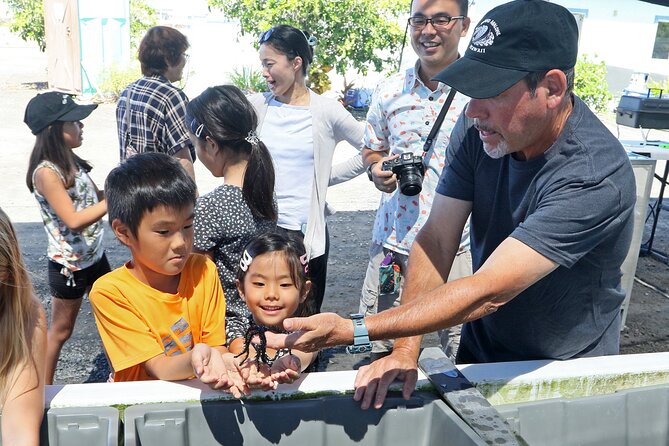
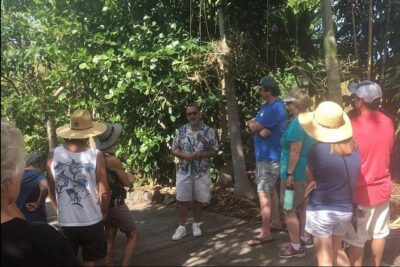
The tone appears to be informal and interactive. Guides ask questions, explain what you are seeing, and bring out creatures for you to touch. Carlos is especially noted for making the material clear and fun, while Kai and Diana have also led engaging visits. The quality of the guide matters here because the farm itself is the subject. A good explanation turns tanks and shellfish into a story about biology, food, and responsible production.
More farm visits and tastings in Big Island:
- Hawaiian Salt Farm Tour in Kona
★ 5.0 · 767 reviews - Award Winning Farm Tour: Coffee, Chocolate and Unique Gifts
★ 5.0 · 484 reviews - Big Island: Volcanoes, Waterfalls, & Coffee Farm Day-Trip
★ 4.9 · 414 reviews
What happens during the one-hour visit
The full activity takes place at Big Island Abalone, at 73-357 Makako Bay Drive in Kailua-Kona. You start and finish at the farm, with no separate transportation between stops. The visit lasts about an hour, which makes it easy to fit into a Kona day.
The first part introduces the farm and the reason abalone are raised in this setting. You learn about the animal’s life cycle, including how it mates, grows, and reaches a size suitable for harvest. The guide also explains the work behind producing premium seafood rather than simply collecting it from the ocean.
That context is important. Abalone are not fast, simple food crops. The tour presents farming as a careful process that depends on understanding the animal at different ages and sizes. You may see abalone at various stages of growth, which helps you connect the tiny animal to the mature shellfish served as food.
The visit is not limited to abalone. You can learn about seaweed and other local sea creatures, giving the tour a broader marine biology angle. Seaweed samples may include sea grapes, sea peas, dulse, or other varieties grown or displayed at the farm. The details can vary, but the main point is consistent: the farm uses food production to teach you about a small marine system.
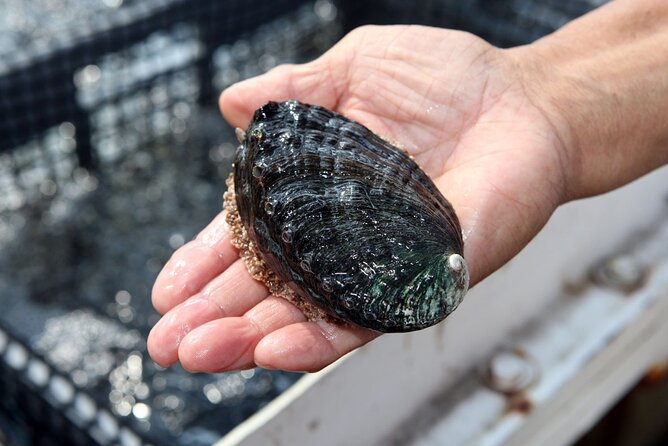
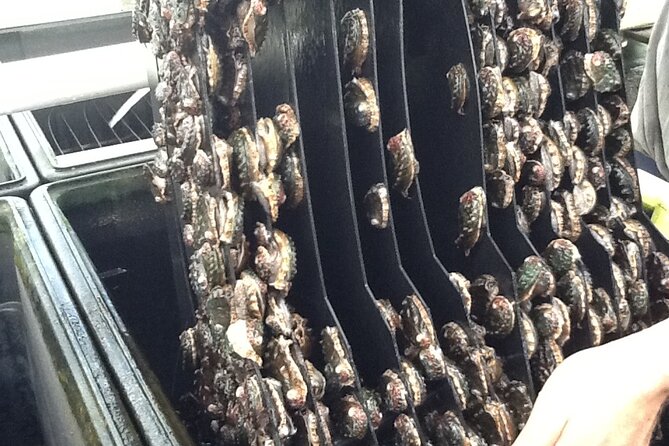
The hands-on portion is the strongest part for many people. You may hold a live abalone and look closely at its shell, eyes, foot, and radula, the feeding structure inside its mouth. That level of contact makes the animal far more memorable than a photograph or a menu description.
At the end comes the tasting. Samples have included abalone and seaweed, and the final serving may be a steamed abalone in its shell. You may also receive the shell afterward, depending on the current practice. The portion is a taste, not a full meal, so think of it as part of the lesson rather than lunch.
That distinction matters when judging the $35 price. You are paying for a guided educational visit, hands-on access, and tasting, not an abalone feast. If your only goal is to eat as much abalone as possible, the food options on the property may be a better use of your budget. If you want to understand what you are eating and meet the animal first, the tour offers more value.
The abalone itself is the star
Abalone are gastropods, a group that includes snails and limpets. The tour gives you a close look at an animal that is easy to underestimate. Its shell is attractive, but the living creature underneath is the interesting part. You can see how it clings, moves, and uses its foot.
This direct contact also helps explain why abalone farming takes skill. You are not looking at a passive shellfish. The animals have a life cycle, feeding needs, and growth stages that the farm must understand. The guide connects those details to the final product served as seafood.
The conservation message is handled through the farming story. Abalone are considered endangered under the International Union for Conservation of Nature classification mentioned by the farm, so raising them under controlled conditions has a wider purpose than supplying restaurants. The discussion gives you a better sense of why sustainable seafood choices matter.
I like that the lesson stays connected to what you can see. You are not sitting through a long lecture about distant environmental problems. You are standing near the tanks, holding a living animal, and then tasting the result of careful aquaculture. That makes the subject easier to remember.
Seaweed tasting adds a useful second lesson
The seaweed portion keeps the visit from becoming a one-animal tour. You may taste sea grapes, sea peas, dulse, or other seaweed products during the visit. Some have a mild, vegetable-like flavor, while others offer more ocean character.
For children, this can be a simple sensory exercise: look, touch, smell, and taste. For adults, it offers a quick introduction to another form of marine food production. Seaweed is not merely decoration on a plate here. It is part of the farm’s work and part of the wider conversation about food from the sea.
The samples are small, and the exact selection can change. One person expecting a large seafood sampler could find the tasting modest. I would set your expectations at a few interesting bites rather than a full tasting menu.
After the tour, you may be able to buy additional abalone or prepared dishes from the food truck on the property or nearby. Abalone poke, sushi-style dishes, and other cooked options have been available. This is a good way to turn the educational visit into lunch, but food purchases are separate from the $35 tour cost.
A few more Big Island mornings worth comparing
- Big Island in a Day: Volcanoes Waterfalls Sightseeing and History
★ 5.0 · 6,569 reviews - Big Island Manta Ray Night Snorkel
★ 5.0 · 5,656 reviews - Big Island: Kona Manta Ray Snorkel Tour in Keauhou Harbor
★ 4.5 · 2,465 reviews - Hilo Shore Excursion: Volcanoes National Park & Black Sand Beach
★ 4.5 · 2,338 reviews
A good fit for families and older adults
The tour is designed for a broad range of ages. A toddler can watch the animals and enjoy the tasting, while an older child can ask questions about breeding and growth. A ten-year-old, for example, can follow the basic science without needing a marine biology background.
The activity also works well for older adults. The walk is short and involves low physical effort. A person using a cane has completed the one-hour visit, and most people can take part. Still, this is a working outdoor farm, not a fully climate-controlled indoor attraction. If you have a serious mobility concern, contact the provider before booking rather than assuming every surface will be easy.
Service animals are allowed. The tour is offered in English, and confirmation arrives when you book. With a maximum of 20 people, the group should remain manageable, though a smaller group can make it easier to ask questions and get a close look at the animals.
The farm is outdoors, with shade available for much of the visit according to the tour information. Bring water, a hat, and sun protection. The operator also requires good weather and may cancel for poor conditions, offering another date or a full refund. A light shower may not tell you exactly how the farm will handle your date, so check the weather before setting out.
Location and timing around Kailua-Kona
The farm is at 73-357 Makako Bay Drive, Kailua-Kona, and the tour returns to that same meeting point. Its location near Kona International Airport makes it useful on a day when you have time before a flight or after arriving, though you should still allow a sensible margin for traffic and airport plans.
From Kailua pier, the ride has been described as roughly 30 minutes by Uber. That makes the visit less convenient if you are staying far south of Kona or trying to squeeze it between tightly timed activities. It is much easier to enjoy when you give the farm a clear hour, plus driving time and room for the food truck afterward.
Most bookings are made about 12 days ahead. You may find a spot closer to your date, but booking early is sensible during busy periods, especially if you need a particular time. The mobile ticket makes arrival simple, and the English-language format suits most visitors.
The cancellation policy is fair but firm. You can cancel at least 24 hours before the start time for a full refund. Changes or cancellations inside that window are not accepted for a refund, and the cut-off uses local Hawaii time.
Is $35 a fair price?
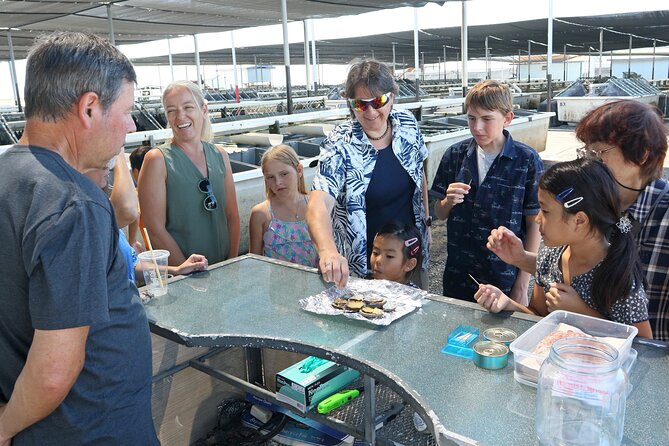
At $35 per person, this is not the cheapest way to spend an hour in Kona. You can visit many beaches and scenic overlooks for little or no admission. The value here comes from access, instruction, handling opportunities, and tasting.
I think the price is reasonable if you are curious about food production, marine life, or sustainable farming. The guide-led explanations give the visit structure, and the tasting turns the lesson into a complete experience. The small group limit also helps keep it personal.
The value is weaker if you want a substantial meal or a long farm visit. The tour lasts only about an hour, and the food sample is modest. Someone mainly interested in eating abalone may prefer to use the tour money toward a meal or additional purchases at the on-site food service.
For families, the cost can make sense because one activity serves several age groups. Parents do not need to split up for a children’s attraction and an adult interest. Everyone can handle the same animal, hear the same story, and try the same samples.
Who should book this experience?
You should consider booking if you enjoy hands-on learning, unusual food, small working farms, or marine biology. It is also a smart choice for repeat visitors to Kona who have already done the standard beach and volcano activities.
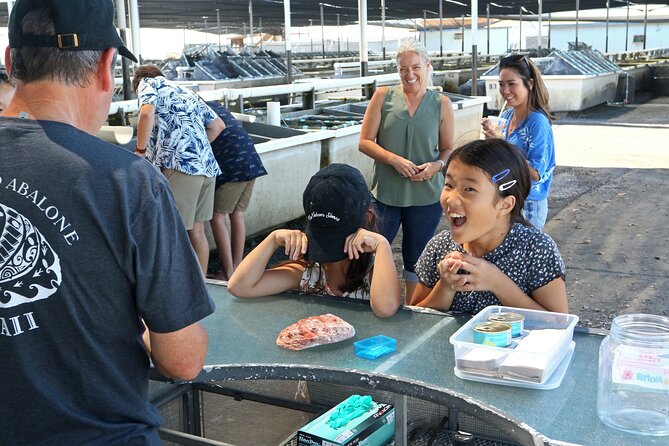
Families with young children should find the touch-and-taste format more engaging than a lecture. Older adults can take part without a demanding hike. Couples may like it as a short, distinctive stop before lunch, an airport departure, or another Kona activity.
I would skip it if you dislike outdoor settings, have no interest in seafood, or want a large meal included in the ticket. The farm is educational first. The abalone sample is a welcome finish, not the main course.
Should you book the Big Island Abalone Farm Tour?
Book it if you want a short, unusual Kona experience that gives you real contact with marine life and a better understanding of sustainable seafood. The strongest reasons are the chance to hold live abalone, the clear explanations from guides such as Carlos, Kai, and Diana, and the combination of abalone and seaweed tasting.
Plan carefully if you are relying on public transportation, managing mobility needs, or fitting the visit near a flight. Bring water and a hat, allow about an hour for the tour itself, and leave room for an optional meal afterward.
For $35, you get more than a sample and a look at some tanks. You get a compact lesson in how a prized seafood animal lives, grows, and reaches the plate. That makes this a worthwhile choice for curious families, food-minded visitors, and anyone who wants to see a working side of Kona beyond the usual resort routine.
FAQ
How long does the Abalone Farm Tour last?
The tour lasts approximately one hour. It starts and ends at Big Island Abalone.
Where does the tour meet?
The meeting point is Big Island Abalone at 73-357 Makako Bay Drive, Kailua-Kona, Hawaii 96740.
What is included in the experience?
The visit includes a guided tour of the working abalone farm, opportunities to touch live abalone and other sea creatures, and tasting samples of abalone and seaweed.
Is the tour suitable for children and older adults?
Yes. Most people can participate, and the activity involves low physical effort. It is designed for a broad range of ages and abilities.
How many people can join the tour?
The maximum group size is 20 people.
What happens if bad weather cancels the tour?
If poor weather causes cancellation, you will be offered a different date or a full refund. You can also cancel at least 24 hours before the start time for a full refund.
Just added around Big Island
- Volcanoes Adventure Tour from Hilo★ 4.0 · 29 reviews
- Volcanoes National Park and Hilo Private Tour★ 5.0 · 3 reviews
- Volcano National Park and Rainbow Fall in Hilo, Hawaii★ 5.0 · 53 reviews
- Private Shore Excursion Hilo Volcanoes National Park up to 10 PPL★ 5.0 · 36 reviews
- Private VAN Tour Hilo★ 4.5 · 5 reviews
- Volcanoes National Park Adventure Tour – Hilo Shore Excursion★ 4.5 · 104 reviews
- Majestic Waterfall Tour★ 5.0 · 31 reviews
- Hawai’i’s Volcanoes National Park from Hilo Only★ 5.0 · 167 reviews
Farms, compared.
Lahaina: Maui Ku’ia Estate Guided Cacao Farm Tour and Tasting
Read our review →
Road to Hana Adventure with Farm to Table Lunch
Read our review →

Award Winning Farm Tour: Coffee, Chocolate and Unique Gifts
Read our review →
Browse the lists this tour appears in