
Reviewed · SUBMARINE TOURS
Big Island: Atlantis Submarine from Kona Beach
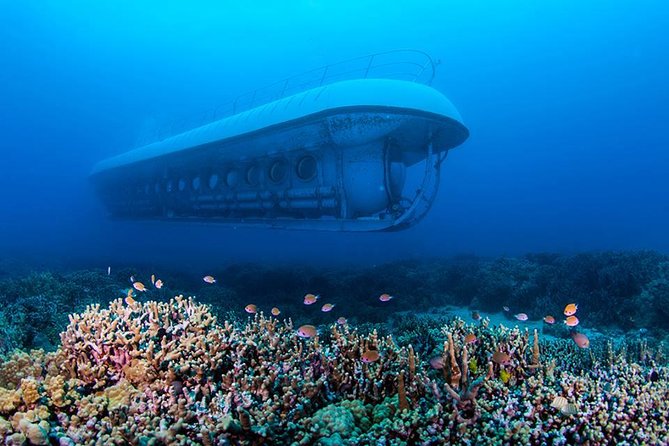
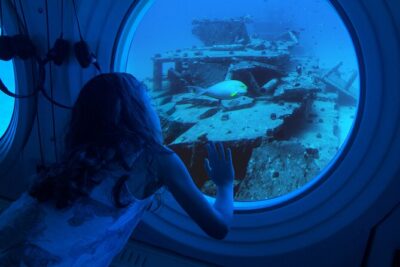
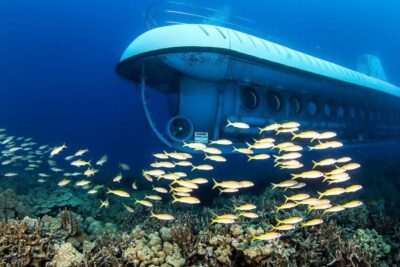
Kona’s Atlantis submarine takes you to a part of Hawaii most people only see in films: the seafloor more than 100 feet below the coast. You ride through an 18,000-year-old fringing reef, pass shipwrecks that now shelter fish, and watch the ocean through large portholes while an underwater naturalist explains what you’re seeing. I love the unusual access and the smooth, air-conditioned cabin. I also like that you don’t need to swim, snorkel, or wear special gear. The main drawback is that the trip depends on good ocean conditions, and the underwater colors can look muted at this depth.
The whole outing takes about an hour, but only 45 minutes are spent inside the submarine. The two short shuttle-boat rides add a little open-air scenery without taking up much time. Plan to arrive early, allow extra time for parking, and think twice if you dislike tight spaces or cannot manage a steep ladder.
Key points to know before booking
- More than 100 feet below Kona: The submarine gradually reaches about 100 to 117 feet, giving you a view well beyond ordinary snorkeling.
- Two shipwrecks on the route: These are newer artificial reef structures, not old historic wrecks, but they attract large schools of fish.
- Large viewing ports and air conditioning: The cabin is designed for sightseeing, with continuous airflow and a smooth ride.
- Live nature commentary: An English-speaking underwater naturalist points out fish, coral, reef life, and wreck features as you pass them.
- Family-friendly height rule: Children must be at least 36 inches tall, and even children under age 3 may ride if they meet that requirement.
- Weather can change the plan: Poor ocean conditions can lead to a last-minute cancellation, with a refund or another date offered.
Descending from Kona Beach to the seafloor
You meet at the Courtyard by Marriott King Kamehameha’s Kona Beach Hotel in Kailua-Kona. This is a central spot, but parking around the waterfront can take patience. I would arrive at least 30 minutes before the scheduled time, not just because early arrival is sensible, but because check-in and the walk to the departure area may take longer than expected.
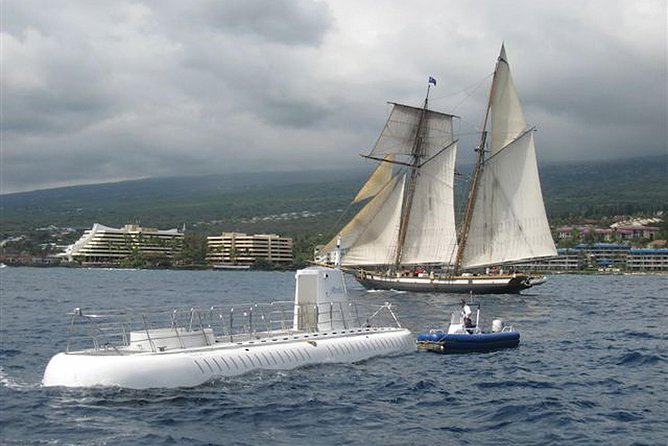
From the meeting point, an Atlantis escort leads you to a shuttle boat. The ride to the submarine takes about five minutes. It is a short transfer, but it helps you see the submarine from the outside and get a little sea air before entering the enclosed cabin.
The submarine carries up to 48 passengers. Boarding requires you to climb down a near-vertical ladder, so this is not the right choice for anyone who cannot safely manage steep steps. Once inside, you sit along the sides of the cabin and look through individual portholes. The submarine is air-conditioned, and the steady airflow makes the space more comfortable than many first-time passengers expect.
The short boat ride matters for another reason: the submarine itself does not leave directly from the hotel shoreline. You first travel out to the waiting vessel, then transfer aboard. Staff are there to guide the process, but you should still wear sensible shoes and keep your hands free for the ladder.
More submarine dives off Big Island:
- From Kona: Big Island Underwater Submarine Adventure
★ 4.6 · 162 reviews - Oahu: Submarine Scooter Adventure
★ 5.0 · 2,273 reviews - Waikiki: Atlantis Submarine Adventure
★ 4.5 · 1,225 reviews
What 45 minutes underwater really feels like
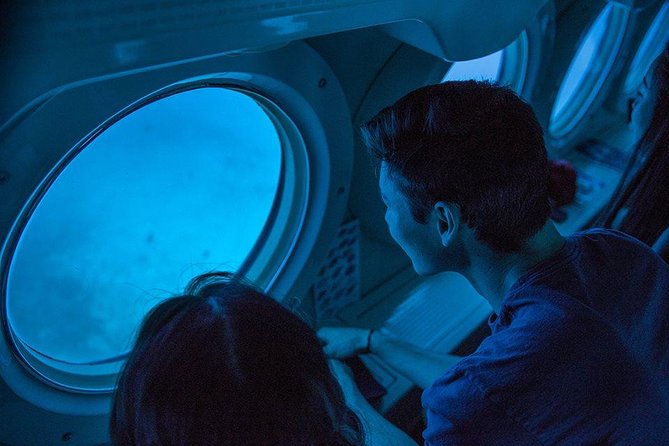
The submarine descends gradually, reaching roughly 100 feet and sometimes a little more. The exact depth described by passengers has ranged from about 105 to 117 feet, but the important point is simple: you are seeing the ocean from a depth most people never reach without scuba equipment.
At first, the water may appear bright and clear. As you go farther down, the blue becomes stronger and some coral and fish lose the intense colors you might see near the surface. This is normal. Water absorbs colors with depth, so the reef can look more blue-gray than postcard-bright. I would not book this expecting the same color display as a shallow snorkeling trip.
The trade-off is access. You can see the sloping reef, fish moving across the seafloor, and structures that would otherwise require swimming skills, equipment, and comfort in open water. The submarine moves slowly enough for you to follow the view, while the guide directs attention to points of interest outside the portholes.
The ride is designed as a sightseeing trip, not a technical expedition. You remain seated in a controlled cabin, and the crew handles the navigation. One of the strongest aspects is the calm pace. You have time to watch a school of fish gather near a wreck instead of rushing past a reef from a boat.
A 25-acre coral reef with a long local story
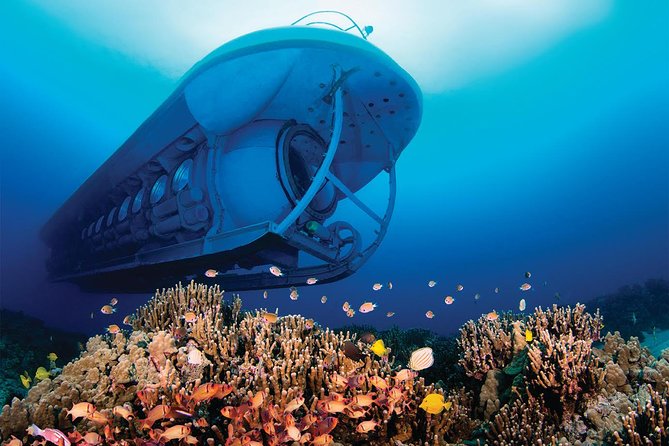
The route crosses a natural fringing coral reef described as about 18,000 years old and covering roughly 25 acres. That age gives the setting a useful sense of scale. You are not simply looking at a few planted pieces of coral beside the harbor. You are passing through a long-established marine habitat with fish, coral formations, and other small sea life.
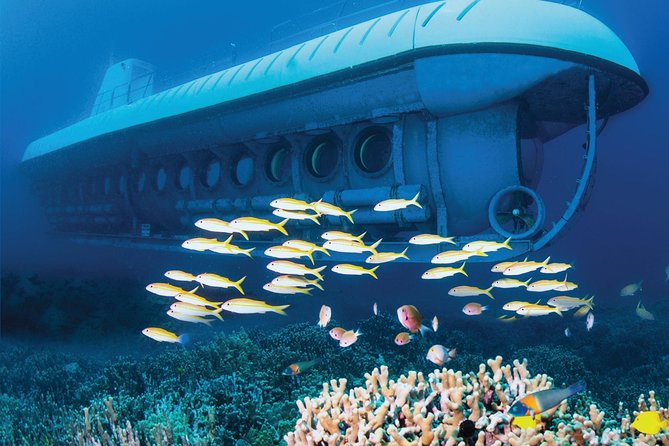
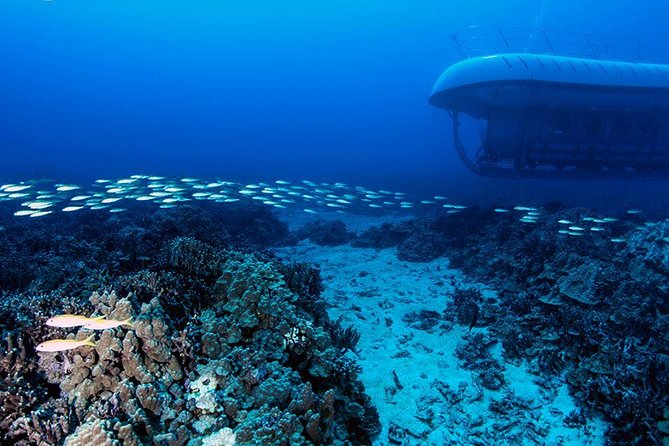
The reef is also a good place to set realistic expectations. Marine life is not arranged like an aquarium display. Some passengers see many fish immediately. Others may need to watch carefully through the porthole and wait for the submarine to move into a busier area. Sightings can include schools of tropical fish, sea urchins, eels, sharks, and, on some trips, sea turtles or dolphins.
The wrecks often attract the greatest concentration of fish. Schools gather around their surfaces and openings, making them useful reference points for the guide. They are newer wrecks used as artificial reef structures, so you should not expect a century-old ship resting on the bottom. Their value is ecological and visual rather than archaeological.
One especially memorable possibility is seeing a white-tip reef shark near or inside a wreck. That is not a guarantee, and marine life never follows a script, but the structures create places where larger animals may appear. The submarine also lets you watch without entering the water, which suits families and anyone who prefers to keep a pane of glass between themselves and the wildlife.
The guide’s commentary is part of the experience
The underwater naturalist provides live English narration throughout the submarine route. This is more than background chatter. A good guide helps you find the fish, explains why they gather near the wrecks, identifies reef creatures, and gives context to the artificial structures below.
The commentary can include local fish, coral ecology, wreck histories, and the way marine animals use the reef. The strongest trips pair clear explanations with a little humor, which helps children stay focused when the view outside briefly becomes a stretch of blue water.
The quality of natural-history commentary can vary by guide. Most of the available feedback praises the crew for being friendly, informative, and safety-minded, but one experienced local diver pointed out a few fish-identification errors and questioned some overly dramatic warnings about fish behavior. That is a fair reminder to treat the narration as an introduction, not a formal marine-biology lesson.
You can request headsets with narration in Japanese, Mandarin, Spanish, or Korean at no extra cost. The tour itself is offered in English, and the live English narration is the main presentation. If you need another language, request the headset when arranging the tour rather than assuming one will be handed to you automatically.
A few more Big Island mornings worth comparing
- Big Island in a Day: Volcanoes Waterfalls Sightseeing and History
★ 5.0 · 6,569 reviews - Big Island Manta Ray Night Snorkel
★ 5.0 · 5,656 reviews - Big Island: Kona Manta Ray Snorkel Tour in Keauhou Harbor
★ 4.5 · 2,465 reviews - Hilo Shore Excursion: Volcanoes National Park & Black Sand Beach
★ 4.5 · 2,338 reviews
Comfort, claustrophobia, and the near-vertical ladder
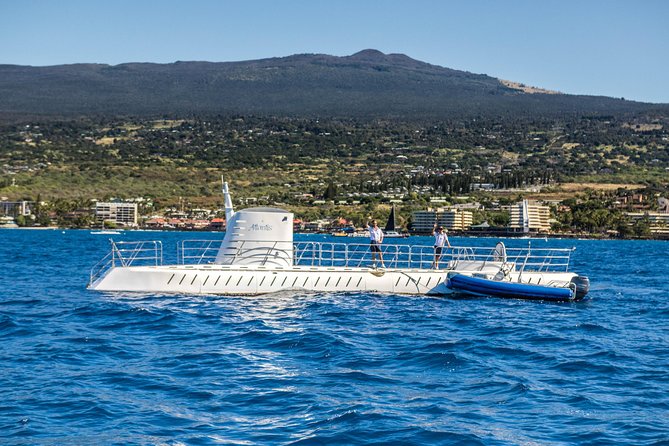
The word submarine can make people picture a cramped, humid metal tube. This experience is more comfortable than that image suggests. The cabin is air-conditioned, airflow continues throughout the ride, and the seats and portholes are arranged for sightseeing.
Still, this is an enclosed space. If you are strongly claustrophobic, the lack of open exits during the underwater portion may outweigh the comfort features. A recent passenger who had worried about stuffiness and motion sickness found the ride smooth, but personal comfort varies. If enclosed spaces bother you, look at photos of the submarine or speak with the operator before booking.
The ladder is the more practical concern. You must descend and climb back up a near-vertical ladder when boarding and leaving. Most people can participate, but the tour is not suitable for anyone unable to manage that movement safely.
Motion sickness appears to be less of an issue inside the submarine than on a rough open boat, since the underwater ride is described as smooth. Ocean conditions still affect the shuttle transfer and the decision to operate. Bring any medication you normally use for boat travel, but do not assume the submarine eliminates all motion.
Is the $160.41 price fair?
At $160.41 per person, this is not a casual add-on. It costs more than a simple beach activity or short glass-bottom boat ride. The value comes from the access: you reach more than 100 feet underwater without snorkeling, scuba certification, or a long training session.
I think the price makes more sense if your group includes people who cannot swim comfortably, young children who meet the height rule, older family members, or anyone who wants to see marine life without getting wet. It is also a strong choice if you have already snorkeled around Hawaii and want a different view of the coast.
The comparison with snorkeling is important. Snorkeling gives you brighter shallow-water colors and a more active relationship with the reef. The submarine gives you comfort, depth, dry clothes, and a controlled view of wrecks and deeper habitat. Neither replaces the other.
The experience lasts about an hour, including the two short shuttle rides, with 45 minutes inside the submarine. That makes the price easier to justify if you have a tight Kona schedule, but it also means the underwater portion ends just as you are getting fully accustomed to it. One passenger wished the trip lasted longer, a reasonable complaint at this price.
Planning the timing around Kona
Several departure times are offered, so you can fit the outing around a beach morning, a meal, or another Kona activity. I would avoid placing it at the very end of your stay. Ocean conditions can force a last-minute cancellation, and a refund does not replace the experience if you have already flown home.
The operator requires good weather and sea conditions. If the trip is canceled because of poor weather, you can receive a full refund or move to another date. That policy is helpful, but it cannot solve a scheduling problem if your holiday is almost over. Booking earlier in your stay gives you the best chance to reschedule.
The activity ends back at the Kona meeting point. Hotel pickup and drop-off are not included. Public transportation is nearby, but if you drive, allow time to find parking and walk to check-in. The meeting point is easy to locate on paper, yet waterfront parking can be less simple in practice.
The experience is popular enough that advance planning is sensible. It is commonly reserved about 30 days ahead, especially when families are arranging a trip around fixed hotel dates or a cruise stop.
Who will enjoy this submarine ride most
I would recommend it to families with children at least 36 inches tall, multigenerational groups, couples wanting a memorable Kona activity, and anyone curious about marine life but not eager to snorkel. The range of ages that can enjoy the trip is one of its real strengths. Children can watch fish through the portholes, while older passengers avoid swimming and sun exposure.
It also suits solo visitors. You do not need a large group to make the experience worthwhile, and the seating arrangement keeps the focus outside the submarine rather than on social interaction inside it.
This is less suitable for anyone who expects a historic shipwreck expedition, intensely colorful shallow coral, or a long underwater adventure. The wrecks are newer artificial reef structures, and the depth means colors can look subdued. Wildlife sightings are likely, but no route can promise a shark, turtle, eel, or dolphin on every departure.
Should you book the Atlantis submarine from Kona Beach?
Book it if you want to see Kona from a genuinely different angle and value comfort over active water time. The combination of a smooth air-conditioned submarine, large portholes, live narration, coral reef habitat, and two fish-filled wrecks gives you access that a normal sightseeing boat cannot match.
I would skip it if you are severely claustrophobic, cannot climb the steep ladder, or would be disappointed by blue-toned scenery instead of bright shallow reef colors. I would also schedule it early in your stay so a weather cancellation does not erase your only chance.
For families and mixed-age groups, this is one of the easier ways to share an underwater experience without asking everyone to snorkel. At $160.41, it is a splurge, but a reasonable one for a rare view of Kona’s seafloor. Arrive early, request your preferred language headset, keep expectations realistic about the wrecks, and give yourself 45 minutes to watch carefully. That is when the ocean usually rewards your attention.
FAQ
How long does the Atlantis submarine experience last?
The full activity takes about one hour. The actual underwater portion lasts 45 minutes, with shuttle-boat rides of about five minutes each way.
Where does the tour start and end?
You meet at the Courtyard by Marriott King Kamehameha’s Kona Beach Hotel, 75-5660 Palani Road, Kailua-Kona. The activity ends back at the same meeting point.
How deep does the submarine go?
The submarine gradually reaches about 100 feet below the surface. Individual descriptions place the deepest point at roughly 105 to 117 feet.
What languages are available?
Live narration is provided in English. Headsets with recorded narration in Japanese, Mandarin, Spanish, and Korean are available upon request at no additional cost.
Can young children ride the submarine?
Children must be at least 36 inches tall. Children under age 3 may ride if they meet the 36-inch height requirement, and a child ticket is required.
Is hotel transportation included?
No. Hotel pickup and drop-off are not included. You must make your own way to the Kona Beach Hotel meeting point.
What happens if poor weather cancels the activity?
If the operator cancels because of poor weather or ocean conditions, you can receive a full refund or choose another date. You can cancel your own reservation for a full refund if you do so at least 24 hours before the scheduled start time.
Just added around Big Island
- Kalaoa: Big Island and Kona Midday Whale Watching Tour★ 4.3 · 29 reviews
- Kailua-Kona: Pacific Humpback Whale Watch Excursion★ 5.0 · 4 reviews
- Kailua Kona: Humpback Whale Watching Adventure Cruise★ 4.5 · 33 reviews
- Kona Hi, Sunset Manta Ray Tour 10 passengers maximum★ 5.0 · 14 reviews
- Kailua-Kona: Night Manta Snorkel or Dive★ 4.6 · 7 reviews
- Kona Tradewind Catamaran Sail with Cocktails★ 4.7 · 5 reviews
- Big Island: Kona Half-Day Boat Tour with Snorkeling & Lunch★ 5.0 · 34 reviews
- Kailua-Kona: Haunted History Ghost Walking Tour★ 4.1 · 8 reviews
Submarine Tours, compared.
Pearl Harbor Arizona Memorial – Honolulu Tour – Submarine Access
Read our review →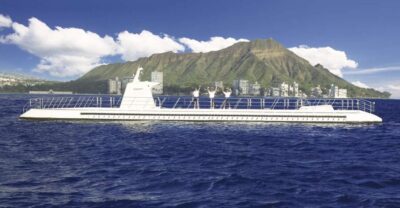
From Kona: Big Island Underwater Submarine Adventure
Read our review →Browse the lists this tour appears in