
Reviewed · SURF LESSONS
Oahu: Beginner-Friendly Waikiki Beach Surfing Lesson
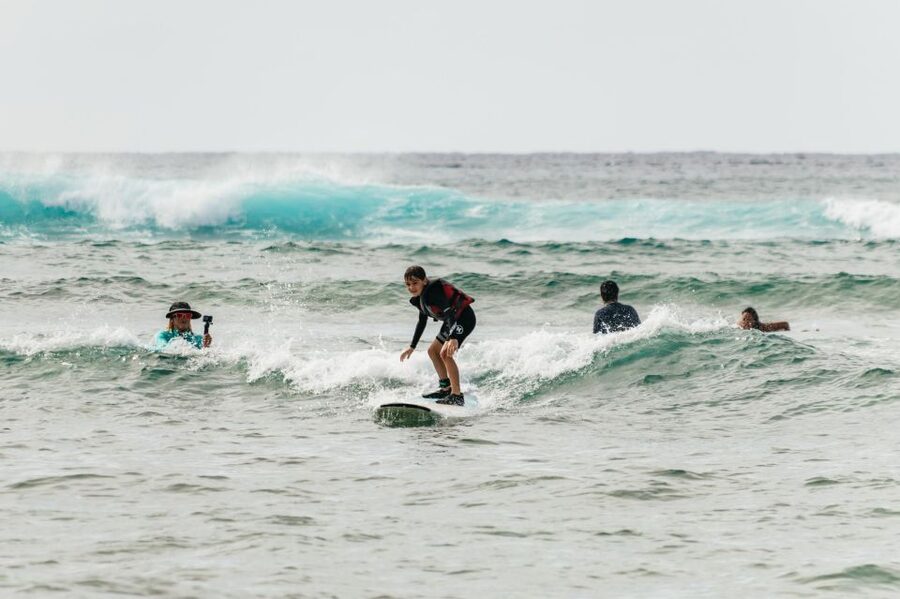
Waikiki is one of the world’s friendliest places to learn surfing, and this lesson makes good use of its long, forgiving waves. You get 20 to 30 minutes of land instruction before heading into the water, followed by about 70 minutes of supervised practice with a lifeguard-certified instructor.
I like the small teaching groups, limited to eight people with as many as one instructor for four students. I also like that the lesson includes the board, leash, rash guard, reef shoes, and optional wetsuit. The main catch is that photos and videos cost extra, and children under 12, pregnant women, and wheelchair users cannot take part.
Quick points to know
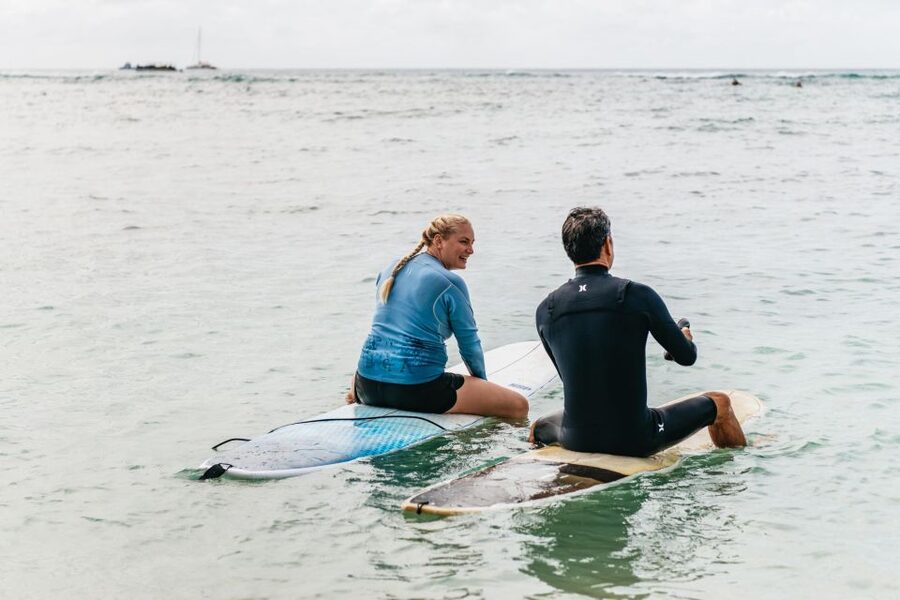
- Beginner-friendly Waikiki waves: The lesson is built for first-time surfers, with instructors helping you choose waves and correct your stance.
- Small groups matter: With a maximum of eight participants and a stated ratio of one instructor for four students, you should get active coaching rather than a quick group talk.
- Useful 20 to 30 minute briefing: You learn ocean safety, board basics, and the correct way to stand before paddling out.
- About 70 minutes in the water: Two hours gives you enough time to fall, adjust, and try again without feeling rushed.
- Photos and video are optional: You can buy the footage afterward for about $45, but it is not included in the $125 price.
- English and Japanese instruction: You can request help in either language, subject to availability.
Why Waikiki works for first-time surfers
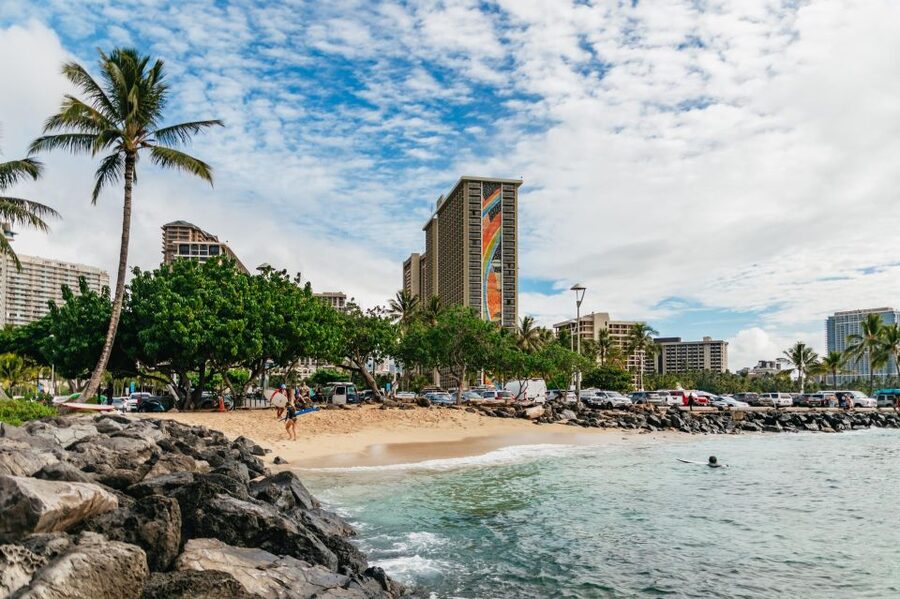
Waikiki has a long-running reputation as a welcoming place to learn, and the setup here is aimed squarely at beginners. You are not being asked to arrive with balance, timing, or knowledge of surf etiquette. The staff starts with the basics and then gets you into the water fairly quickly.
That matters because surfing is hard to understand from the sand. On land, you can practice the motion of standing on the board without waves pushing you around. In the water, you then get a chance to turn that practice into something real.
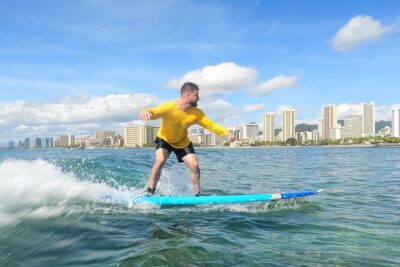
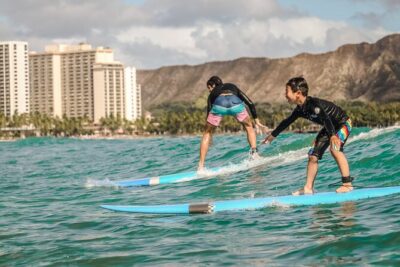
The activity takes place at an uncrowded part of the beach, according to the tour details. Exact water conditions can vary, but the instructors work with the waves available that day. Several participants were able to stand during their first lesson, while others needed more attempts. That is a realistic goal for two hours: not mastery, but a first taste of riding a wave under your own control.
I would set your expectations at catching several short rides rather than surfing all the way across Waikiki. You will likely spend part of the lesson paddling, falling, getting back on the board, and listening for the next instruction. That repetition is the point.
More Surf Lessons in Oahu
- Open Group Surfing Lesson in Waikiki, Hawaii
★ 4.5 · 582 reviews - Surfing Lessons On Waikiki Beach
★ 4.5 · 317 reviews - Waikiki Private Group Surf Lesson
★ 5.0 · 298 reviews
Arriving at Surfer Girl Academy
Your meeting point is Surfer Girl Academy. Parking by the ocean is free, which is useful in Waikiki, where parking can otherwise add stress and expense. One practical warning: the location may not look obvious at first, and the beach area is described as small. If you are unsure that you have found the right place, calling the company is the sensible move.
Bring swimwear, a towel, sunscreen, water, and a change of clothes. Cash is also listed as something to bring, which may be useful for small purchases or optional extras. You are fitted with the equipment before the lesson begins.
The included gear is a real part of the value here. You receive a surfboard, leash, HURLEY rash guard, and reef shoes, with a wetsuit available if you want one. You do not need to buy or carry your own board for a first attempt. Reef shoes are especially helpful when you are walking in and out with a large board under your arm.
The gear process is simple, but allow enough time to arrive ready for the scheduled start. This is not a drop-in beach rental where you grab a board and figure things out alone. The teaching time is organized around your lesson.
The first 20 to 30 minutes on shore
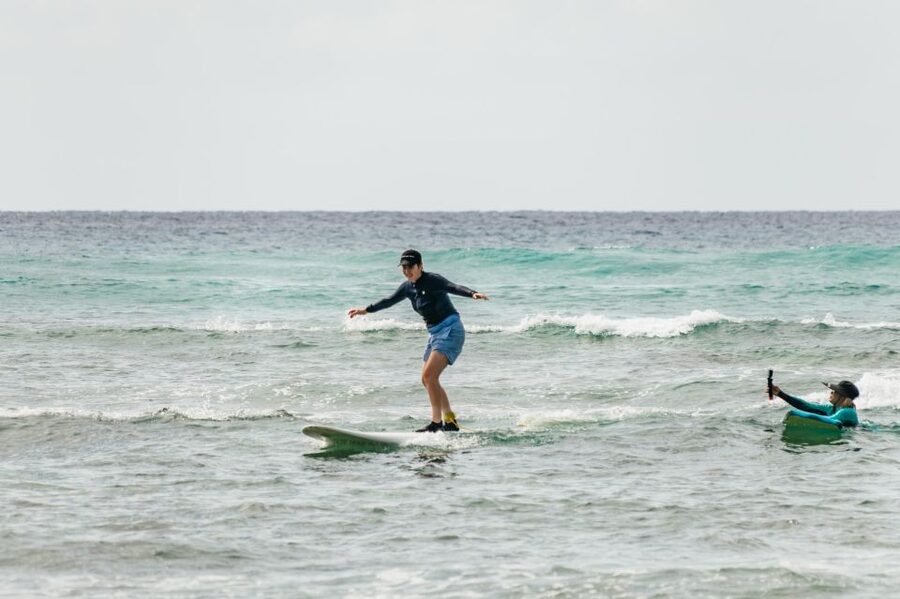
The dry-land portion covers the parts of surfing that look simple until you try them. Your instructor explains how to position yourself, how to stand, and how to handle the board safely. You also receive general ocean-safety instructions and directions for moving through the water.
This section is brief enough to keep the day moving, but long enough to give you a plan. Pay close attention to the standing technique. Several people who succeeded quickly credited the instructors with showing them exactly what to do and correcting their posture.
You may find the first practice awkward. That is normal. Surfing demands a quick transition from lying on your stomach to standing with your feet placed correctly, all while the board is moving. The land session gives you a chance to rehearse the motion before the real test begins.
I like that the instructors do not turn the introduction into a long lecture. The strongest part of this experience is the move from explanation to practice. Instructors described by name in participant feedback include Yuko, Mito, John, Noah, Kai, and Shuji. Their teaching styles may differ, but the consistent pattern is patient coaching and encouragement.
About 70 minutes riding Waikiki waves
After the briefing, you head into the water for roughly 70 minutes of supervised surfing. The instructor helps position your board, points out suitable waves, and tells you when to paddle. That guidance is what makes this more than a standard board rental.
The first attempts often involve help from the instructor. You may be pushed into a small wave or given a correction before the wave arrives. As you improve, you are encouraged to catch waves with less assistance. The goal is to build enough confidence to manage the basic sequence yourself.
Expect to fall. In fact, falling early is useful because it teaches you how quickly a board moves and how much time you have to stand. The instructors focus on getting you back into position rather than dwelling on mistakes. One participant described needing repeated attempts before eventually riding independently, while another stood on the first try. Both outcomes fit a beginner lesson.
The water time can feel surprisingly full. Two hours sounds short when you are starting from zero, but about 70 minutes in the ocean gives you many chances to practice. You are not spending the whole session waiting for a turn from the beach.
The listed ratio of one instructor for every four students is important. You may not receive one-on-one attention every second, but the group is small enough for an instructor to see your stance and offer corrections. Some sessions may be even smaller. One person had a solo lesson when no other participant booked the same early start, and another small group had two instructors for three students.
Conditions still matter. No instructor can guarantee that every wave will suit every student. The experience is designed to give you the best practical chance to ride, not to promise a perfect surf day.
Same island, a completely different kind of day:
- Oahu Grand Circle Island and Haleiwa Tour: 9-Hr Deluxe Experience
★ 5.0 · 17,387 reviews - Oahu: Grand Tour Around Island 16 Locations plus Snorkeling
★ 5.0 · 8,669 reviews - Parasailing Experience in Waikiki, HI
★ 5.0 · 7,692 reviews - Salute to Pearl Harbor Including USS Arizona
★ 4.5 · 7,433 reviews
What makes the coaching useful
The strongest praise goes to the instructors, especially for patience, clear explanations, and encouragement. That is more valuable than fancy equipment for a first lesson. A board can float you, but it cannot tell you why you keep falling backward.
Instructors such as Shuji have been described as experienced surfers and coaches who adapt the lesson to the student. John is praised for being calm and precise, while Yuko is repeatedly associated with patient, encouraging teaching. Mito is described both as an instructor and as the person taking photos in some sessions.
You should still take responsibility for listening. The instructors can help you choose a wave and set up your board, but you need to follow safety directions and make the standing motion when told. If you pay attention to the corrections, you are more likely to leave with a skill you can practice later.
The tone appears supportive rather than competitive. Families, solo participants, and complete beginners have all been accommodated. The lesson is not designed only for athletic people, though basic balance and comfort in the water will help.
The photo and video option
Photos and videos are available to purchase after the lesson, with the price described by participants as $45. They are not part of the $125 booking cost, so you should decide in advance if you want to spend more.
This optional add-on has clear value if you want proof of your first ride. Surfing is difficult to photograph from the beach, and the staff can capture moments that family members on shore would miss. Some participants particularly liked having GoPro-style images and video ready soon after the lesson.
The extra cost is the main complaint connected with the activity. At $45, the package is not a small impulse purchase for everyone. If your budget is tight, skip it and focus on the lesson. If recording your first Waikiki wave matters to you, set the money aside before you go.
Family members who are not surfing may have a place to watch, and one small group appreciated that chairs were provided for bystanders. Still, I would not assume every viewing detail will be identical on every date.
Is $125 a fair price?
The $125 cost is not cheap, but it covers more than a board rental. You get a two-hour lesson, an instructor, surfboard, leash, rash guard, reef shoes, and optional wetsuit use. You also receive direct supervision in the water, which is the main reason to book a lesson instead of renting equipment.
The small group makes the price easier to justify. If eight people fill the session, you will share the attention, but the stated maximum of four students per instructor is still reasonable for beginner coaching. If the group is smaller, the value improves sharply. Solo and very small-group sessions have occurred, though you should not book assuming that will happen.
Compared with trying to teach yourself, the instruction can save you a lot of wasted time. A beginner may not know which waves to choose, how to position the board, or why the board keeps turning. An instructor handles those decisions while you focus on standing.
I would consider this good value if surfing is a priority during your Oahu stay. It is less attractive if you only want to play in the water for a few minutes or if you are already comfortable surfing. The activity is aimed at first-timers and less experienced surfers, not advanced coaching.
Who should book this lesson?
I would choose this for adults and children aged 12 or older who want a structured first attempt. It also suits couples, families with older children, and solo visitors who prefer an instructor rather than a rental counter.
You do not need prior surfing experience. The lesson is open to all levels, but beginners receive the clearest benefit because every part of the session, from board handling to ocean safety, is explained for you.
This is not suitable for children under 12, pregnant women, or wheelchair users. The provided information does not list other fitness requirements, so if you have concerns about balance, swimming ability, or physical exertion, contact the academy before booking.
The lesson is available in English and Japanese. If language support matters to you, check that your preferred language is available at your selected time.
Timing, cancellation, and small practical matters
The activity lasts two hours, with start times depending on availability. An early session may offer a smaller group, but you should choose the time that fits your plans rather than relying on an empty booking.
Cancellation is free up to 24 hours in advance for a full refund. You can also reserve now and pay later, which helps if your Oahu schedule is still shifting. Those terms are useful for a weather-sensitive water activity, though you should still check the final booking conditions.
Bring sunscreen and water, but do not forget the towel and dry clothes. Reef shoes, a rash guard, and the board are supplied. A sticker is also included, a small souvenir rather than a reason to book, but a nice touch for children and first-time surfers.
Should you book it?
I would book this lesson if you want a genuine first surfing experience at Waikiki and value hands-on instruction. The best reasons are the small groups, the long water session, and the instructors’ repeated focus on patient corrections and confidence.
I would skip it if you are looking for a cheap board rental, need wheelchair access, are traveling with a child under 12, or do not want to pay extra for photos and video. For everyone else, $125 buys a well-supported introduction, with a strong chance of standing up at least once and a clear idea of whether surfing is something you want to pursue.
FAQ
How long is the Waikiki surfing lesson?
The experience lasts two hours. About 20 to 30 minutes are spent on land instruction, followed by roughly 70 minutes of supervised surfing.
Is this lesson suitable for complete beginners?
Yes. The lesson is designed for all surfing levels, including people with no prior experience.
How many people are in each group?
The group is limited to eight participants. The stated teaching ratio is one instructor for every four participants.
Which languages are available?
Instruction is available in English and Japanese.
What equipment is included?
You receive a surfboard, leash, HURLEY rash guard, and reef shoes. A wetsuit is available if you want one.
Do I need to bring my own surfboard?
No. A surfboard and leash are included with the lesson.
Are photos and videos included in the price?
No. Photos and video downloads are available for purchase separately. The price described for this option is about $45.
What should I bring?
Bring swimwear, a change of clothes, a towel, sunscreen, water, and cash.
Who cannot take this activity?
Children under 12, pregnant women, and wheelchair users cannot take part.
Just added around Oahu
- Kailua: Mokulua Islands Guided Kayak and Snorkeling Tour★ 4.9 · 46 reviews
- Honolulu, Oahu: Waikiki Whale Watching Cruise★ 3.5 · 166 reviews
- Oahu: Sips & Secrets of Hawaii Pub Crawl★ 5.0 · 19 reviews
- Oahu: Honolulu Turtle Canyon Snorkeling Tour★ 4.6 · 136 reviews
- Oahu: USS Arizona Memorial and City Highlights Tour★ 4.2 · 32 reviews
- Honolulu: Waikiki Food Tour with Local Guide★ 5.0 · 3 reviews
- Oahu: Traditional Canoe Sunset Cruise with Dinner★ 5.0 · 4 reviews
- Oahu: Hilton Waikiki Beach Hotel Magical Mystery Show★ 4.7 · 39 reviews
Surf Lessons, compared.


Private Hanalei Sandy Bottom Surf Lesson on Kauai
Read our review →

Browse the lists this tour appears in