
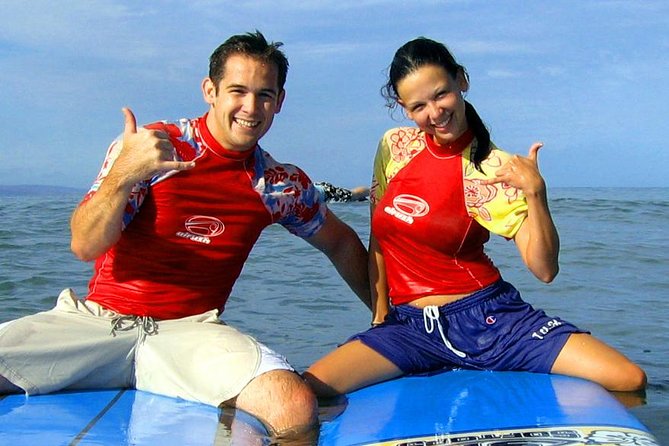
Reviewed · SURF LESSONS
Maui: Two Hour Beginner Group Surf Lesson in Kihei
The best part of this Kihei surf lesson is that you get into the water quickly and work toward a real goal: standing on a board and riding a wave. The class stays small, with no more than six students, so instructors such as Mike, Ivan, Francisco, Sofi, Justo, and Jay can give hands-on help instead of shouting advice from shore.
I like the free next lesson guarantee if you do not manage to surf, and I like that the price includes the board, rash guard, and water booties. The main drawback is simple: the ocean makes the schedule, not the instructor. Some days bring easy beginner waves; other days are calm, and you may spend more time waiting for a ride.
Key points to know before you book
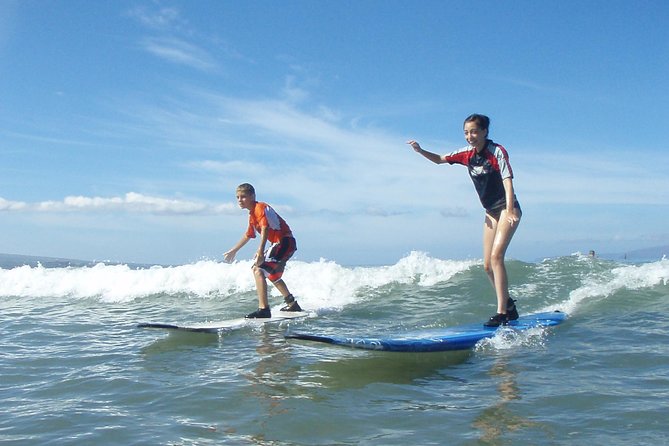
- A true beginner lesson: The class covers ocean awareness, safety, basic wave riding, and surfing etiquette before you head out.
- Small groups matter: Six is the maximum, and some sessions have fewer students split among instructors.
- Your equipment is included: You receive a surfboard, rash guard, and water booties.
- Kihei is practical: Surf Shack is at 1976 South Kihei Road, with parking, shops, food trucks, and nearby beaches.
- You may get professional photos: An in-water photographer may capture rides and posed shots. Photo packages have been offered for an extra fee.
- The waves are not guaranteed: Conditions can be gentle and ideal for beginners, or too soft for frequent rides.
Why this two-hour lesson works for first-time surfers
Surfing can look easy from the beach. It is not. You must read the water, lie on the board correctly, paddle at the right moment, push up quickly, and keep your balance while the board moves beneath you. A good first lesson breaks that chain into manageable pieces.
This class starts with the basics rather than throwing you into the water cold. You learn surfing rules and etiquette, ocean awareness, and water safety before trying to catch a wave. That short beach explanation matters, especially if you have never handled a surfboard or are unsure how to fall safely.
The goal is not to turn you into a polished surfer in two hours. The goal is a first ride, a better sense of the ocean, and enough technique to keep practicing. Many beginners manage to stand during the first class, sometimes on the second attempt, but you should treat that as a realistic possibility rather than a promise that every wave will cooperate.
The school does offer a useful promise: if you are not surfing after the lesson, your next lesson is free. That takes some pressure off the first attempt. You can focus on learning instead of feeling that every missed wave has wasted your money.
More Surf Lessons in Maui
- Outrageous Surf ScHool Lesson on Lahaina Side
★ 4.5 · 547 reviews - Group Surf Lesson at Kalama Beach in Kihei
★ 5.0 · 264 reviews - Maui Lahaina Group Surf Lesson
★ 4.9 · 235 reviews
Meeting at Surf Shack Maui in Kihei
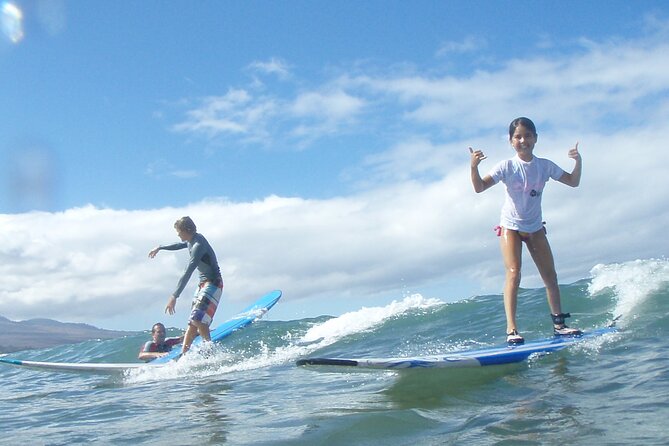
You meet at Surf Shack Maui, at 1976 South Kihei Road in Kihei. The lesson begins and ends at this point, and there is no hotel pickup or drop-off, so plan your own way there.
The location works well for a family or group with mixed plans. One person can take the lesson while others wait nearby at family-friendly beaches, shops, or a food-truck area across the road. That gives nonparticipants something to do without forcing them to sit in a parking lot for two hours.
Parking is described as convenient, though the surf area itself can feel a little crowded. That is not unusual for a popular beginner beach. The tradeoff is that you are practicing in a place already suited to novice surfers, with small waves and plenty of other first-timers learning the same basic moves.
Arrive ready to change into the supplied gear. You receive a surfboard, rash guard, and water booties, plus instruction and the required one-dollar state ocean stewardship fee and taxes in the price. Bring your own swimsuit and anything you need for afterward, since hotel transport is not part of the experience.
The beach briefing: safety before standing up
The first part of the class takes place on land. Your instructor demonstrates the basic body position and the movement used to stand on the board. The lesson also covers wave-riding fundamentals, ocean awareness, safety, and etiquette.
This is the part that can feel brief, but do not dismiss it. A clear land demonstration lets you rehearse the movement before the board is sliding beneath you. You will have a better chance of standing if you listen closely to details about hand placement, timing, and where your feet should land.
The instructors are a major strength of this experience. Mike is often described as encouraging and patient, while Ivan is praised for being attentive and easy to follow. Francisco, also called Fran, has helped beginners get riding quickly, and Sofi, Justo, and Jay have all led friendly, supportive sessions.
Names and personalities can change with the schedule, but the teaching approach is consistent in the information provided: instructors explain the process, help position the board, and encourage you through the first attempts. That hands-on help is especially useful for children and adults who are athletic but have never surfed.
Getting into the water and catching your first wave
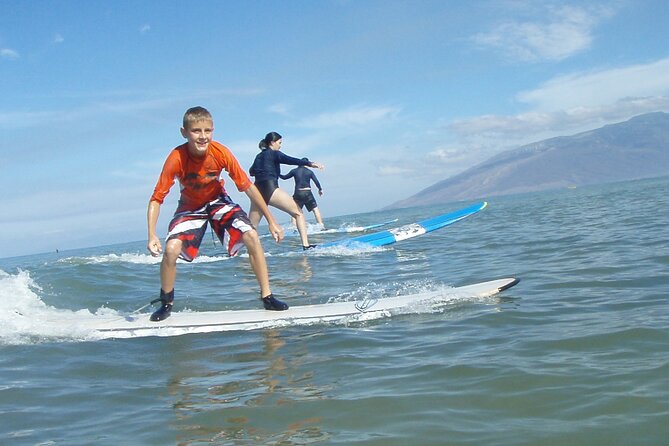
After the beach instruction, you head into the shallow water with your board. The instructor helps you find a suitable wave and may push the board at the right moment so you can concentrate on standing.
For many people, the first successful ride comes from keeping the movement simple. Paddle, wait for the push, rise in one quick motion, and look ahead rather than down at your feet. Your instructor will correct the basics, but you will still need to make an effort. Surfing is fun, though it is also an arm workout.
A two-hour class does not mean every minute is spent riding. Some time goes to fitting gear, explaining technique, walking into position, waiting for waves, and recovering between attempts. One session included a short beach tutorial and about an hour and a half in the water, which gives you a reasonable idea of how the time may be divided.
The water is shallow where beginners fall off, which can make those first attempts less intimidating. Still, conditions vary, and the supplied booties are described as fairly thin. If you already own better water shoes, you might prefer them, though the class does provide footwear.
Your group size makes a real difference here. With a maximum of six students, the instructor can watch your takeoff, offer a quick correction, and help you try again. A larger class would mean longer waits and less personal feedback.
Same island, a completely different kind of day:
- Maui Pineapple Farm Tour in Haliimaile
★ 5.0 · 2,855 reviews - Maui Eco-Raft Tour: Eye-Level Whale or Dolphin Watching – Lahaina
★ 5.0 · 2,482 reviews - Maui Snorkeling Adventure to Molokini and Turtle Town
★ 4.5 · 2,221 reviews - Maui: Haleakala Sunrise Spectacular with Local Breakfast
★ 4.5 · 2,155 reviews
What happens when the waves are small
The biggest variable is the ocean. The instructor can choose a useful practice area and give strong advice, but nobody can manufacture waves. On a calm morning, you might wait longer between attempts or catch fewer rides.
That is not necessarily a bad first lesson. Small waves are less intimidating, and a slower pace gives you time to recover and think about the last attempt. It can also mean fewer exciting rides, so set your expectations properly. You are booking an introduction to surfing, not a guarantee of perfect conditions.
The instructors appear to handle changing conditions sensibly. Their job is to make the best use of the water available, adjust the lesson, and keep the class safe. If the ocean is unusually quiet and you do not get up, the free follow-up lesson gives you a fair second chance.
The class is also affected by crowding. Kihei is a popular place to learn, and you may share the area with other beginners. That can make the beach feel busy, but it also means you are not expected to perform like an expert among advanced surfers.
The people who make the lesson enjoyable
Instruction is the heart of this activity, and the strongest pattern is the instructors’ patience. Mike, Ivan, Francisco, Justo, Sofi, and Jay are all named as friendly, encouraging teachers who make the process feel manageable.
That matters for older beginners as much as for children. One participant in their sixties finally tried surfing after wanting to do it for decades and found the process fairly simple with help and encouragement. You do not need to arrive as a natural athlete, though basic fitness will help you paddle and push up repeatedly.
Children and teenagers also tend to fit the class well. The stated minimum age for the group lesson is nine, and children must be accompanied by an adult. The information also advises private lessons for children under nine, with ages five to nine specifically directed toward a private format for safety and a better learning experience. Because those age notes overlap, contact the operator if your child is near the cutoff before booking.
A private lesson may be the wiser choice for a younger child or anyone who needs extra time. The group class is a good match for families who are happy to learn together and share attention with a few other students.
Photos, nearby plans, and the extra costs
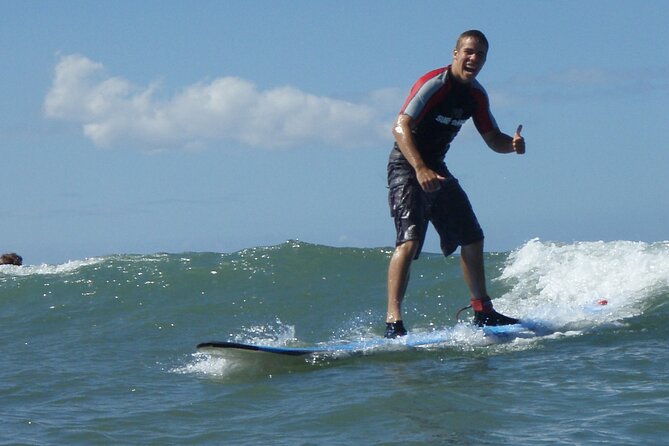
An in-water photographer may capture your attempts, successful rides, and posed photos. This can be a nice addition, especially for a family trying the activity together or for someone who wants proof of a first ride.
Photo purchases are extra. Packages have been offered at $40 for one photo or $75 for all images, with one purchase providing roughly 20 photos. The exact arrangement may vary, so treat this as an optional add-on rather than part of the $98 lesson price.
At $98 per person, the lesson is not a cheap beach activity, but the price includes two hours of professional instruction, the board, rash guard, booties, taxes, and the state ocean stewardship fee. You are also paying for a small class, which is important in a sport where quick corrections can make the difference between lying on the board and standing on it.
The free next lesson promise adds value if conditions are poor or you need more time. If you stand up several times and leave with the basics, the price feels more reasonable. If you spend much of the class waiting for waves, the value depends more on the quality of the instruction and your willingness to try again.
The activity is booked an average of 21 days ahead, so it is sensible to reserve early if your Maui dates are fixed. Free cancellation is available until 24 hours before the start time. Inside that window, you receive no refund, and changes are not accepted.
Who should book this Kihei surf lesson
I would choose this class if you want a friendly first try without committing to a long surf course. It suits solo beginners, couples, families, and teenagers who want a shared Maui activity rather than another sightseeing stop.
It is especially appealing if you have always wanted to surf but felt unsure about the physical side. The instructor helps with the board and the timing, and the shallow water and beginner waves make the first attempt less daunting.
You should think twice if you need guaranteed waves, private attention, or a quiet beach. Ocean conditions can be weak, the practice area may be crowded, and six students is small but not one-on-one. For a child under nine, book the recommended private lesson instead of assuming the group class is suitable.
You should also be comfortable with physical effort. Paddling and repeated attempts can tire your shoulders and arms. The class is beginner-friendly, not effortless.
Should you book it?
Yes, if your goal is to stand up on a surfboard, learn basic safety, and enjoy a well-organized first lesson in Kihei. The small class, included gear, experienced instructors, and free follow-up lesson make this a sensible choice for beginners.
Book with realistic expectations about the ocean. You may catch several small waves, or you may spend more time waiting on a calm day. If that uncertainty sounds acceptable, this offers a practical and memorable way to try surfing without buying equipment or signing up for a longer course.
FAQ
Where does the surf lesson meet?
You meet at Surf Shack Maui, 1976 South Kihei Road, Kihei, Hawaii 96753. The activity ends back at the same meeting point.
How long does the lesson last?
The lesson lasts approximately two hours. Time includes a beach introduction and water practice.
How many students are in each class?
The maximum group size is six students. Smaller groups may be divided among instructors for additional attention.
What equipment is included?
The price includes a surfboard, rash guard, and water booties. Professional instruction, taxes, and the one-dollar state ocean stewardship fee are also included.
Is hotel pickup provided?
No. Hotel pickup and drop-off are not included, so you must arrange your own transportation to and from Surf Shack Maui.
What age can join the group lesson?
The minimum stated age is nine. Children must be accompanied by an adult, and children under nine should take a private lesson for safety and a better learning experience.
What if I cannot stand up during the lesson?
The experience offers a free next lesson if you do not manage to surf in the first lesson.
Are photos included in the price?
No. An in-water photographer may be present, but photo purchases are optional and cost extra. Packages have been offered at $40 for one photo or $75 for all photos.
Can I cancel for a full refund?
Yes, if you cancel at least 24 hours before the experience start time. Cancellations or changes made less than 24 hours before the start time are not refunded.
More 2-Hour Experiences in Maui
- Maui: 2-Hour Molokini Snorkel Trip
★ 5.0 · 816 reviews - Whale Watching Maui: 2-Hour Small Group Raft Tour from Lahaina
★ 5.0 · 661 reviews - 2-Hour Oahu Whale Watch from Ala Wai Harbor, Waikiki
★ 4.5 · 1,929 reviews - Waikiki, Oahu 2-Hour Whale Watching: Guaranteed Sightings
★ 4.5 · 1,064 reviews
Just added around Maui
- Maui: Waterfalls of West Maui and Molokai Helicopter Tour★ 4.9 · 6 reviews
- Ka’anapali: Whale Watching Boat Tour★ 5.0 · 14 reviews
- Kaanapali: Sunset Dinner Catamaran Cruise With Drinks★ 4.8 · 55 reviews
- Kahului: Doors-off West Maui and Molokai Helicopter Tour★ 4.9 · 33 reviews
- Ka’anapali Beach: Coral Reef Snorkel and Turtle Spotting★ 4.9 · 135 reviews
- Hali’imaile: Pineapple Farm Tour★ 4.9 · 126 reviews
- Hana Rainforest and Haleakala Crater 45-min Helicopter Tour★ 5.0 · 18 reviews
- From Maalaea: Whale Watching Catamaran Cruise with Drinks★ 4.7 · 26 reviews
Surf Lessons, compared.
Beginner-Friendly Waikiki Beach Surfing Lesson
Read our review →

Private Hanalei Sandy Bottom Surf Lesson on Kauai
Read our review →

Browse the lists this tour appears in