
Reviewed · SURF LESSONS
Po’ipu Surf Lesson
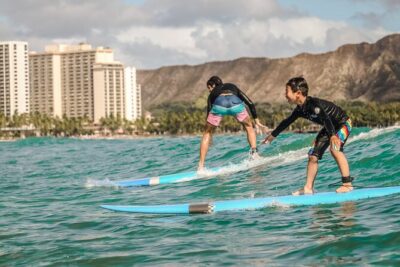
Standing on a surfboard for the first time is a fine way to spend an hour and a half on Kaua‘i. This Po‘ipu lesson begins on land with simple instruction, then moves into the water for coached attempts. Kele, David, and Dave are among the instructors praised for patient, clear teaching and steady encouragement.
I like the small groups of no more than eight and the fact that boards, booties, and rash guards are included. You do not need to shop for gear or guess which beach break suits a beginner. The main thing to consider is the workout: paddling takes effort, and the beach area is rocky rather than sandy in the easy, north-shore sense.
Key points at a glance
- Land instruction comes first: Practice paddling, popping up, and basic wave technique before entering the water.
- Patient coaching in the surf: Instructors give tips after each attempt, which helps nervous beginners improve quickly.
- Equipment is included: Your board, booties, and rash guard are provided.
- Small groups matter: A maximum of eight people allows for more direct help than a large class.
- Po‘ipu location is convenient: Meet at Koʻa Kea Resort on Poipu Beach, with the lesson ending at the same spot.
- Expect real exercise: You may catch several waves, but paddling and repeated attempts can leave you tired.
Why This Po‘ipu Lesson Works for First-Time Surfers
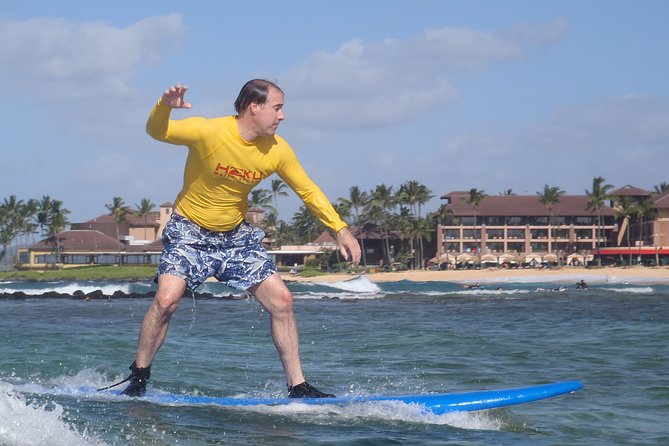
The best part of this class is its simple progression. You begin with the mechanics on land, then try those movements in the sea while an instructor watches and offers corrections. That order matters. Surfing can look easy from shore, but standing up requires timing, balance, and a quick change from lying down to crouching.
The lesson focuses on three basics: paddling, popping up, and catching a wave. You need all three. Weak paddling makes it hard to catch the wave, a slow pop-up leaves you kneeling or falling, and poor positioning can waste your best chance.
I especially like the low-pressure tone described by the instructors’ approach. Nervous beginners are not treated as a problem to solve. They are given repeated chances, simple reminders, and encouragement after a wipeout. One useful tip that came up in the instruction was to keep your head up. That small adjustment can help with balance and direction.
The class is also suitable for older adults who are in fair shape. People in their 50s and 60s have managed to stand and ride waves, but the lesson is still physical. You should expect to paddle hard, get splashed, and work your legs and shoulders.
More Surf Lessons in Kauai
- Private Hanalei Sandy Bottom Surf Lesson on Kauai
★ 5.0 · 339 reviews - Kauai’s Ultimate Group Surf Lesson
★ 5.0 · 110 reviews - Kauai’s Ultimate Semi-Private Surf Lesson
★ 5.0 · 33 reviews
Meeting at Koʻa Kea on Poipu Beach
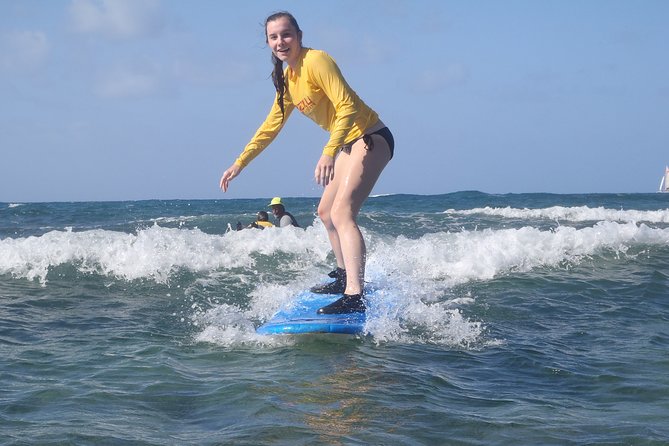
You meet at Koʻa Kea Resort, at 2251 Poipu Road in Koloa. The activity returns to this same meeting point, so you do not need to arrange a separate ride from the beach at the end.
There is no hotel pickup or drop-off. That is worth noting if you are staying elsewhere on Kaua‘i. You will need to make your own way to Po‘ipu, and the meeting instructions should be checked carefully when you book.
The location is particularly convenient if you are staying near Po‘ipu Beach. One person staying at the nearby Sheraton described the lesson as easy to reach on foot. The setting also gives you a pleasant start to the class, with the sea right there and no long transfer cutting into your activity time.
The beach area is not as soft underfoot as some first-time surfers expect. A direct warning from the practical side of this activity: the entry area can be rocky, unlike the north shore. Booties are included, and they are useful for more than keeping your feet warm. Still, move carefully when entering and leaving the water.
The First 15 Minutes: Paddling and the Pop-Up
The class starts on land. Your instructor demonstrates how to lie on the board, paddle, and rise into a standing position. You will practice the pop-up before handling real waves, giving your body a basic sequence to follow.
The instruction is meant to be direct rather than overloaded with theory. That suits surfing. You have only a few seconds to act once a wave reaches you, so short reminders are more useful than a long lecture.
Expect attention to body position, timing, and balance. You may be told to keep your head up, place your feet correctly, or move quickly from your stomach to your stance. These small corrections can make the difference between sliding off and riding across the water.
This land session also gives you a chance to ask questions and get comfortable with the board. If you are nervous, it is the least intimidating part of the lesson. If you already have some board experience, you may find it brief, but the real value comes when those movements are tested in the water.
The total activity lasts about 90 minutes, so the land portion cannot take up the entire lesson. That is good news for most people. You are here to surf, not sit through a classroom talk.
The Water Session: From First Attempt to First Ride
Once the group is ready, you take the board into the water. Your instructor helps you apply the land practice to actual waves and offers advice between attempts.
This is where the small group size becomes important. With no more than eight people, the instructor can keep an eye on each surfer and offer individual help. You may not receive constant one-on-one coaching, but you should have more direct support than in a large class.
The instructors’ teaching style is a major strength. Kele is repeatedly described as warm, patient, and encouraging. David and Dave are also praised for simple instructions, motivation, and staying engaged with the people in the water. Different instructors lead different classes, so you cannot choose a particular teacher unless the operator confirms it, but the teaching approach appears consistent.
Your first attempt may end with a splash. That is normal. The goal is not perfection. It is to understand what happened, make one adjustment, and try again. A good instructor helps you avoid getting stuck in frustration.
The most satisfying moment comes when the board catches the wave and you rise. Even a short ride feels like a real achievement because you have handled the timing yourself. Some beginners get up on their first try. Others need several attempts. The class is designed to support both kinds of progress.
Same island, a completely different kind of day:
- Koloa Zipline in Kauai
★ 5.0 · 6,764 reviews - Kauai Deluxe Sightseeing Flight
★ 5.0 · 2,162 reviews - Kauai Eco Adventure Helicopter Tour
★ 5.0 · 2,032 reviews - Kauai Airplane Tour: Na Pali Coast, Waterfalls & Window Seats
★ 5.0 · 1,964 reviews
How Much Work Is Involved?
Surf lessons are active, even when the waves are friendly. Paddling uses your arms and shoulders, while getting up and staying balanced uses your legs and core. Repeated attempts can become tiring before the 90 minutes are over.
You do not need to be an athlete, but a moderate level of fitness is required. If swimming or paddling for short periods is difficult, you may find the session demanding. One useful way to prepare is to practice basic swimming endurance and watch a few beginner videos so the pop-up motion feels familiar.
Do not confuse a gentle teaching style with an effortless activity. The class is low-pressure, not low-effort. You can still have fun if you tire quickly, but you may spend more time recovering between waves.
Bring enough energy for the morning or afternoon. Food and drinks are not included, though there is a food and beverage outlet on the property. You may want to eat beforehand, especially if you are booking the class for children or planning more activities afterward.
Boards, Booties, and Rash Guards Included
The $89.01 price includes professional instruction, a surfboard, booties, and a rash guard. That makes the cost easier to judge because you are not adding a separate equipment rental.
The rash guard is useful for sun protection and comfort. It also adds a light layer when the water or wind feels cooler than expected. One class participant specifically appreciated the long-sleeved clothing on a chilly day, while others found the water temperature comfortable.
Booties are especially welcome at this Po‘ipu location because the entry area can be rocky. They will not remove every concern underfoot, so take care when walking, but they are a practical inclusion.
You do not receive snacks, drinks, transportation, or a private lesson for this price. Those omissions are reasonable for a group class, but they matter if you want a fully arranged outing or personal coaching. The value is strongest for a first attempt, when equipment and basic instruction are the two things you need most.
Is $89.01 a Fair Price?
I consider the price fair for a 90-minute introduction when you factor in the equipment and small group limit. A private class would offer more direct attention, but this is not sold as a private lesson. You are paying for a supported first experience rather than a full day of surf coaching.
The value improves if you are traveling as a family. Several members of one family can learn together, share the excitement of first rides, and avoid separate board rental costs. It also works well for couples, especially if one person is confident and the other is nervous.
If you already surf regularly, this class may not provide enough challenge or instruction to justify the cost. It is aimed at beginners and casual learners. For a first taste of surfing on Kaua‘i, the price is easier to defend.
The 98 percent recommendation rate and 4.9 rating from 361 reviews point to a strong record, but I would still read the practical details carefully. The class can be tiring, the beach entry is rocky, and the experience depends on the day’s weather and surf conditions.
Families, Children, and Nervous Beginners
This is a good family activity for children over age eight, according to the stated suitability guidance. The teaching style also makes it a sensible choice for teens and adults who feel unsure about waves.
The instructors receive especially strong praise for working with children. David has helped young students feel comfortable quickly, and Kele has been singled out for helping a child stand on early waves. Those moments matter because a child’s first response to surfing may be excitement, hesitation, or fear.
Parents should still judge fitness and comfort honestly. A child who can follow instructions but tires easily may need extra encouragement. The class is not a passive beach activity. Everyone paddles, gets wet, and tries repeatedly.
If someone in your group is apprehensive, book a time when you can stay calm and unhurried. The instructor can help, but the child or adult still needs to be willing to enter the water and try. Success may mean standing, catching a short wave, or simply becoming more comfortable on the board.
The Po‘ipu Setting and Ocean Conditions
Po‘ipu gives you a warm, clear-water setting for learning. The scenery helps, but the water conditions matter more than the view. Surfing lessons depend on suitable weather and manageable waves, so the operator may cancel if conditions are poor.
If bad weather cancels the class, you can choose another date or receive a full refund. That policy protects you from forcing a lesson into unsafe conditions, though it can affect a tightly planned vacation schedule.
The rocky entry is the main local detail to keep in mind. This is not the same as walking into a soft, sandy north-shore beach. Wear the supplied booties, follow the instructor’s directions, and do not rush through the entry or exit.
You may also see other beach life during your time at Po‘ipu. One couple spotted monk seals on the beach. That is not promised, but it is a reminder that the activity takes place in a living coastal setting rather than an enclosed training area.
Practical Details Before You Book
Confirmation arrives when you book, and the ticket is mobile, so you can keep the details on your phone. The activity is offered in English.
Service animals are allowed, and the meeting point is near public transportation. Hotel pickup is not included, so check your route to Koʻa Kea Resort before the day of the class.
The stated weight limit is 230 pounds. You should also have a moderate level of physical fitness. These limits are not minor footnotes. They affect safety, comfort, and your ability to paddle and climb onto the board.
Free cancellation is available up to 24 hours before the start time. Changes or cancellations made inside that window are not accepted for a refund. The activity uses local time, and weather-related cancellations are handled with a new date or full refund.
Who Should Book This Po‘ipu Surf Lesson?
I would choose this class if you want a first surfing experience with equipment included and an instructor nearby to keep you moving. It is particularly well suited to families, couples, teenagers, and adults who want a friendly introduction rather than an intense training session.
You should book it if the idea of standing on a wave excites you, even if you feel nervous. The instructors’ patience is a real asset, and the small group size gives you a fair chance to receive useful corrections.
I would think twice if you dislike physical activity, have difficulty paddling, or need private instruction. The session is active, and group coaching cannot provide the same attention as a one-on-one lesson.
For most beginners staying in or near Po‘ipu, I think it is worth booking. Arrive ready to work, wear the included gear, take the rocky entry slowly, and expect to fall before you stand. That first successful ride is likely to be the part of your Kaua‘i holiday you remember longest.
FAQ
Where does the Po‘ipu surf lesson meet?
The lesson meets at Koʻa Kea Resort on Poipu Beach, 2251 Poipu Road, Koloa, Hawaii 96756.
Where does the activity end?
The lesson ends back at the original meeting point.
How long does the surf lesson last?
The activity lasts approximately 1 hour and 30 minutes.
How much does the lesson cost?
The listed price is $89.01 per person.
Is surf equipment included?
Yes. The lesson includes a surfboard, booties, and a rash guard.
Is hotel pickup included?
No. Hotel pickup and drop-off are not included.
How many people can join the class?
The maximum group size is eight people.
Is this lesson suitable for children?
It is described as a good activity for families with children over age eight.
Is there a weight limit?
Yes. The stated weight limit is 230 pounds.
What happens if the weather is poor?
If poor weather causes a cancellation, you can choose another date or receive a full refund.
Just added around Kauai
- Kalapaki Beach: Surfing Lesson with Kauai Beach Boys★ 4.9 · 26 reviews
- Kauai: Full-Day Waimea Canyon & Wailua River Tour★ 4.6 · 58 reviews
- From Princeville: Discover Kauai Helicopter Tour★ 5.0 · 13 reviews
- Kauai: Waimea Canyon and Waterfall Adventure Day Tour★ 4.3 · 4 reviews
- Kauai: Allerton Garden and Estate Tour with Sunset Dinner★ 4.6 · 55 reviews
- Kauai: Allerton Garden Guided Group Walking Tour★ 4.6 · 159 reviews
- Corner Store Kauai Cooking Class★ 5.0 · 18 reviews
- Creative Soul Scavenger Hunt of Hanalei Kauai★ 5.0 · 39 reviews
Surf Lessons, compared.
Beginner-Friendly Waikiki Beach Surfing Lesson
Read our review →
Private Hanalei Sandy Bottom Surf Lesson on Kauai
Read our review →

Browse the lists this tour appears in