
Reviewed · VOLCANO TOURS
Private Tour: Hawaii Volcanoes National Park Eco Tour
Kilauea is not just something to photograph from a roadside overlook. On this private tour, you walk across old eruption sites, feel heat rising from the ground at steam vents, enter a lava tube, and look into the summit caldera with a guide who can explain what you are seeing. The most rewarding parts are the one-group format and the chance to shape the day around your interests. Guides such as Erik, Jay, Michelle, Justin, Tyson, and Chris are praised for combining geology with plants, birds, park history, and Hawaiian culture.
I especially like the way the tour connects big volcanic events to small details, such as native plants adapted to volcanic gases or olivine crystals scattered along a trail. I also like the flexible three-to-six-hour length. The main consideration is that this is not a ride where you sit back and watch the park pass by. You will spend time walking, and the guide also drives between several stops, so bring water, snacks, and shoes suited to uneven ground.
Key points to know before you book
- Private guiding changes the pace: Your guide can focus on geology, hiking, photography, children, Hawaiian culture, or a mix of all five.
- Kilauea activity is never guaranteed: Keanakako’i Overlook is the best listed spot for an active summit eruption, but lava viewing depends on current conditions.
- You cover park entry separately: The National Park entrance fee is $30 per vehicle, and transportation to the meeting point is not included.
- The short tour still covers a lot: Three hours can include trails, steam vents, the lava tube, and crater views, but six hours gives you more time for the Chain of Craters Road and coastal stops.
- Expect both walking and driving: The park is spread out, and reaching sites such as Holei Sea Arch requires travel between areas.
- Families can add a useful extra: Children can receive a Junior Ranger program and work toward an official badge with help from the guide.
Why a private Kilauea tour makes sense
Hawaii Volcanoes National Park is easy to visit on your own, but it is not always easy to understand. A black field of lava can look like a pile of rocks until you learn how it formed. A plant beside a sulfur vent can seem ordinary until you hear how it copes with volcanic gases.
That is where this tour earns its price. You are not paying simply for a ride to a viewpoint. You are paying for interpretation, questions answered in real time, and a route adjusted to your group. The private setting also helps if you have children, older family members, a short schedule, or a strong interest in geology.
The guides bring different strengths. Erik is repeatedly praised for geology, geochemistry, Hawaiian life, and working patiently with children. Jay has worked as a park ranger and brings park experience along with a relaxed sense of humor. Michelle is known for building a customized mix of short walks and less crowded areas. Justin is a good fit if you want flexibility, plants, birds, and lesser-known sights. Tyson and Chris are also praised for making a long tour feel personal and easy to follow.
The tour requires at least two people and can include up to 25 people per booking, though the activity is private to your group. That maximum matters if you are organizing a larger family or friend group. For a couple or small family, the guide can make the experience feel much more personal than a bus tour.
More volcano and lava-country days:
- Big Island in a Day: Volcanoes Waterfalls Sightseeing and History
★ 5.0 · 6,569 reviews - Hilo Shore Excursion: Volcanoes National Park & Black Sand Beach
★ 4.5 · 2,338 reviews - Small Group Big Island Twilight Volcano and Stargazing Tour
★ 5.0 · 1,619 reviews
Starting at Volcano House and the summit rim
The meeting point is at the historic Volcano House hotel inside the park. This is a useful starting place because you begin close to the summit area rather than spending the first part of the tour getting oriented from outside the park.
From here, the experience moves toward steam vents and Sulphur Banks. You can feel geothermal heat escaping from the ground, and the guide explains why these openings occur. Steam vents also create good photo opportunities, but the science is the real prize. You get a direct sense that Kilauea is an active volcanic system, not a finished monument.
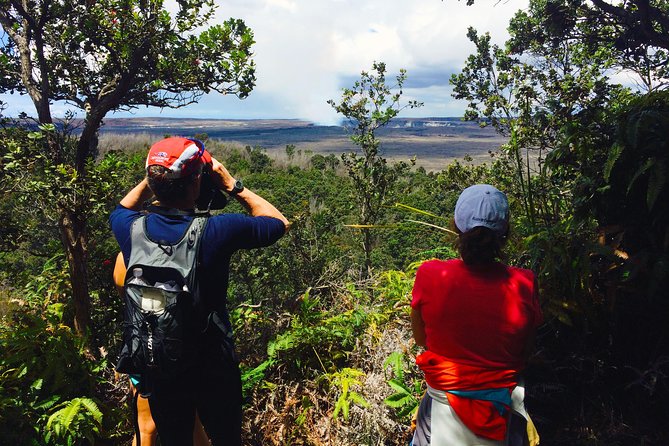
The Halemaumau Trail adds a longer look at the summit caldera. Your guide can point out native plants and birds along the way and explain how Hawaiian culture remains connected to the volcano. This is one of the tour’s strongest features because it avoids treating the park as geology alone.
The crater views depend on current conditions and trail access. Recent volcanic activity has sometimes caused parts of the park to close, and the tour may need to change. That flexibility is useful, but you should not book this experience expecting a guaranteed view of flowing lava.
Thurston Lava Tube, a short walk into volcanic history
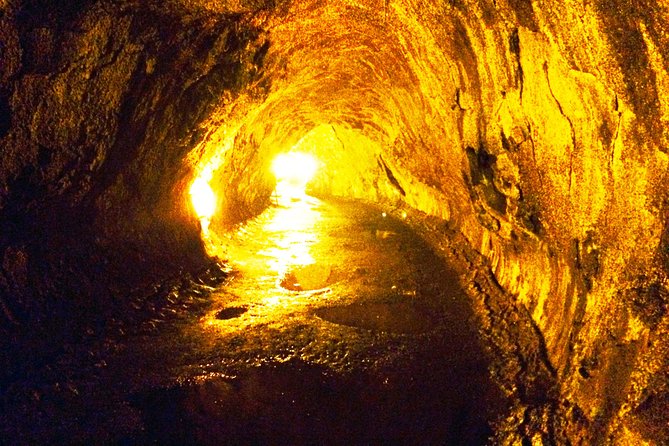
Nahuku, also called Thurston Lava Tube, is one of the most approachable stops. You walk through old-growth native forest before entering a lava tube estimated at about 500 years old.
Inside, the guide explains how lava tubes form and points out their features. A lava tube is created when the outside of a lava flow cools and hardens while molten lava continues moving beneath it. Once the flow drains, it leaves a tunnel behind.
The stop is listed as about 15 minutes, so it is more of a focused visit than a long underground hike. That works well in a three-hour tour, especially if you want to see several parts of the park. The forest walk also gives the guide a chance to discuss native plants before the setting changes to bare volcanic rock.
Kilauea Iki and the feeling of walking on the moon
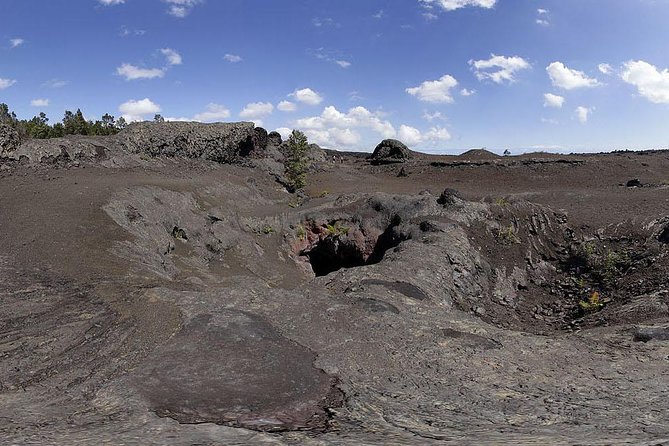
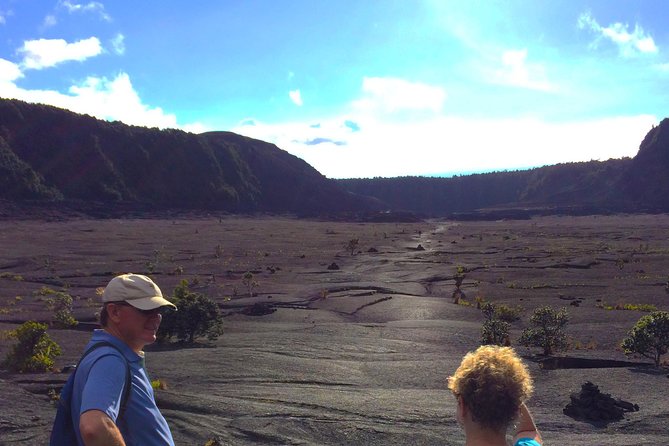
Kilauea Iki Trail is one of the park’s signature walks. The route crosses the area shaped by the 1959 eruption, including the event’s record-setting lava fountains. The surface and open views can feel stark and otherworldly, which explains why the tour describes it as walking on the moon.
This is where a guide can turn a scenic walk into a story. You learn how the eruption changed the area, how the crater formed, and why certain rocks and plants appear where they do. The stop is listed as about 15 minutes within the tour, so do not assume you are signing up for the entire long Kilauea Iki loop. Your guide can discuss how much walking fits your chosen time and interests.
The private format helps families and mixed-ability groups here. You can ask for more walking or less, and the guide can adjust the balance between trails and roadside stops. One family with adults ranging from age 80 to young adults found the experience workable for a broad age range, but you should still be honest about your group’s pace when arranging the departure.
More national park days around Big Island:
- Big Island: Fat Tire E-Bike Tour through Volcanoes National Park
★ 5.0 · 546 reviews - Big Island, Hawaii: Volcanoes National Park Safari
★ 4.5 · 545 reviews - Small-Group Big Island Tour: Hawaii Volcanoes National Park and Kona Coffee Farm
★ 5.0 · 343 reviews - Volcano National Park Adventure From Kona
★ 5.0 · 339 reviews
Devastation Trail and the small details after a major eruption
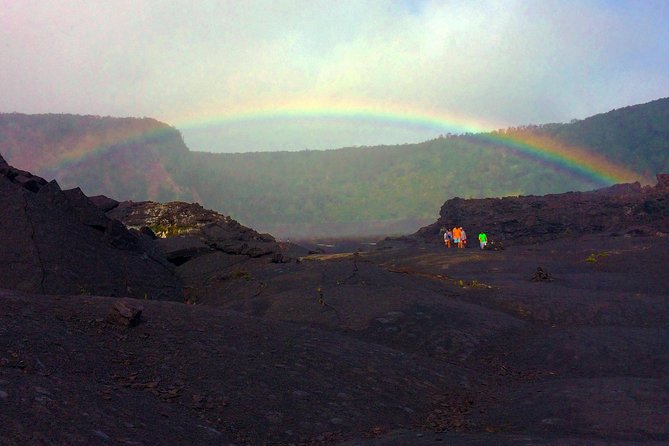
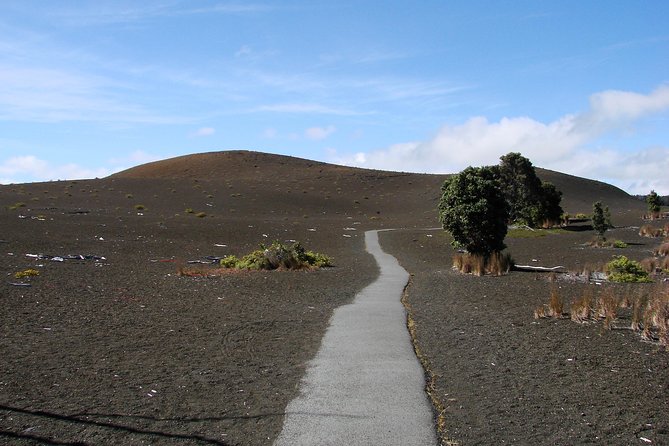
Devastation Trail shows what happened when the 1959 eruption buried native rainforest under volcanic debris. It is a compact way to see how quickly a major eruption can alter an ecosystem.
Look for Pele’s tears, olivine crystals, and other unusual rock forms. These details are easy to miss if you simply walk through taking pictures. A good guide slows the moment down and explains what you are looking at without turning the walk into a geology lecture.
This stop is listed at about 30 minutes, making it one of the more substantial walking portions. The ground and weather can vary, so water and sensible footwear matter. The experience is educational rather than strenuous by description, but the tour involves outdoor walking and should be planned accordingly.
Chain of Craters Road and the long view to the coast
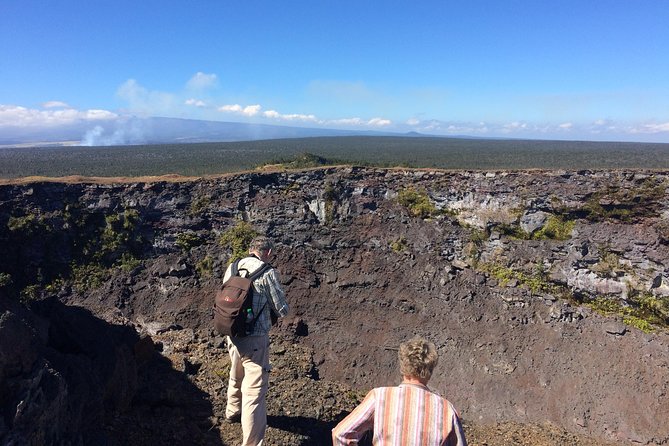
The Chain of Craters Road gives the tour its broadest sense of place. You move through volcanic areas formed at different times, with stops such as Lua Manu for a discussion of pit craters and their role on Kilauea.
This section is also where the driving becomes more noticeable. One previous participant found that the amount of driving reduced some of the benefit of having a guide, even though the driving is clearly part of reaching the park’s scattered sights. That is a fair warning. You cannot cover a large national park without moving between areas, and this tour is not a continuous walk.
The reward is variety. Within one outing, you may see old lava flows, crater forms, rainforest, coastal rock, native birds, and a sea arch. The guide can explain how these places connect rather than presenting them as unrelated photo stops.
If you choose the longer five-to-six-hour version, the Chain of Craters Road has more room to breathe. You can stop for additional questions, take more walks, and spend time at coastal viewpoints. The three-hour version is better for a compact introduction or a day with other plans.
Keanakako’i Overlook and the question of active lava
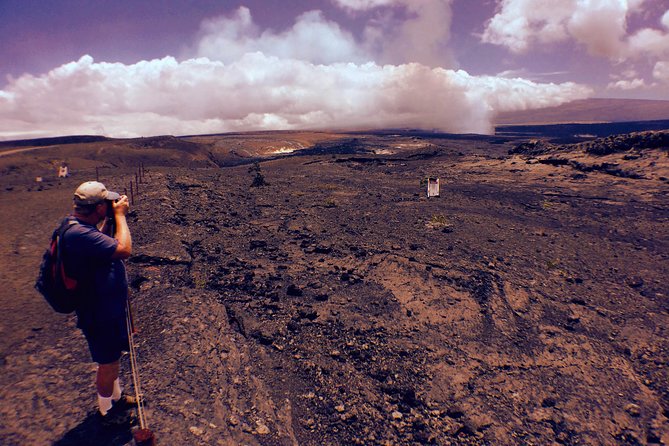
Keanakako’i Overlook is described as the best place on this tour to see a summit eruption when lava is visible. The guide may provide binoculars or a spotting scope, which is helpful when the activity is distant.
The important phrase is when lava is visible. Kilauea’s activity changes, and summit viewing is never promised. Conditions may also affect which trails and overlooks are open. If the volcano is erupting during your visit, this stop can become the day’s headline. If it is not, the guide still has plenty to discuss about the volcano’s behavior, past eruptions, and the land around the caldera.
I would treat active lava as a bonus, not the sole reason to book. The tour has enough variety to remain worthwhile when the summit is quiet.
Steam Vents and Sulphur Banks
Steam Vents and Sulphur Banks are close to the summit area but offer different ways to read volcanic activity. At the vents, you feel heat coming from below. At Sulphur Banks, the focus turns to geochemistry and gases.
The area is considered safe to explore because the gas concentration is low, but you should follow the guide’s instructions and remain in the approved areas. The guide can explain how native plants adapt to conditions that would challenge many species elsewhere.
This is an excellent part of the tour for curious adults and older children. It also gives you a physical experience of the volcano. You do not need a dramatic eruption to understand that heat and gas remain active beneath the surface.
Holei Sea Arch and the park’s coastal edge
The Holei Sea Arch offers an easy coastal walk and a change of scenery from the summit. The arch is a good photo stop, while the guide can discuss native seabirds and the volcanic coast.
The listed visit is about five minutes, so think of it as a brief stop rather than a long coastal hike. Its value comes from showing how far the park extends and how volcanic rock meets the ocean. On a longer tour, it helps break up the inland stops.
Because this is near the end of the Chain of Craters Road, it also makes the park feel larger and more varied. You are not seeing one crater and going home. You are tracing volcanic activity from summit to shore.
Volcano Art Center and the original Volcano House
The Volcano Art Center Gallery provides a final cultural note. You can see local art and the original Volcano House hotel, described as the oldest hotel in the state.
This stop is brief, but it rounds out the tour. The park is not only about eruptions, trails, and rocks. People have built lives, traditions, and creative work around this volcano. If you like bringing home something more meaningful than a standard souvenir, the gallery and nearby visitor center may be worth your time.
The Kilauea Visitor Center is another optional short stop. You can pick up park information, local books about the volcano or Hawaiian culture, and Junior Ranger materials for children. The guide can help younger members of your group complete the program and receive the official badge.
Three hours or six hours?
The three-hour option works if you want a strong overview and have limited time. You can see major summit-area features, walk through the lava tube, visit eruption sites, and ask questions without giving up an entire day.
Several people found that three hours passed quickly because the discussion was so engaging. That is also the main risk: you may finish wishing you had booked longer. A short tour requires choices, and some stops may receive only a few minutes.
Choose five to six hours if you want more walking, longer conversations, the Chain of Craters Road, coastal stops, and a less hurried pace. It is also the better choice if your group has a serious interest in geology, native plants, birds, or Hawaiian culture.
The departure time is flexible, but you need to contact Kilauea EcoGuides after booking to set your preferred time and discuss the route. That conversation matters. Tell the operator if you prefer hiking to driving, need a firm end time, are traveling with children, or want to focus on active volcanic features.
What the $160 price includes
The price is $160 per person. It includes a professional guide, the private activity, and taxes, fees, and handling charges. It does not include the $30 per vehicle National Park entrance fee, food, drinks, or transportation to and from the meeting point at Volcano House.
The value depends on how much you want from your visit. If you only need to see the main roads and take a few photos, you can explore the park independently for less. If you want the science, cultural context, route planning, and ability to ask questions all day, the private format makes the cost easier to justify.
For a larger group, the per-person price may compare favorably with other private options, though the booking requires at least two people. For a couple, the cost is higher than a self-guided visit, but you gain a tailored pace and direct attention.
Bring water and snacks. There is not really a dependable lunch stop along the main touring route, and the available snack choices may be limited. Do not arrive expecting food and drinks to be included.
Who should book this experience?
Book this tour if you want to understand what you are seeing rather than collect quick photos. It suits couples, families, and friends who enjoy asking questions and can agree on a shared pace.
It is especially useful for first-time visitors, children who like science, and anyone interested in Hawaiian plants, birds, geology, or culture. The guides are also praised for adjusting the route for people with a tight schedule or a preference for more hiking and less driving.
You may want to skip it if your main goal is a completely independent day or if you dislike moving between stops by vehicle. The private price is not a bargain for everyone. It buys interpretation and convenience, not an exclusive volcano or guaranteed lava flow.
FAQ
Where does the Hawaii Volcanoes National Park Eco Tour begin?
The tour begins at 1 Crater Rim Drive, Hawaii Volcanoes National Park, at the historic Volcano House hotel. It ends back at the same meeting point.
How long is the private volcano tour?
The experience lasts approximately three to six hours. You can discuss your preferred departure time and route with Kilauea EcoGuides after booking.
Is the National Park entrance fee included?
No. The National Park entrance fee is listed separately at $30 per vehicle.
Is transportation to the park included?
No. Hotel pickup and drop-off, as well as transportation to and from the attractions, are not included. The tour begins inside Hawaii Volcanoes National Park at the stated meeting point.
Will I definitely see flowing lava?
No. Summit eruption viewing depends on current eruption conditions. Keanakako’i Overlook is the best listed location for viewing an active summit eruption when lava is visible.
Can children take part in the tour?
Yes. Most people can participate, and children can receive a Junior Ranger program at the Kilauea Visitor Center. The guide can help them complete it and receive an official Junior Ranger badge.
Should you book the Kilauea EcoGuides tour?
I would book it if you have at least three hours and want the volcano explained by a person who can connect geology, ecology, and Hawaiian culture. The strongest reason to go private is not avoiding crowds. It is having someone adjust the day to your questions, walking ability, and interests.
Choose the longer option if you want the Chain of Craters Road and coastal stops without rushing. Choose three hours if you need a focused introduction. Bring water, snacks, sturdy shoes, and realistic expectations about lava viewing. With those points in mind, the $160 price buys a thoughtful, personal introduction to one of Hawaii’s most remarkable national parks.
Just added around Big Island
- Kalaoa: Big Island and Kona Midday Whale Watching Tour★ 4.3 · 29 reviews
- Kailua-Kona: Pacific Humpback Whale Watch Excursion★ 5.0 · 4 reviews
- Kailua Kona: Humpback Whale Watching Adventure Cruise★ 4.5 · 33 reviews
- Kona Hi, Sunset Manta Ray Tour 10 passengers maximum★ 5.0 · 14 reviews
- Kailua-Kona: Night Manta Snorkel or Dive★ 4.6 · 7 reviews
- Kona Tradewind Catamaran Sail with Cocktails★ 4.7 · 5 reviews
- Big Island: Kona Half-Day Boat Tour with Snorkeling & Lunch★ 5.0 · 34 reviews
- Kailua-Kona: Haunted History Ghost Walking Tour★ 4.1 · 8 reviews
Volcano Tours, compared.
Big Island in a Day: Volcanoes Waterfalls Sightseeing and History
Read our review →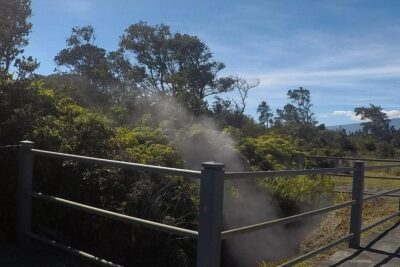
Hilo Shore Excursion: Volcanoes National Park & Black Sand Beach
Read our review →
Small Group Big Island Twilight Volcano and Stargazing Tour
Read our review →
Big Island Highlights: Coffee, Volcano, Black Sands & Waterfall
Read our review →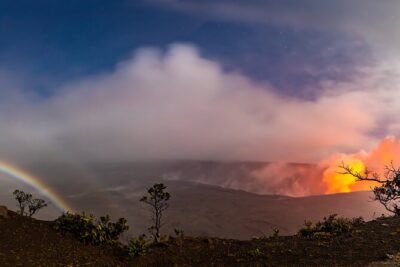
Deluxe Volcano Experience with Restaurant Dinner
Read our review →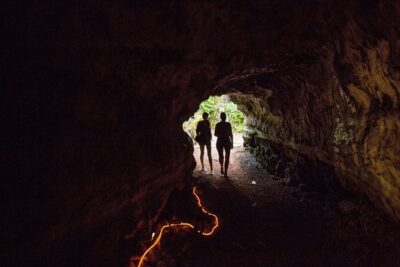
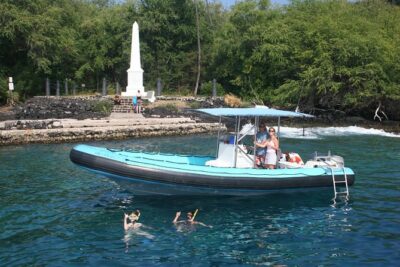
Captain Cook Snorkel Tour with Sea Caves and Lava Tubes
Read our review →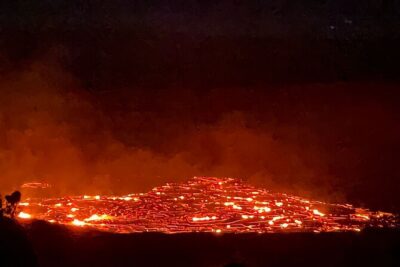
Fat Tire E-Bike Tour through Volcanoes National Park
Read our review →Browse the lists this tour appears in