
Reviewed · SURF LESSONS
Group Surf Lesson at Kalama Beach in Kihei
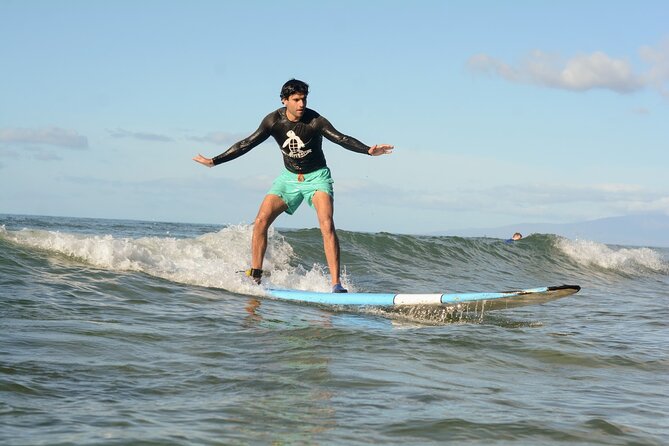
Surfing in Hawaii feels right from the first paddle. At Kalama Beach in Kihei, Surf Club Maui keeps the lesson focused on the basics: a short safety talk, simple board practice, then repeated attempts to catch small waves with a coach nearby. The water is warm, and the waves are generally mild enough for first-timers.
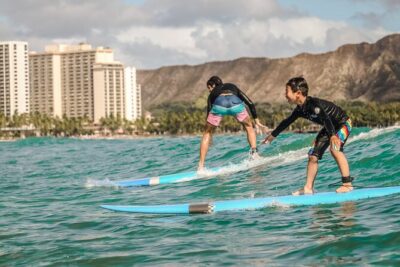
I like two things right away. The instructors stay involved in the water, giving you advice after each attempt, and the lesson includes the gear you need, from board to reef shoes and rash guard. The small group, capped at six, also gives you a better shot at personal help than a large beach class.
The main caution is the bottom. One detailed account described a rocky entry and scraped knees after falling in shallow water. Conditions and exact location can vary, but you should be ready for more than soft sand, and you must be able to swim comfortably in the ocean.
Key points at a glance
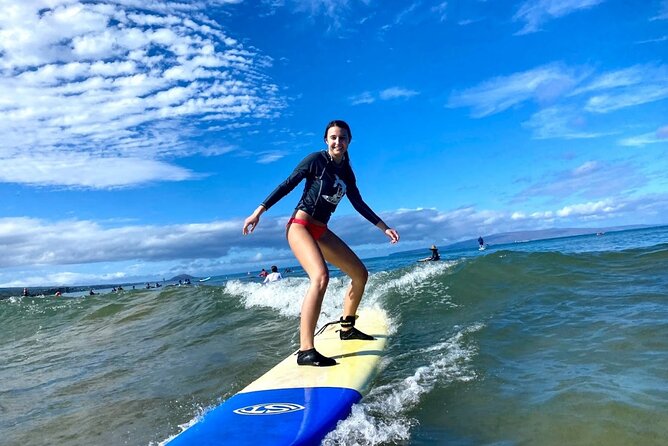
- Gentle Kihei waves: The usual waist-to-chest-deep water and smaller waves suit first-time surfers and cautious intermediates.
- A true learn-by-doing lesson: You practice on land, then work with a coach in the water to catch several waves.
- Small groups, up to six: A smaller class can mean more direct corrections and less waiting between attempts.
- Equipment is included: Surfboard, reef shoes, rash guard, taxes, fees, and parking are covered.
- Strong instructor feedback: Coaches including Bryan, Sarge, Pablo, Epps, Brendon, Willow, and Sol have been praised for patience and encouragement.
- Strict fitness and age rules: The class is for ages 11 and up, with a 250-pound per-person limit and a requirement that you can swim in the ocean.
What the $108.61 price gets you at Kalama Beach
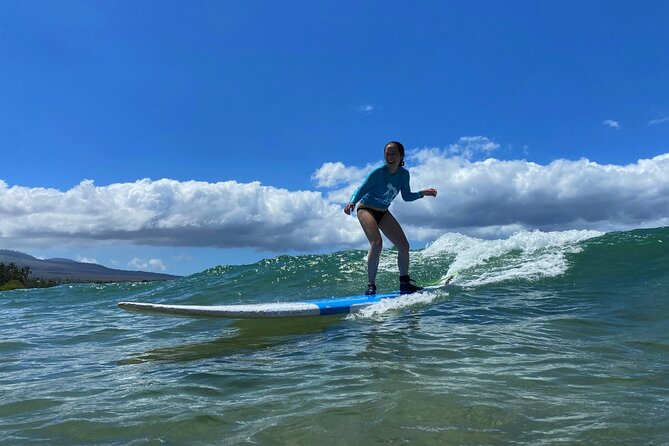
At $108.61 per person, this is not the cheapest way to spend two hours in Maui. But you are paying for more than a board rental. The price includes instruction, all necessary equipment, reef shoes, a rash guard shirt, taxes, fees, and free parking.
That matters because beginner surfing is awkward at first. You need to know where to sit, how to handle the board, when to paddle, and how to get your feet underneath you. Renting a board alone gives you none of that. A coach can often fix a small problem in one sentence, such as moving your hands, standing earlier, or keeping your weight centered.
The value is strongest if your goal is to stand up on a surfboard for the first time, not to spend a full day riding waves. The session lasts about two hours, and that includes the land lesson, getting outfitted, water instruction, and repeated attempts. Several people found themselves tired by the end, which is a useful reminder that beginner surfing uses more strength than it looks like from shore.
The group limit is six. That is not a private lesson, but it is still a workable size for a class where each person takes turns catching waves. Some sessions may be smaller. One account described only four people in the group, while another had just two. A smaller class can make the price feel especially fair, though you should not book expecting a private instructor.
Optional photographs may be offered during the lesson. The supplied details include accounts of strong action shots and a price of $60 per person in one session. That cost is separate from the lesson, so plan for it only if you want a visual record of your first rides.
More Surf Lessons in Maui
- Maui: Two Hour Beginner Group Surf Lesson in Kihei
★ 5.0 · 950 reviews - Outrageous Surf ScHool Lesson on Lahaina Side
★ 4.5 · 547 reviews - Maui Lahaina Group Surf Lesson
★ 4.9 · 235 reviews
Meeting Surf Club Maui at 1900 South Kihei Road
You meet at Kalama Beach Park, at the Surf Club Maui van at 1900 S Kihei Road, Kihei, Hawaii 96753. The activity begins and ends at this meeting point, so you do not need to arrange a separate return ride.
The van acts as the practical base for the lesson. You receive reef shoes and a rash guard before heading out, and changing rooms and showers are available. Bring your swimsuit, sunscreen, drinking water, and anything you need for after the lesson.
The company asks you to arrive well rested and hydrated. Take that seriously. Even a mild surf session requires paddling, balancing, pushing up from the board, and repeated effort in the water. Drink water before you arrive rather than waiting until you feel thirsty.
You also need to complete the online waiver before the lesson. Confirmation is provided when you book, and the activity is offered in English.
The land lesson: safety before the first wave
The first formal part of the session is a short lesson on land. This is where you learn the basic surf position, how to place your hands, how to rise from the board, and what to do when you fall.
That last part matters at Kalama Beach. One detailed account described a rocky beach and scrapes from falls in shallow water. Reef shoes are included, which should help protect your feet, but they do not remove every risk. Listen closely to the instructions about falling properly, and do not try to force a stand if the board or wave feels wrong.
The land portion also gives you a chance to ask questions before the board is moving beneath you. Beginners often think the hard part is standing. In practice, timing and balance cause just as much trouble. A clear land demonstration lets you focus on those pieces once you reach the water.
The coaches are also expected to monitor your physical condition. You should report pain, tingling, numbness, or other health problems right away. If lower back or neck pain appears, stop the activity. If those symptoms do not go away, seek medical attention.
Into warm, waist-to-chest-deep water
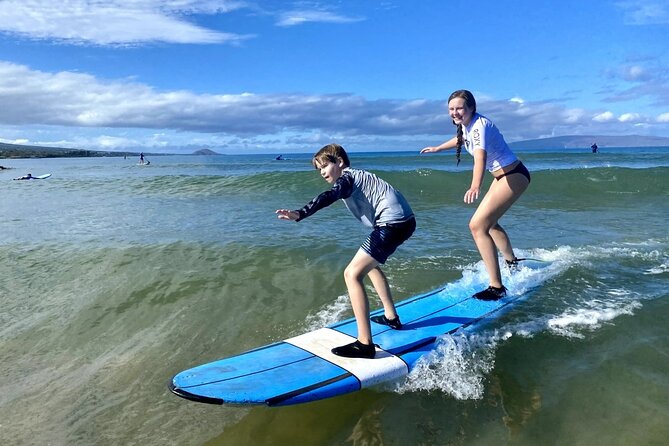
After the land instruction, the coaches take you into the ocean. The usual water depth is around waist to chest level, though the exact depth can vary with conditions and the place used that day.
This is a good setup for beginners because you are not immediately asked to paddle far offshore. The coach can help position your board, time the push, and offer advice as you return for another attempt. The water is warm, but you still need to be comfortable in the ocean and able to swim.
The waves are generally gentle, often described as small beginner waves. That is the right kind of surf for learning. Larger waves may look more exciting, but they leave less room for a new surfer to think. Smaller waves give you time to paddle, rise, and recover from a wobbly attempt.
The tradeoff is that experienced surfers may find the session too easy. This is a lesson built around confidence and first successes, not speed or dramatic surf. An intermediate surfer might still benefit from coaching on timing and stance, but anyone seeking powerful waves should choose a different type of outing.
Same island, a completely different kind of day:
- Maui Pineapple Farm Tour in Haliimaile
★ 5.0 · 2,855 reviews - Maui Eco-Raft Tour: Eye-Level Whale or Dolphin Watching – Lahaina
★ 5.0 · 2,482 reviews - Maui Snorkeling Adventure to Molokini and Turtle Town
★ 4.5 · 2,221 reviews - Maui: Haleakala Sunrise Spectacular with Local Breakfast
★ 4.5 · 2,155 reviews
The coaches make the difference
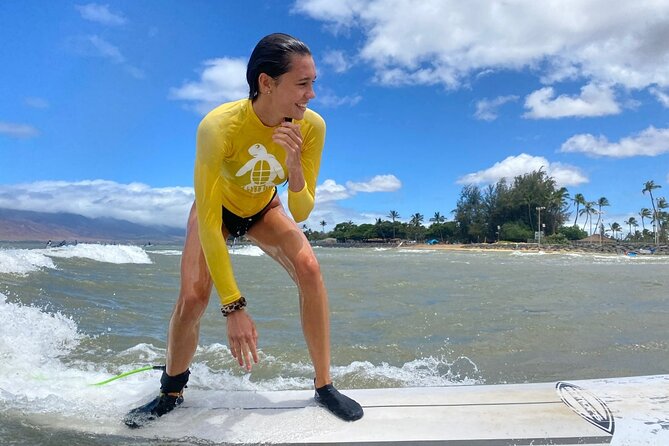
The strongest part of this experience is the in-water coaching. Names that appear repeatedly in the supplied material include Bryan, Sarge, Pablo, Epps, Brendon, Willow, Sol, Pedro, Alan, David, and Epes. The specific instructor depends on the day, so you cannot request a guaranteed coach based on these accounts.
Bryan is described as helping people catch waves, improve their speed, and stand at the right moment. Sarge is associated with clear instruction and an easygoing manner. Pablo worked with both teenagers and adults, while Epps received praise for patience with a young surfer. Brendon was singled out for friendly, personal coaching during a first lesson.
Willow’s approach included feedback after each run, helping beginners make a small improvement on the next attempt. That kind of immediate correction is what you want from a lesson. You do not need a long technical lecture. You need one useful adjustment while the last attempt is still fresh.
The instructors also seem to balance help with independence. At first, they may assist with positioning and timing. As you gain confidence, they can give you more room to catch a wave on your own. That makes the lesson feel like actual progress rather than being pushed along by the coach.
The experience has a 4.9 rating from 264 ratings, with 98 percent recommending it. Those numbers point to consistent satisfaction, especially for beginners, but they do not cancel out the physical demands or the rocky-entry concern. The lesson works best when you arrive ready to listen, fall, try again, and accept that not every wave will cooperate.
Family rules, swimming ability, and physical demands
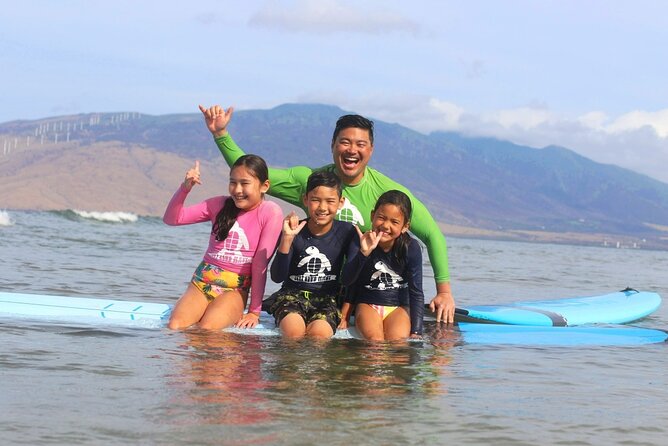
This is a mixed-age group class for people 11 and older. If you are traveling with younger children, the stated option is a private lesson or semi-private family class. Arriving with a child under 11 can result in cancellation without a refund, so check your group carefully before booking.
You must be able to swim in the ocean. If you are not comfortable in deep water, the lesson can be canceled without a refund. This rule is important even though the usual water is waist to chest deep. Ocean conditions change, and comfort in a pool does not always equal comfort in moving water.
The stated weight limit is 250 pounds per person. You also need a moderate level of physical fitness. Surfing involves repeated paddling and getting up from a prone position, and the effort can be tiring even in small waves.
Parents should also think about age and confidence, not only height. The lesson can be a good choice for a capable 11-year-old or teenager who listens well and is comfortable in the sea. It is not a suitable substitute for a supervised beach introduction for a child who cannot swim.
The rocky-bottom question
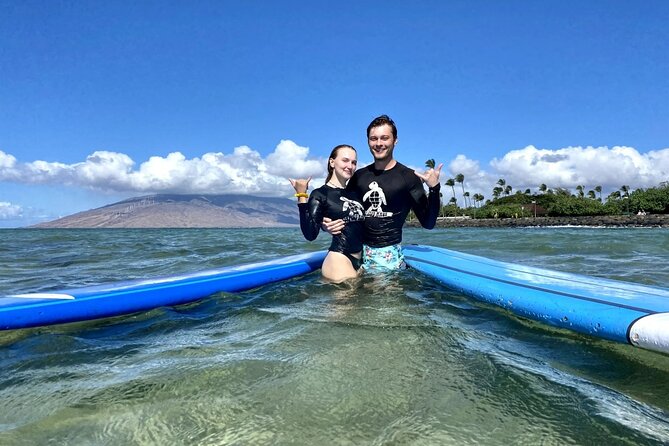
Most of the supplied comments focus on friendly instruction, easy waves, and successful first rides. One detailed account raises a practical concern that deserves more attention: the beach was rocky, and several people scraped themselves while falling in shallow water.
That does not mean every session uses the same bottom. Surf Club Maui is van-based, and the exact place used may depend on conditions. Still, you should not assume a soft sandy floor. Reef shoes are included, and the instructor teaches safe falling, but you may want to ask about the day’s location if you are uneasy about rocks.
This issue matters most if you are cautious about falling or have limited ocean experience. A confident swimmer may accept it as part of the lesson. Someone who freezes when the bottom feels rough may spend too much time hanging back instead of practicing.
Photos, parking, showers, and what to bring
Free parking is included, which is useful in busy Kihei. Changing rooms and showers are also available at the meeting area, so you can clean up before heading to your next Maui activity.
Bring a swimsuit, sunscreen, and water. The operator supplies the board, reef shoes, and rash guard. You should also complete the waiver in advance and bring cash for an instructor tip.
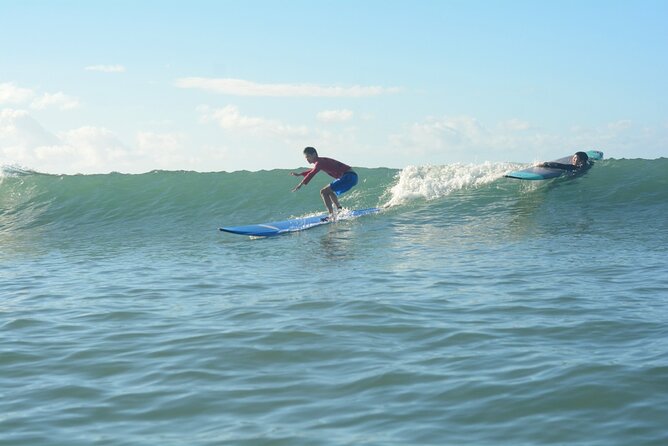
Photography may be available during the lesson. The photographers described in the supplied comments captured action shots from the water and shore, and some people considered the images a highlight. If you want photos, ask about the cost before purchasing. One account gives $60 per person as the price for a set of images, but the supplied information does not state that every session uses exactly the same arrangement.
I would schedule this early in your Maui stay if surfing interests you. That gives you time to rent a board or try another session afterward if you catch the bug. One account specifically wished for an earlier class so there would be more time to surf later in the day. The start time itself is not specified, so check your booking details.
Cancellation and weather planning
You can cancel for a full refund up to 24 hours before the local start time. Changes made within 24 hours are not accepted, and cancellations inside that period are not refunded.
The activity requires good weather. If poor weather causes the company to cancel, you are offered another date or a full refund. Since this is an ocean activity, avoid placing it on the final morning of your Maui stay if your schedule allows. A weather cancellation is easier to handle when you have another day available.
Who should book this Kihei surf lesson?
I would choose this for a first-time surfer, a couple wanting an active Maui morning, or a family with teens who can swim. It is also a solid fit if your main goal is to stand up once or several times, learn basic technique, and decide if you want to keep surfing.
The lesson may suit an intermediate surfer who wants gentle practice, but it is not aimed at advanced riding. The waves are intentionally mild, and the session is built around instruction rather than long, independent rides.
I would skip it if you cannot swim in the ocean, are not comfortable in moving water, fall outside the age or weight rules, or want a sandy-bottom guarantee. I would also think twice if you have current neck or lower back problems, since the activity requires repeated paddling and rising from the board.
Should you book Surf Club Maui?
Book it if you want a well-supported first step into Hawaiian surfing. The price includes the important equipment, the group is limited to six, and the coaching style centers on repeated attempts with useful feedback. The instructors, especially names such as Bryan, Sarge, Pablo, Epps, Brendon, and Willow, have been praised for patience and encouragement.
Go in with realistic expectations. You may stand up several times, but you will also fall, get tired, and possibly encounter a rocky bottom. For a two-hour introduction at a historic surfing destination, the experience offers good value when you want instruction and a real chance to catch a wave, not simply a board rental.
FAQ
Where does the surf lesson begin and end?
You meet at the Surf Club Maui van at Kalama Beach Park, 1900 S Kihei Road, Kihei, Hawaii 96753. The activity ends back at the same meeting point.
How long does the lesson last?
The lesson lasts approximately two hours.
What ages can join the group class?
The mixed-age group class is for ages 11 and up. Younger children must be booked into a private lesson or semi-private family class.
Do I need to know how to swim?
Yes. You must be able to swim in the ocean and feel comfortable in deep water. If you cannot swim or are not comfortable in deep water, the lesson can be canceled without a refund.
What equipment is included?
The lesson includes all necessary equipment, including a surfboard, reef shoes, and a rash guard surf shirt. Taxes, fees, and free parking are also included.
How many people can be in the group?
The activity has a maximum of six people.
What happens if the weather is poor?
If the company cancels because of poor weather, you can choose a different date or receive a full refund. For your own cancellation, you must cancel at least 24 hours before the start time to receive a full refund.
Just added around Maui
- Maui: Waterfalls of West Maui and Molokai Helicopter Tour★ 4.9 · 6 reviews
- Ka’anapali: Whale Watching Boat Tour★ 5.0 · 14 reviews
- Kaanapali: Sunset Dinner Catamaran Cruise With Drinks★ 4.8 · 55 reviews
- Kahului: Doors-off West Maui and Molokai Helicopter Tour★ 4.9 · 33 reviews
- Ka’anapali Beach: Coral Reef Snorkel and Turtle Spotting★ 4.9 · 135 reviews
- Hali’imaile: Pineapple Farm Tour★ 4.9 · 126 reviews
- Hana Rainforest and Haleakala Crater 45-min Helicopter Tour★ 5.0 · 18 reviews
- From Maalaea: Whale Watching Catamaran Cruise with Drinks★ 4.7 · 26 reviews
Surf Lessons, compared.

Beginner-Friendly Waikiki Beach Surfing Lesson
Read our review →

Private Hanalei Sandy Bottom Surf Lesson on Kauai
Read our review →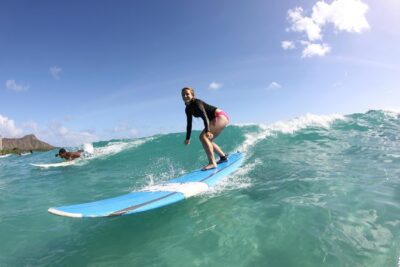
Browse the lists this tour appears in