
Reviewed · SURF LESSONS
Maui Surf Instruction 101 at Kalama Beach in Kihei
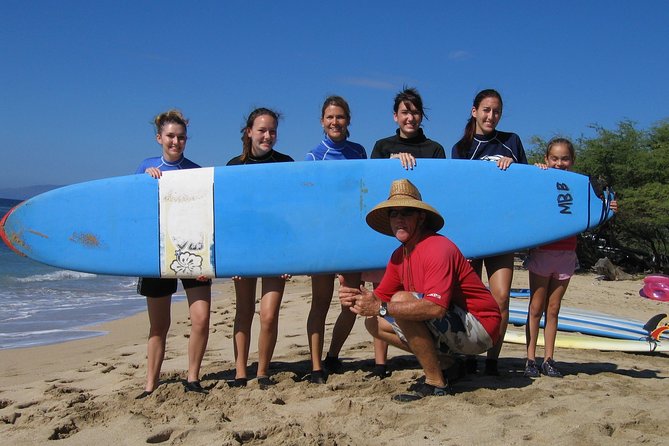
The best part of this Maui lesson is simple: you get a real chance to stand on a surfboard, often within your first few tries, without having to own a board or guess what to do. At Kihei’s Kalama Beach, local instructors such as Jordan, Keoki, Josh, Fran, and Ricky Bobby teach the basics, then help you find gentle rolling waves at The Cove.
I like the small-group format, which gives you more help than a large beach class. I also like the practical setup: a stable soft-top board, rash guard, booties, shore briefing, and CPR and first-aid-certified instructors are included. The main caution is that the area can get crowded, the rocky bottom can be rough on bare skin, and weather or scheduling problems can affect your session.
Key points at a glance
- Gentle beginner waves: The Cove is used for rolling waves that suit first-time surfers better than large, fast breaks.
- Personal coaching: Small groups and private lessons give instructors time to correct your stance and timing.
- Useful gear included: You receive a soft surfboard, rash guard, and neoprene booties.
- A strong family choice: Children aged 5 and older can participate, and many beginners are standing within a few attempts.
- Plan for tired muscles: Two hours in the water can leave you worn out for the rest of the day.
- Photos cost extra: On-water photographers capture the action, but the photo packages are not included and can be expensive.
Why The Cove Works for First-Time Surfers
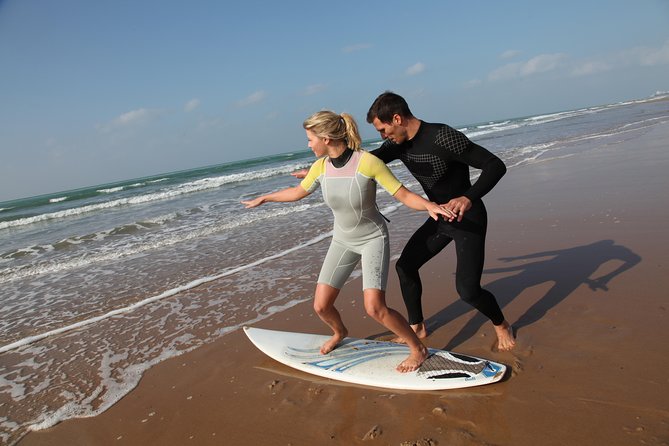
Surfing looks easy from the beach. Then you lie on a board, paddle, try to stand, and discover that the ocean has its own schedule. That is why this lesson matters. You are not simply handed a board and sent toward the waves. You first learn basic technique, safety, and surf etiquette on shore.
The lesson takes place at Kalama Beach in Kihei, at a popular spot known locally as The Cove. The waves here are described as gentle rolling waves, which is exactly what most beginners need. Bigger waves may look more exciting, but they give a first-timer less time to balance and more chances to feel overwhelmed.
You will use a wide, stable soft-top board. It is forgiving under your knees and feet, and it is a sensible choice when several people are learning at once. The goal is not advanced surfing. The goal is to learn how to position yourself, paddle, pop up, and ride a small wave with control.
The experience lasts about two hours. That is enough time for a short land lesson and plenty of water practice, though your exact water time can vary with conditions and group needs. One useful point from past sessions is that instruction on land is kept brief, with much of the lesson spent catching waves.
More Surf Lessons in Maui
- Maui: Two Hour Beginner Group Surf Lesson in Kihei
★ 5.0 · 950 reviews - Outrageous Surf ScHool Lesson on Lahaina Side
★ 4.5 · 547 reviews - Group Surf Lesson at Kalama Beach in Kihei
★ 5.0 · 264 reviews
Meeting the Instructors and Finding the Right Truck
You meet at 1965 South Kihei Road in Kihei, Hawaii. The activity ends back at this same meeting point, and hotel pickup and drop-off are not included, so you need to arrange your own way there.
Finding the operation can take a little attention. Look for the black truck associated with Beach Boys and South Pacific Kayaks. One family found the meeting point hard to locate at first, so arrive with enough time to look around rather than pulling in at the last second.
The two named itinerary stops are Maui Eco Tours and South Pacific Kayaks. In practical terms, the session is organized around the South Pacific Kayaks operation and its beach equipment setup. The important thing for you is not sightseeing at either stop. It is getting checked in, fitted with gear, and moving to the beach without wasting the short lesson.
The instructors have years of experience and hold CPR and first-aid certification. That does not remove every risk from ocean sports, but it gives you a trained person watching the group and explaining how to handle the board, waves, and other surfers.
Several instructors have earned especially warm praise for their teaching style. Jordan is described as patient and encouraging. Keoki is known for attentive coaching and helping people catch waves. Josh has been praised for making a birthday lesson relaxed and fun, while Fran helped a group learn with clear instruction. These details matter because a good first surf lesson depends as much on calm coaching as on the waves.
What Happens Before You Enter the Water
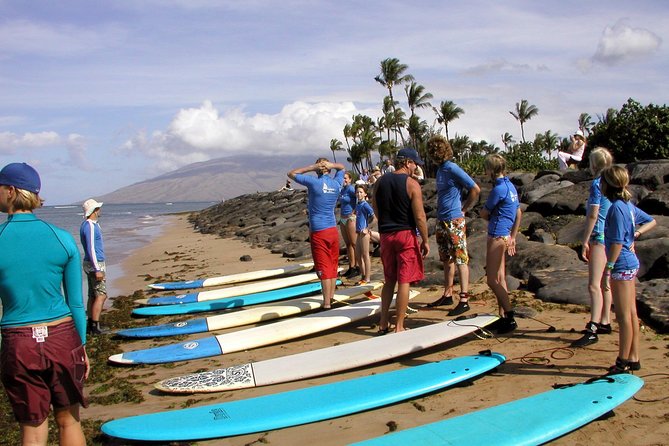
You begin with equipment and a safety briefing on shore. The staff supplies the soft surfboard, rash guard, and neoprene booties, so you do not need to rent those items separately.
The shore lesson covers basic technique and etiquette. You should expect instruction on how to lie on the board, how to paddle, how to stand, and how to behave around other surfers. The etiquette part is important at The Cove, where several groups may share the same water.
The booties protect your feet, but do not treat them as armor. One family found that a 12-year-old got banged up by the rocky bottom. This is a useful reminder to follow the instructor’s advice about where to stand, how to handle the board, and how to fall. Children should be at least 5 years old, since the activity is not recommended for ages 4 and under.
The instructor also helps with positioning. That can make the difference between flopping onto the board and getting a short ride. You may hear simple, repeated directions about when to paddle and when to stand. This is not the moment for fancy technique. Simple movements work best.
Bring sunscreen and a sense of adventure. You may also want a camera for the beach, but protect it carefully around sand and salt water. The professional photographers working near the lesson are the better option if you want action shots.
The Two Hours in the Water
After the shore briefing, you carry the board toward the waves and begin practicing. The instructors watch each person, give corrections, and help position you for a ride. Small groups are useful here because the instructor can focus on individual timing instead of giving only general advice.
Many first-timers get upright quickly. Some beginners have stood by the first wave or by the third attempt, while others need more time. Your result depends on conditions, balance, confidence, and how well you follow the timing instructions. No responsible lesson can promise that everyone will surf perfectly, but this setting gives you a fair chance to experience a real ride.
You may share the water with other surfers, and crowding can be the hardest part of the session. One family found the lineup unusually crowded and said local positioning helped them get waves safely. This is where an experienced instructor adds real value. The lesson is not only about standing on the board. It is also about learning where to wait and how to avoid interfering with other people.
The group size can reach 12 people. That is still a manageable maximum for an introductory class, but it is not the same as having a private instructor. If you want the most direct attention, choose the private option when available. A private lesson also makes sense if your family includes very young children or people with very different confidence levels.
The water portion is active. Even if you are only riding short waves, you paddle, climb onto the board, stand, fall, and start again. Plan a quiet afternoon afterward. Families have found that the children were exhausted for the rest of the day, and adults should expect to feel it in their arms and legs too.
Same island, a completely different kind of day:
- Maui Pineapple Farm Tour in Haliimaile
★ 5.0 · 2,855 reviews - Maui Eco-Raft Tour: Eye-Level Whale or Dolphin Watching – Lahaina
★ 5.0 · 2,482 reviews - Maui Snorkeling Adventure to Molokini and Turtle Town
★ 4.5 · 2,221 reviews - Maui: Haleakala Sunrise Spectacular with Local Breakfast
★ 4.5 · 2,155 reviews
Choosing Between a Group and Private Lesson
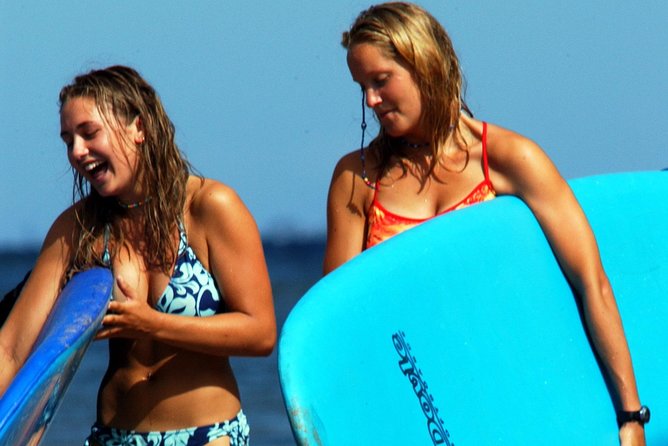
The group lesson offers a social, lower-cost introduction and works well when everyone in your party is a beginner. You can watch other people try, laugh at the inevitable falls, and learn from the same set of instructions. It is a good fit for couples, families, and mixed-age groups that want one shared activity.
The private lesson gives you more direct attention. It is the better choice if you feel nervous, want to progress quickly, or need an instructor to tailor the pace. It can also help when children need closer supervision. The available information does not specify a separate private-lesson price, so check the current option before booking.
I would not choose the group format solely because it is cheaper if your party has very different needs. A confident teenager and a cautious parent may not learn at the same pace. On the other hand, a family of beginners can have more fun together in a group, especially when the main goal is to share the experience rather than build a serious surfing skill set.
Price, Photos, and the Real Value
The listed price is $108.03 per person. For a two-hour lesson with a board, rash guard, booties, instruction, certified staff, and local taxes included, that is a reasonable Maui activity price, especially if you have never surfed before and would otherwise need to rent equipment and figure out the basics alone.
The value is strongest if you stand up and catch several waves. Even if you spend much of the session learning, the lesson gives you access to equipment and instruction that would be difficult to arrange independently. The small-group or private choice also lets you decide how much personal coaching you want.
Photos and videos are a separate expense. Photographers may capture you riding, and the images can be excellent keepsakes. But the packages have been priced around $75 per person in some cases, which is much higher than photo add-ons on other Maui activities. If you are trying to control costs, decide in advance whether you really want professional action shots.
If you do want pictures, the photographers can be useful beyond the souvenir value. They work in the water and may help you find your way through a crowded lineup. Still, you should treat the package as optional, not part of the lesson price.
Safety, Weather, and Timing
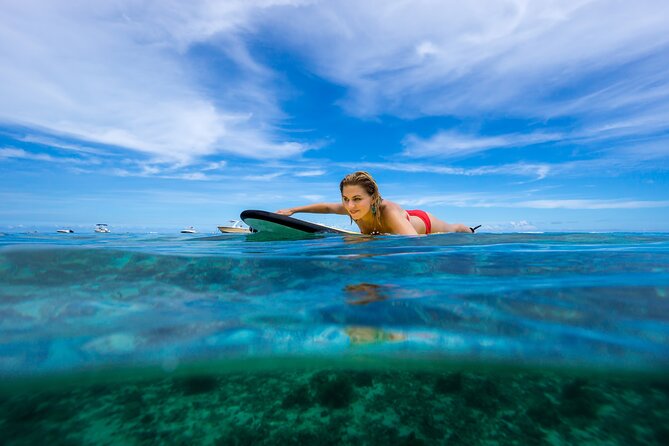
The instructors are CPR and first-aid certified, and the equipment is designed for beginners. That makes the lesson approachable, but surfing remains an ocean activity. You can fall, hit the bottom, collide with a board, or tire quickly. Listen closely during the safety briefing and tell the instructor if you feel uncomfortable.
Weather and wave conditions can affect the experience. Gentle waves are good for learning, but a poor weather window can reduce the fun. One unhappy booking involved weather, schedule mix-ups, and concerns about health protocols. The provider explained that weather cannot be controlled and offered rescheduling or a refund in that case.
That story gives you two practical lessons. First, do not schedule the surf lesson as the one event that must rescue your entire Maui vacation. Second, confirm the meeting time and health-related questions before the activity if those matters are important to you. Thanksgiving and other busy periods can create more schedule pressure.
Free cancellation is available if you cancel at least 24 hours before the start time. Cancellations or changes inside that window are not refunded. The cut-off uses local Maui time.
Bringing Family Members to Watch
Parents and grandparents can watch from the beach, and there is enough room for spectators. Bring your own chairs. An umbrella is also worth considering if you plan to stay for the full session, since beach watching can feel longer than expected under the sun.
The activity works particularly well for families with children who are old enough to follow directions and manage a board. Ages 12 and 14 have successfully learned during the same session, and younger children may also do well if they meet the age requirement and are comfortable in the water. The lesson is not recommended for children aged 4 and under.
Service animals are allowed, and the meeting point is near public transportation. Most people can participate, though the supplied information does not give a detailed medical or mobility screening. If you have a health concern, contact the operator before booking rather than relying on a general participation statement.
Who Should Book This Maui Surf Lesson
I would recommend this lesson to a first-time surfer who wants a practical introduction rather than a long theory session. It suits couples, families, and friends who want to laugh, work hard, and possibly stand on a board before lunch or dinner.
It is also a good choice for someone who has tried surfing elsewhere but never got past the knees. Several people with little success before have been helped by the simple instruction and steady boards here. The local coaching is most useful when the water is crowded and you need help choosing a safe position.
I would hesitate if you dislike group activities, have a strict no-sun schedule, or want guaranteed quiet water. The maximum group size is 12, the Cove can be busy, and conditions are outside the operator’s control. I would also budget for the physical effort and skip a demanding excursion immediately afterward.
Final Call: Book It If You Want a Real First Ride
Book this lesson if your Maui plans include trying something new and you value patient instruction, included gear, and a genuine chance to catch a wave. The strongest points are the beginner-friendly water, certified instructors, stable boards, and repeated reports of people standing up quickly.
Go in with sensible expectations. You may share the lineup, the beach can be difficult to find at first, and the professional photos cost extra. Still, at $108.03 for roughly two hours, this is a fair way to test surfing without buying equipment or taking on the ocean alone. Choose private instruction if you want close coaching. Choose the group lesson if your family or partner wants to learn together.
FAQ
Where does the surf lesson meet?
You meet at 1965 S Kihei Rd, Kihei, HI 96753, USA. The activity ends back at the same meeting point.
How long does the experience last?
The lesson lasts approximately two hours, including the shore briefing and time in the water.
What equipment is included?
The price includes a soft surfboard, rash guard, neoprene booties, local taxes, and instruction from an experienced instructor. The instructors are CPR and first-aid certified.
Is the lesson suitable for children?
Most people can participate, but the activity is not recommended for children aged 4 and under. Children aged 12 and 14 have successfully learned during the lesson.
Can I book a private lesson?
Yes. You can choose between a group lesson and a private lesson. The supplied details do not state the separate private-lesson price.
Are photographs included?
No. On-water photographers may take photographs and videos, but these are available for an additional charge. Some packages have cost about $75 per person.
Just added around Maui
- Mermaid and Merman Photoshoots on Maui★ 5.0 · 4 reviews
- Molokini and Turtle Arches Snorkeling Trip from Ma’alaea Harbor★ 4.5 · 812 reviews
- 3-Tank Dive Featuring the Molokini Crater★ 5.0 · 5 reviews
- Instant Island Moments: photos and video same day delivery★ 5.0 · 9 reviews
- “Origins” Multicultural Dance Spectacular★ 5.0 · 23 reviews
- Maui Jewelry Making Class with Puka Shells and Pearls★ 5.0 · 7 reviews
- Maui’s Only Clear Bottom Kayak Rental (priced per tandem kayak)★ 4.0 · 12 reviews
- Mermaid Ocean Swimming Lesson in Maui★ 5.0 · 98 reviews
Surf Lessons, compared.

Beginner-Friendly Waikiki Beach Surfing Lesson
Read our review →

Private Hanalei Sandy Bottom Surf Lesson on Kauai
Read our review →
Browse the lists this tour appears in