
Reviewed · SURF LESSONS
Oahu: Waikiki 2-Hour Beginner Group Surf Lesson
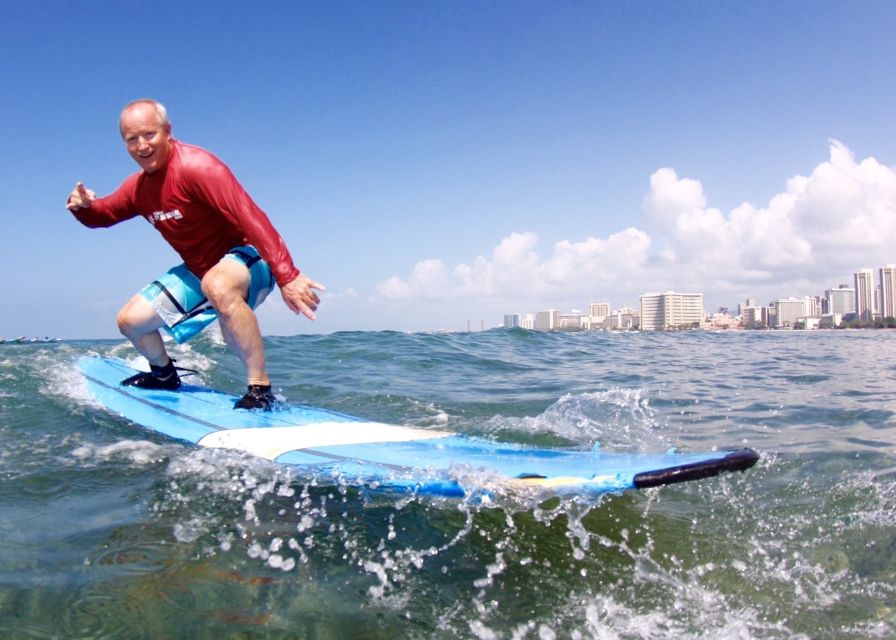
Waikiki is one of the easiest places in Hawaii to try surfing, and this lesson gets you away from the thickest crowds to a beginner-friendly spot about a mile outside the main beach area. The instructors are current professional surfers, and the small groups, capped at six, make it easier to get personal coaching.
I like the 20-minute beach lesson because it covers equipment, safety, surf etiquette, paddling, and the right stance before you enter the water. I also like that the instructors stay active in the ocean, helping you catch waves and offering small corrections. Turner, Kai, Noah, and Noa are repeatedly praised for patience, encouragement, and clear coaching.
The main consideration is physical effort. Two hours in the water can be tiring, and one participant had trouble with seasickness. Children under 11 and weak swimmers must book private instruction instead of joining the group class.
Key points to know before you book
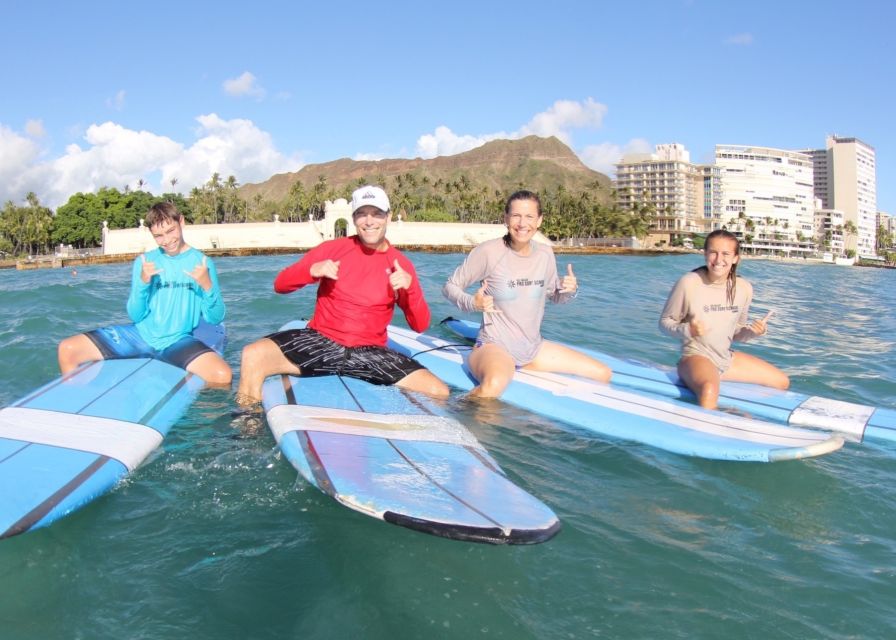
- Small groups of up to six: You get a better chance at individual coaching than in a large beach class.
- A beginner-friendly surf spot: The lesson takes place about a mile outside Waikiki, away from the most dangerous crowds.
- Real coaching from professional surfers: Instructors such as Turner, Kai, and Noah focus on helping you catch waves, not just explaining surfing on shore.
- A useful 20-minute land lesson: You learn surfboard parts, safety skills, etiquette, wave technique, and stance before entering the water.
- Equipment is supplied: A surfboard, leash, rashguard, and reef booties are included. Bring your own swimsuit and towel.
- A strong first-surfing option: The $103 price is reasonable if you want instruction, equipment, and guided time in the water rather than simply renting a board.
Why this Waikiki surf lesson works for beginners
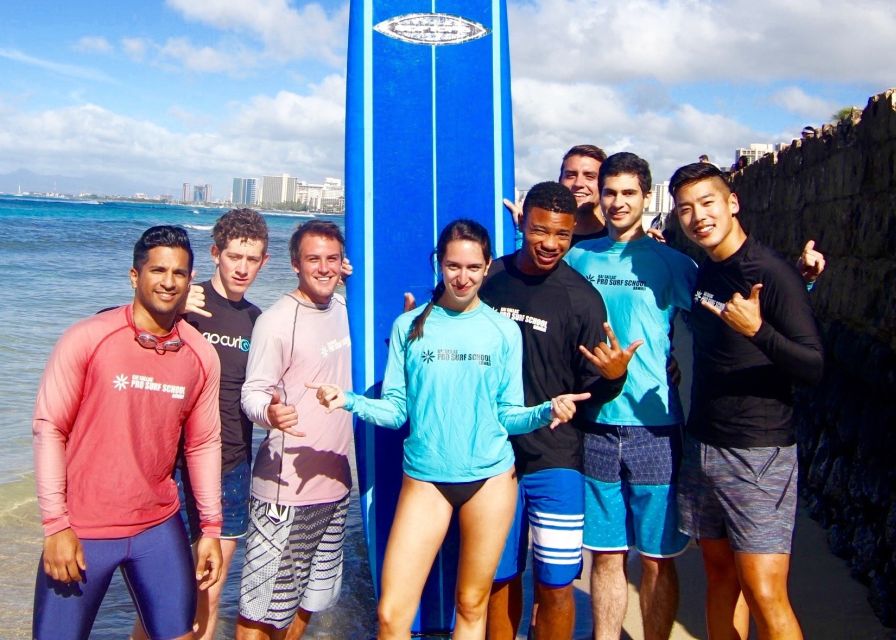
Many first-time surfers worry that they will spend the whole class falling off the board. This lesson is built around giving you a quick, practical start. You do not need previous surf experience, and the instructors work with complete beginners as well as people who have tried surfing once or twice.
The setting helps. You are not being sent straight into the most crowded part of Waikiki. Instead, the lesson uses a beginner-friendly spot about a mile outside Waikiki, where the class can focus on learning rather than dodging a wall of boards and swimmers.
That does not mean the water will feel effortless. Surfing takes balance, timing, and stamina. Still, the lesson structure gives you a fair shot at standing up. Several participants managed to ride waves more than once, and some stood up within the first part of the water session.
I would treat standing up as a bonus rather than a guarantee. Ocean conditions, fitness, balance, and simple luck all matter. The stronger promise is that you will learn the basic skills and get coached through the process.
More Surf Lessons in Oahu
- Open Group Surfing Lesson in Waikiki, Hawaii
★ 4.5 · 582 reviews - Oahu: Beginner-Friendly Waikiki Beach Surfing Lesson
★ 4.9 · 425 reviews - Surfing Lessons On Waikiki Beach
★ 4.5 · 317 reviews
The 20-minute beach lesson sets the tone
The activity begins on land with about 20 minutes of instruction. This is not wasted time. For a beginner, a short beach briefing can prevent confusion and make the water session much less stressful.
You learn about the different materials used in surfing and how the board, leash, rashguard, and reef booties fit into the experience. The instructor also covers basic safety techniques. This matters in the ocean, where a small problem can quickly become tiring if you do not know how to respond.
You also get an introduction to surf etiquette. That means learning how to share waves and behave around other people in the water. It is a modest lesson, but an important one. Surfing is not just about getting up on a board. You need to understand where to position yourself and how to avoid causing trouble for someone else.
The land portion also covers how to move over breaking waves. This is one of the less glamorous parts of surfing, but it can save energy. Paddling out repeatedly, handling the board, and getting past small waves take work. Knowing what to do makes the first water session feel more manageable.
Choosing the board and learning your stance
After the initial explanation, you select equipment based on your skill level. The lesson includes a surfboard and leash, plus a rashguard and reef booties.
You need to bring your own swimsuit and towel. The supplied rashguard is useful for comfort and protection, while reef booties help protect your feet in the water. Since there is no towel included, pack one even if your hotel is close by.
The instructor then shows you the proper surf stance. You learn how to position your feet and body on the board before trying to do it while a wave is carrying you forward. That preparation is especially useful if you have never stood on a surfboard.
I like this basic approach. The instructors do not appear to bury beginners in technical details. They explain enough to help you make a safe attempt, then let you learn through repeated practice.
The water session is where the lesson earns its price
Most of the two-hour activity takes place in the water. The goal is to catch waves, stand up, and learn from each attempt.
A good instructor can make a major difference here. Turner is often praised for giving clear instructions, staying patient, and helping people catch several waves. Kai is described as calm and encouraging with complete beginners, while Noah and Noa are praised for friendly coaching and making sure participants had plenty of chances to try.
The names are useful because they show the teaching style you can expect from the school. This is not a silent rental where you receive a board and point yourself toward the ocean. The instructor stays involved, watches your attempts, and offers advice as you practice.
You may be pushed into position or helped with timing. That hands-on support is important for beginners, since catching a wave requires you to paddle at the right moment and then shift from lying down to standing quickly.
The first few attempts can feel awkward. You may miss the wave, stand too early, lose your balance, or simply forget which foot should move first. The instructors are there to keep the process moving and help you try again instead of getting stuck on one mistake.
Same island, a completely different kind of day:
- Oahu Grand Circle Island and Haleiwa Tour: 9-Hr Deluxe Experience
★ 5.0 · 17,387 reviews - Oahu: Grand Tour Around Island 16 Locations plus Snorkeling
★ 5.0 · 8,669 reviews - Parasailing Experience in Waikiki, HI
★ 5.0 · 7,692 reviews - Salute to Pearl Harbor Including USS Arizona
★ 4.5 · 7,433 reviews
What the small group size means in practice
The group limit is six people. That is small enough for the instructor to keep an eye on everyone, but it does not mean you receive nonstop one-on-one attention.
You will share the instructor’s time with the other participants. If all six people are learning at once, each person will have moments of waiting between attempts. That is normal in a group surf class and gives you a chance to watch other beginners and learn from their timing.
A group of four may sometimes feel nearly private if other spaces are not filled. One group of four described having a private-feeling experience, though the official maximum remains six.
This format suits couples, families with older children, and friends who want to learn together. It also works for solo participants who do not mind meeting others in a small class.
If you want constant personal correction or need extra support in the water, a private lesson may be a better fit. Children under 11 and weak swimmers are required to take a private one-on-one lesson for safety reasons.
Safety is taken seriously, but you still need to judge your limits
The instructors are CPR and lifeguard certified. That is reassuring, especially if you feel nervous about open water or have never handled a surfboard before.
The safety talk includes techniques for being in the water and instructions for getting over crashing waves. You are also taught surf etiquette, which reduces the chance of careless behavior around other people.
Still, certification does not remove the physical demands of surfing. You need to be comfortable enough in the water to follow instructions and manage a two-hour activity. If you are not a strong swimmer, the required private lesson gives you closer supervision.
The experience is not suitable for people with mobility impairments or for pregnant women. Those restrictions are worth checking before you pay, since they affect eligibility rather than comfort alone.
One participant found seasickness to be a real problem and managed only one good run. That is a useful warning. Even a calm-looking surf session can leave you feeling unwell, and the combination of paddling, bobbing water, and repeated effort may be tough if you are prone to motion sickness.
How hard are the two hours?
The class has a playful feel, but it is also a workout. You will paddle, push up, stand, fall, climb back onto the board, and repeat the process.
The instructors may help move you into position, but you should expect to use your arms and legs. One participant joked about needing plenty of help getting back out to the waves. The comment is funny, but it also points to the effort involved.
If you are reasonably active, the two-hour length gives you time to improve rather than rushing through a single attempt. You can make mistakes early, adjust your stance, and try again while the lesson is still underway.
If you are less fit, pace yourself. Drink water before the class, bring a towel, and avoid treating the first few attempts as a race. The point is to learn enough technique to make the next wave better than the last one.
Is $103 a fair price?
At $103 per person, this is not the cheapest way to get near a surfboard. You could spend less on basic equipment rental, but that would not give you the same safety briefing, instruction, or help catching waves.
The price includes the board, leash, rashguard, and reef booties. It also includes two hours of teaching in a small group. For a first-time surfer, that combination gives the fee reasonable value.
The most important part of the price is the coaching. Renting a board is useful if you already know how to paddle, position yourself, and read a wave. For a beginner, a board alone can mean a lot of falling and very little progress.
The value is strongest if you want to stand up at least once, learn the basics safely, and decide if surfing is something you want to try again. It is less compelling if you are already comfortable surfing and only need equipment.
The activity runs twice a day, so you have some choice when fitting it into a Waikiki schedule. Starting times vary, so check availability when booking.
Who will enjoy this most?
I would recommend this class to adults and children 11 or older who are curious about surfing but do not know where to begin. It is also a good choice for couples and families who want a shared activity that feels more active than a beach day.
Teenagers appear to fit the class well. The instruction is direct, friendly, and practical, and younger participants can get excited quickly once they catch a wave.
It also suits nervous beginners. The instructors are repeatedly described as patient, encouraging, and nonjudgmental. That matters when you are trying something that feels awkward in front of other people.
You should think twice if you dislike physical exertion, get seasick easily, or are uncomfortable in open water. You should also choose the private format if you are under 11 or a weak swimmer.
A few practical things to bring
The required packing list is short:
- Swimsuit
- Towel
The activity provides the surfboard, leash, rashguard, and reef booties. The swimsuit is not included, and neither is the towel.
Wear something suitable for active time in the water. You will spend most of the session practicing rather than sitting on the beach, so comfort matters more than dressing up.
The meeting details deserve a quick check before you go. One participant had trouble finding the correct part of the surf school because the front doors were locked and staff were at the back. Confirm the meeting instructions and arrive with enough time to find the staff without rushing.
Cancellation is flexible up to 24 hours before the activity for a full refund, and you can reserve now and pay later. Those terms help if your Waikiki plans may change, but they do not replace checking the weather and your own comfort level before the lesson.
Should you book this Waikiki surf lesson?
Book it if you want a real introduction to surfing rather than a board rental. The two-hour format gives you enough time to learn the basics, practice repeatedly, and possibly stand up on several waves. The six-person limit, professional surfer instructors, and CPR and lifeguard training add useful support for first-timers.
I especially like this choice for a family with children 11 and older, a couple looking for an active Honolulu memory, or anyone who has always wanted to try surfing but felt intimidated. Turner, Kai, Noah, and Noa have each shown the patient, upbeat teaching style beginners need.
Skip the group class if you are a weak swimmer, under 11, pregnant, or have mobility limitations. Consider a private lesson if you need close supervision. For everyone else, $103 is a fair price for equipment, safety instruction, and guided time on Waikiki waves, with a real chance to get upright and ride.
FAQ
How long is the surf lesson?
The lesson lasts two hours. About 20 minutes are spent on land learning safety, equipment, surf etiquette, wave technique, and stance. The remaining time is spent in the water practicing.
How many people can join the group?
The small group is limited to six participants. A group of four may sometimes have a private-feeling class, but six is the stated maximum.
What equipment is included?
The activity includes a surfboard, leash, rashguard, and reef booties. You need to bring your own swimsuit and towel.
Are children allowed to join the group class?
Children must be 11 years old to join a group class. Children under 11 must take a private one-on-one lesson.
Can weak swimmers join the group lesson?
Weak swimmers are required to take a private one-on-one lesson for safety reasons.
Can I cancel the booking?
You can cancel up to 24 hours in advance for a full refund. The activity also offers a reserve-now, pay-later option.
More 2-Hour Experiences in Oahu
- 2-Hour Oahu Whale Watch from Ala Wai Harbor, Waikiki
★ 4.5 · 1,929 reviews - Waikiki, Oahu 2-Hour Whale Watching: Guaranteed Sightings
★ 4.5 · 1,064 reviews - Kailua 2-Hour Guided Kayaking Excursion, Oahu
★ 5.0 · 442 reviews - Oahu: Waikiki 2-Hour Semi-Private Surfing Lesson
★ 4.9 · 5 reviews
Just added around Oahu
- Kailua: Mokulua Islands Guided Kayak and Snorkeling Tour★ 4.9 · 46 reviews
- Oahu: Sips & Secrets of Hawaii Pub Crawl★ 5.0 · 19 reviews
- Honolulu, Oahu: Waikiki Whale Watching Cruise★ 3.5 · 166 reviews
- Oahu: Honolulu Turtle Canyon Snorkeling Tour★ 4.6 · 136 reviews
- Oahu: USS Arizona Memorial and City Highlights Tour★ 4.2 · 32 reviews
- Honolulu: Waikiki Food Tour with Local Guide★ 5.0 · 3 reviews
- Oahu: Traditional Canoe Sunset Cruise with Dinner★ 5.0 · 4 reviews
- Oahu: Hilton Waikiki Beach Hotel Magical Mystery Show★ 4.7 · 39 reviews
Surf Lessons, compared.


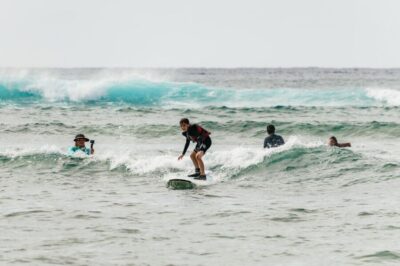
Beginner-Friendly Waikiki Beach Surfing Lesson
Read our review →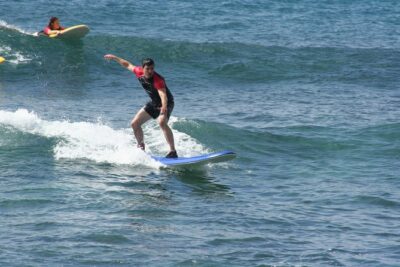

Private Hanalei Sandy Bottom Surf Lesson on Kauai
Read our review →
Browse the lists this tour appears in